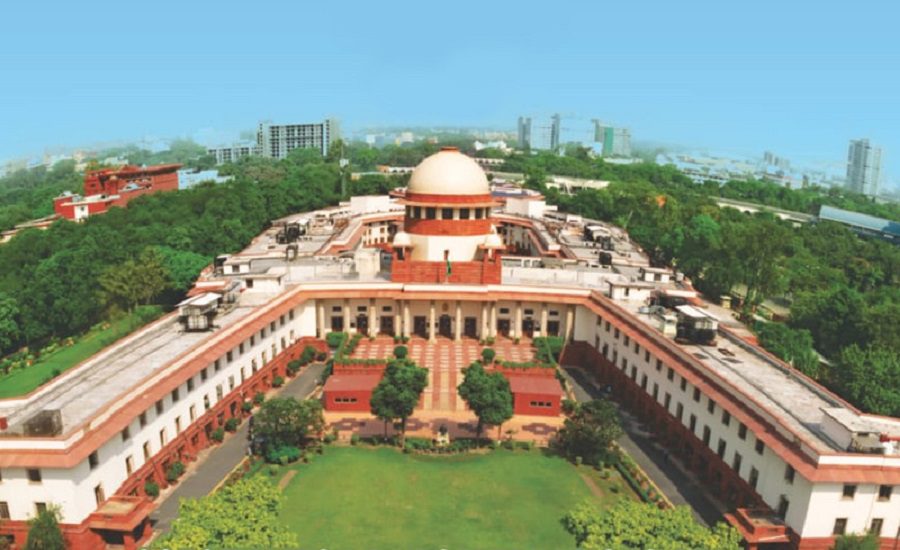
New Delhi: In a major relief for law graduates, the supreme court ruled that all recruitment notifications issued between May 20, 2025, and March 31, 2027, will not require candidates to fulfill the earlier three-year practice condition. The decision was delivered by a Bench led by Chief Justice of India Surya Kant and aims to ease the transition after the Court restored the practice requirement in 2025.
Civil Judge Exam Practice Requirement: Supreme Court Grants Temporary Relaxation For Judicial Aspirants
The Supreme Court has allowed all law graduates to apply for Civil Judge (Junior Division) examinations during the transitional period ending on March 31, 2027. The relaxation applies to recruitment notifications issued between May 20, 2025, and March 31, 2027. Candidates will not need to show three years of legal practice for these recruitments.
Read also: NDPS Act Reform Plea: Why Is the Supreme Court Concerned About Drug Trafficking in India?
Why Did The Supreme Court Grant This Relief
The Court observed that restoring the three-year practice requirement in May 2025 created difficulties for many law graduates.
Many aspirants had planned their careers based on the recruitment system that existed for more than two decades, where fresh graduates could directly appear for judicial service examinations. To prevent unfair hardship, the Court introduced a transitional arrangement until March 2027.
Civil Judge Exam Practice Requirement: What Did The Supreme Court Say?
The Bench held that candidates applying during the transitional period would be deemed to have completed one year of active practice for application purposes. Such candidates will not be required to submit a separate practice certificate for the deemed period.
Civil Judge Exam Practice Requirement: New Rules For Selected Candidates
The Supreme Court clarified that selected candidates will initially be appointed as Trainee Judicial Officers. They will undergo one year of intensive training at the State Judicial Academy followed by one year of structured law clerkship.
Practical Courtroom Exposure Included
The clerkship program will include:
- Six months under a Principal District Judge, District and Sessions Judge, or a member of the Higher Judicial Service.
- Six months under a sitting judge of the concerned High Court.
The Supreme Court said this system will provide practical courtroom exposure before regular judicial responsibilities are assigned.
Practice Requirement Reduced For Future Recruitment
While granting temporary relief, the Supreme Court also modified its earlier position on prior practice. For recruitment notifications issued on or after April 1, 2027, candidates will need at least one year of actual legal practice before appearing in Civil Judge (Junior Division) examinations..This replaces the earlier requirement of three years of practice that was restored by the Court in May 2025.
Bench That Delivered The Judgment
The judgment was delivered by a Bench comprising:
- Chief Justice of India Surya Kant
- Justice Augustine George Masih
- Justice K. Vinod Chandran (dissenting)
Read also: Bar Council of India Reforms Plea: Key Demands Against Chairman Manan Kumar Mishra
FAQs
For future recruitments issued on or after April 1, 2027, candidates must have at least one year of actual legal practice before appearing in Civil Judge (Junior Division) examinations.
Yes. For recruitment notifications issued between May 20, 2025, and March 31, 2027, law graduates can apply without fulfilling the earlier three-year practice requirement.
No. Selected candidates will first undergo one year of training and one year of structured clerkship before taking up regular judicial responsibilities.