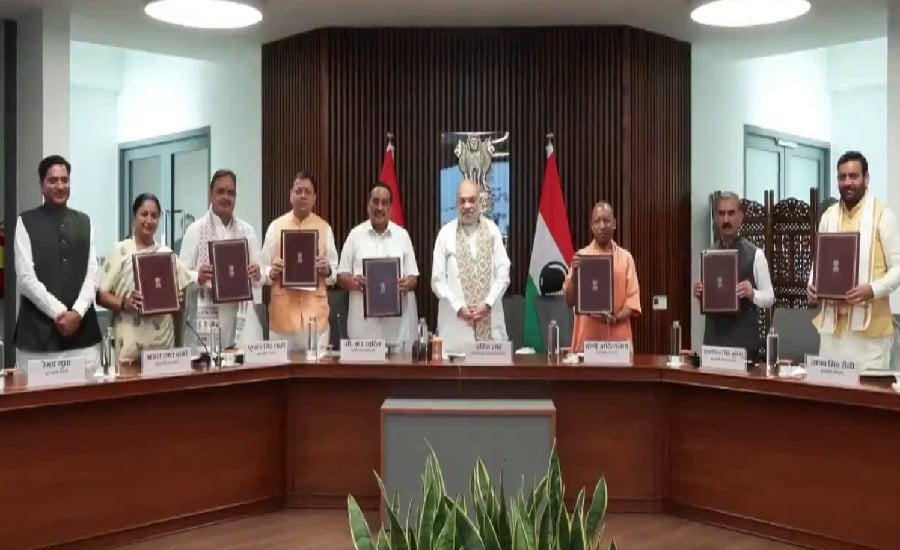
New Delhi: The chief ministers of Uttar Pradesh, Uttarakhand, Himachal Pradesh, Rajasthan, Delhi and Haryana on Tuesday signed a Memorandum of Agreement (MoA) for the construction of the Kishau Multipurpose Project on the Tons River, in the presence of Union Home Minister Amit Shah.
The agreement marks a major step towards strengthening interstate cooperation and water resource management in the upper Yamuna basin. Nearly 28 MoAs were signed between the six states and the Central government during the meeting.
The Kishau agreement is the third project-specific agreement signed by the six basin states for a multipurpose storage project. Agreements for the Renuka Ji and Lakhwar multipurpose projects have already been executed, and both projects are under construction.
Kishau Project to Support Irrigation, Power and Water Security
The proposed Kishau Multipurpose Project will be constructed on the Tons River, a major tributary of the Yamuna, in the Dehradun district of Uttarakhand and Sirmaur district of Himachal Pradesh.
The project envisages the construction of a 232.6-metre-high concrete gravity dam with a live storage capacity of approximately 1,562 million cubic metres.
Once completed, the project is expected to:
- Provide irrigation to around 97,000 hectares of agricultural land.
- Generate approximately 1,476 million units of electricity annually.
- Increase the availability of drinking and industrial water.
- Support the rejuvenation of the Yamuna.
- Strengthen water security in Delhi, Rajasthan and other beneficiary areas.
The project will be implemented by Kishau Corporation Limited, a joint venture between the governments of Himachal Pradesh and Uttarakhand.
Stored Water to Help Rejuvenate Yamuna
A key objective of the Kishau project is to improve water availability in the Yamuna basin.
The stored water will contribute to maintaining flows in the Yamuna and is expected to support the availability of drinking and industrial water, particularly for Delhi and Rajasthan. The participating states and the Centre have described the project as an important step towards increasing clean water flow in the Yamuna and supporting its rejuvenation.
Six States Strengthen Upper Yamuna Water Cooperation
The agreement builds on the May 12, 1994 Memorandum of Understanding (MoU) signed by the upper Yamuna basin states for sharing the utilisable surface water of the Yamuna up to the Okhla Barrage.
The 1994 agreement recognised the need for developing storage projects in the upper Yamuna basin to maximise the utilisation of available water resources. It also provided for separate agreements for individual identified storage projects within the agreed water allocation framework.
The Kishau MoA is being signed as part of this long-term framework for coordinated development and utilisation of Yamuna basin water resources.
Agreement Follows June 16 Consensus
The latest agreement comes nearly three months after a meeting chaired by Union Home Minister Amit Shah on June 16, 2026.
During that meeting, the Centre and the six states reached a consensus on the Kishau multipurpose dam project and its role in the rejuvenation of the Yamuna.
Following the June meeting, the states agreed to move forward with the project and sign the required agreement for its implementation. With the MoA now signed, the Kishau project will be submitted to the Union Cabinet for approval.
Centre to Provide 90% of Water Component Cost
The meeting also reached an agreement on the funding arrangement for the project.
Under the agreed framework, 90% of the cost of the water component will be provided by the Central government as assistance.
The remaining 10% will be shared by the six participating states. The arrangement is intended to facilitate the implementation of the large-scale water storage project while ensuring participation from the beneficiary states.
Himachal Pradesh Water Share Arrangement Agreed
Another important decision concerns Himachal Pradesh’s share of the project’s water.
As per the consensus reached, Himachal Pradesh’s share of water will be allocated to Delhi and Rajasthan.
In return, Delhi and Rajasthan will share the cost of Himachal Pradesh’s portion of the power component of the project.
Officials see this arrangement as an important step towards increasing clean water flow in the Yamuna and supporting efforts to rejuvenate the river.
Agreement Seen as Milestone for Cooperative Federalism
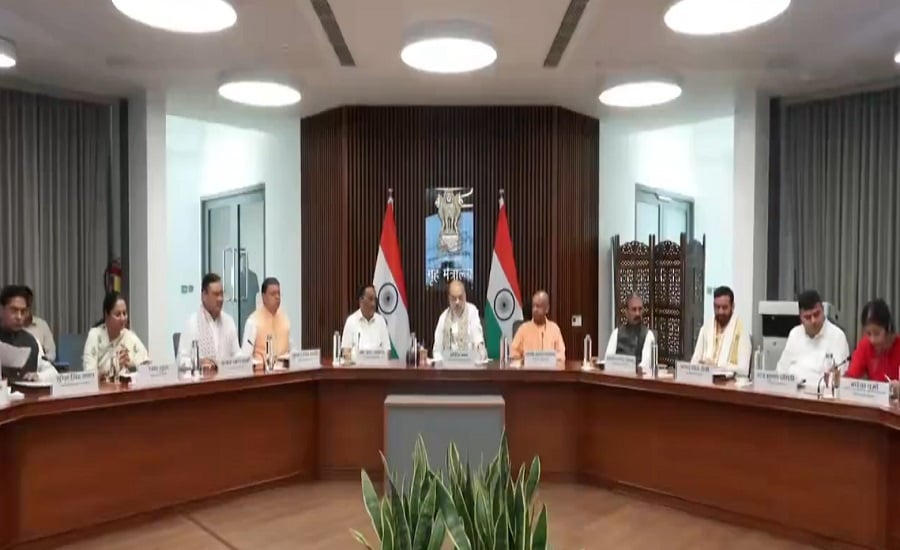
The signing ceremony was attended by Union Minister for Jal Shakti C.R. Patil, Union Home Secretary Govind Mohan, the Secretary of the Department of Water Resources, River Development and Ganga Rejuvenation, and the chief secretaries of the participating states
The meeting lasted around an hour.
Officials described the agreement as a historic milestone in cooperative federalism, highlighting the collective commitment of the Centre and the basin states towards sustainable development and optimal utilisation of water resources in the Yamuna basin.
The Kishau project is expected to play a significant role in addressing the region’s long-term requirements for irrigation, hydropower and drinking and industrial water, while also supporting efforts to rejuvenate the Yamuna.
Read also: DFS Bags First Rajbhasha Kirti Prize for Official Language Work in 2025-26