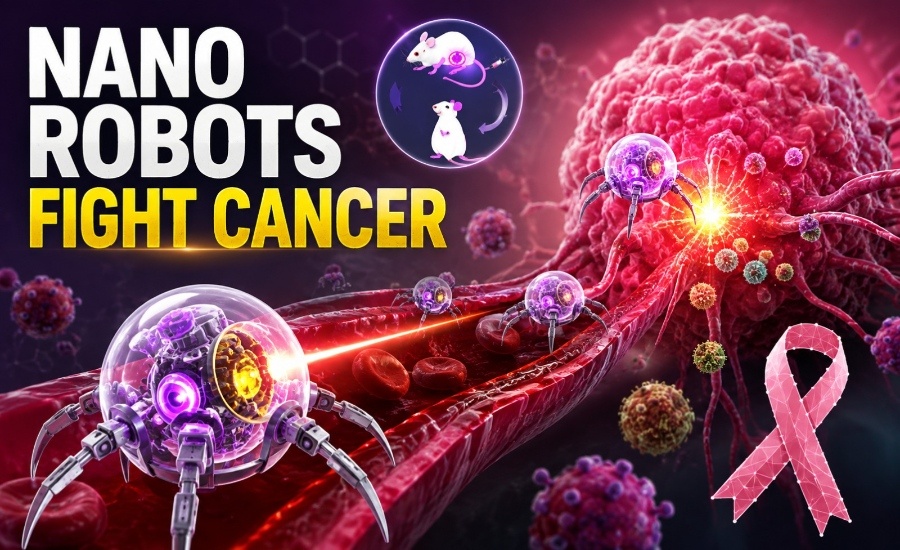
New Delhi: In a breakthrough that could reshape the future of cancer treatment, Indian researchers have developed light-activated multifunctional nanobots capable of targeting breast cancer cells with remarkable precision. The innovation promises a more effective alternative to conventional chemotherapy by reducing damage to healthy tissues while improving treatment accuracy.
The research was carried out by scientists from the Institute of Nano Science and Technology (INST), Mohali, in collaboration with the Bhabha Atomic Research Centre (BARC), Mumbai, and has been published in the journal ACS Applied Materials & Interfaces.
Why This Innovation Matters
Breast cancer remains one of the leading causes of cancer-related deaths among women worldwide. While chemotherapy has saved millions of lives, it often affects healthy cells along with cancerous ones, leading to severe side effects, drug resistance and limited effectiveness.
Most existing nanomedicines depend on passive accumulation inside tumours, making it difficult to reach deeper cancer cells. The newly developed nanobots aim to overcome these limitations through active, externally controlled movement.
How the Nanobots Work
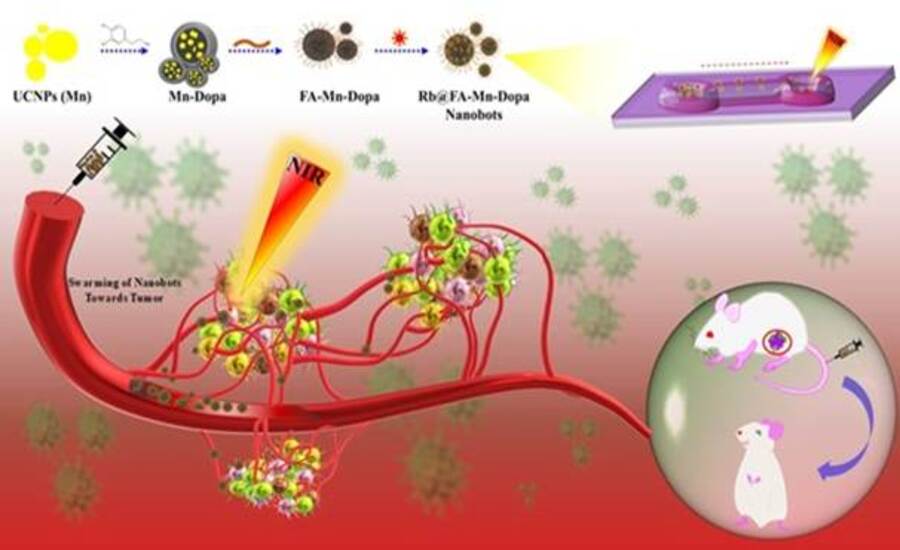
The research team developed upconversion nanoparticle (UCNP)-based nanobots that respond to near-infrared (NIR) light. Unlike ultraviolet or visible light, NIR light penetrates deeper into body tissues with lower risk of damage.
When exposed to a 980 nm NIR laser, the nanobots:
- Move towards the laser source through light-guided movement (phototaxis)
- Generate heat to destroy cancer cells
- Produce reactive oxygen species (ROS) that attack tumour cells
- Target breast cancer cells using folic acid-coated surfaces that recognise folate receptors
This combination enables highly localised treatment while minimising harm to surrounding healthy tissues.
Successful Laboratory and Animal Trials
The researchers demonstrated the effectiveness of the nanobots in both cellular models and breast tumour-bearing mice. The combined photothermal and photodynamic therapies showed significantly better tumour inhibition than either treatment alone.
The project was led by Dr Jiban Jyoti Panda of INST Mohali in collaboration with Dr Santosh K. Gupta of BARC Mumbai. Swapnil Srivastava, the study’s first author, played a key role in developing the nanobot platform, along with researchers Annu Balhara, Pankaj Kharra and Jyoti Yadav.
Towards Precision Cancer Treatment
Scientists believe the technology could become an important step towards precision medicine, where treatments are tailored to attack only diseased cells. Since the nanobots can be controlled externally using light and respond to biological conditions such as pH and glutathione levels, they offer a minimally invasive and highly targeted therapeutic approach.
While further studies and clinical trials will be required before the technology reaches hospitals, the research marks a significant advancement in nanomedicine and cancer therapy.
A Step Forward in India’s Biomedical Research
The development highlights India’s growing capabilities in advanced healthcare research and nanotechnology. If successfully translated into clinical practice, light-responsive nanobots could pave the way for safer, smarter and more effective treatments not only for breast cancer but also for other difficult-to-treat diseases in the future.
Read Also: ₹20,000 Crore Nuclear Energy Mission to Develop Small Modular Reactors, Govt Tells Parliament