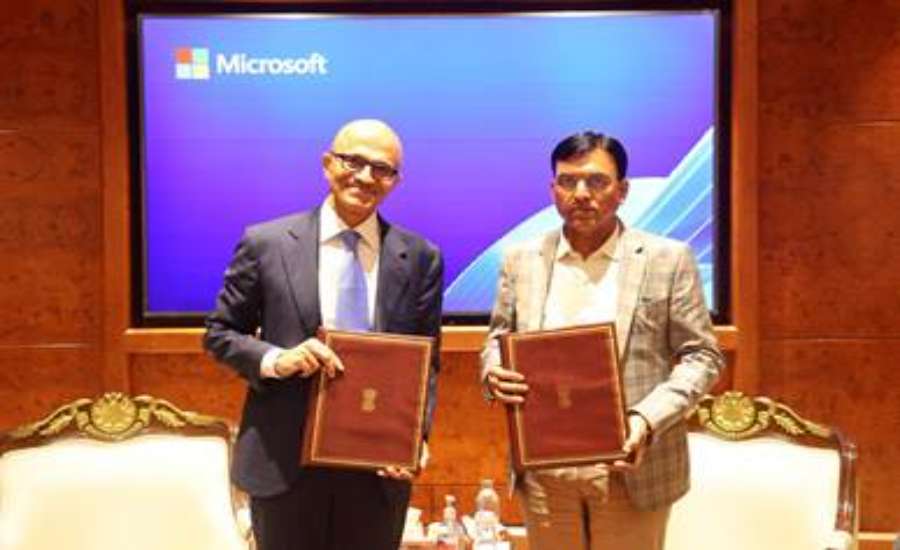
New Delhi: In a major stride toward strengthening India’s workforce ecosystem, the Ministry of Labour & Employment (MoLE) signed a landmark Memorandum of Understanding (MoU) with Microsoft.
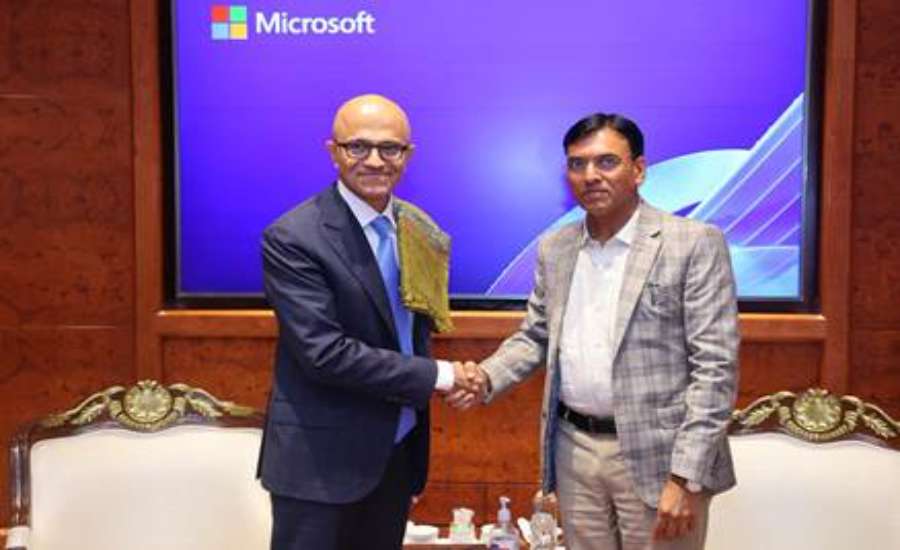
The agreement — signed in the presence of Union Minister Dr. Mansukh Mandaviya and Microsoft CEO Satya Nadella — aims to expand job opportunities, scale up AI-driven skilling, and ready India’s workforce for a rapidly transforming global employment landscape.
The collaboration intends to leverage India’s demographic dividend by equipping millions of young professionals with digital and future-ready skills, enabling them to access formal jobs, both domestically and internationally. Over 15,000 employers and partners from Microsoft’s global network are expected to be onboarded onto the government’s employment portal, broadening formal job access across sectors.
Background of MoLE Microsoft MoU 2025
This MoU builds upon a foundation of earlier collaboration between MoLE and Microsoft. In 2021, they jointly launched DigiSaksham — a digital skills training initiative aimed at increasing the employability of youth across India. Under DigiSaksham, job-seekers registered on the National Career Service (NCS) portal gained free access to training in programming, data analytics, software development fundamentals, digital productivity tools, and more.
Read also: This Young IAS Officer in Maharashtra Uses AI To Improve Nutrition Level of Tribal Students
DigiSaksham targeted millions of registered job-seekers — particularly from rural, semi-urban, and disadvantaged communities — and promised scalable training through self-paced, virtual instructor-led, and instructor-led (in-person) modes via NCS and associated Model Career Centres.
While the initial emphasis was on digitally upskilling Indian youth for domestic employment, the 2025 MoU reflects a broadened vision: aligning India’s workforce with global standards, enabling international mobility, and embedding AI, cloud, cybersecurity and productivity tools at the core of employability.
Key Features of the MoLE Microsoft MoU 2025
Onboarding 15,000+ global employers onto NCS: Microsoft will encourage over 15,000 employers and partners from its extensive international network to join the NCS platform. This promises to significantly broaden the formal job market for Indian job-seekers, especially in high-growth and globally competitive sectors.
Scaling AI-led skilling and workforce readiness: The agreement will expand AI-driven skilling initiatives through DigiSaksham — upgrading earlier digital-skilling efforts to now include AI, cloud, cybersecurity, and modern productivity tools. The aim is to build a workforce that meets global industry needs.
Strengthening employment digital infrastructure: Microsoft expressed its commitment to support India in building an “Employment Digital Public Infrastructure (DPI)” — a scalable, interoperable platform for employment services, job-matching, labour-market intelligence and analytics.
Facilitating international mobility of Indian professionals: The partnership is expected to open pathways for Indian youth and professionals to access international job opportunities, thus enabling cross-border mobility and global career growth.
Importance of MoLE Microsoft MoU 2025
- With a large proportion of its population in the youth age bracket, India stands at a critical juncture: translate this demographic potential into economic growth and global competitiveness. Through this MoU, MoLE and Microsoft aim to do exactly that — by transforming large swathes of youth into digitally-skilled, globally employable professionals. As Dr. Mandaviya noted, the collaboration reflects a “shared ambition to leverage India’s favourable demographic dividend and create a globally competitive, digitally skilled, future-ready workforce.”
- Even as India accelerates its digital transformation, many job-seekers — especially in rural and semi-urban areas — lack access to digital literacy and advanced tech skills. Earlier initiatives under DigiSaksham attempted to bridge this divide; the new MoU deepens that commitment by bringing in advanced AI, cloud and cybersecurity training, bridging the gap between traditional skill sets and future-ready digital demands.
- By integrating 15,000+ global employers onto NCS, the partnership not only expands domestic formal job opportunities, but also paves the way for Indian professionals to explore international job markets. This can significantly enhance India’s global workforce mobility and increase foreign employment, remittance inflows, and global recognition of Indian talent.
- The agreement to build an “Employment DPI” suggests a long-term vision: a modern, tech-enabled infrastructure for labour and employment services. This could transform how job-matching, labour-market analytics, up-skilling, and career guidance are delivered — making them more efficient, transparent, scalable, and globally aligned.
Key Challenges & Considerations for MoLE Microsoft MoU 2025
While the MoU holds immense promise, realization will depend on execution.
Some of the potential challenges:
Effective reach to rural and disadvantaged communities: Ensuring that training is accessible and adopted by youth from socially and economically marginalized backgrounds — particularly those without prior digital exposure — will require on-ground infrastructure, outreach, and support.
Ensuring employment translation: Training alone does not guarantee jobs. Matching skill-sets with real job opportunities, especially in high-growth international sectors, will require proactive employer engagement, placement support, and bridging soft-skill/industry-requirement gaps.
Digital infrastructure and access: Stable internet connectivity, access to computers/devices, and digital literacy remain barriers in many parts of India. Overcoming this digital divide remains critical.
Sustainability and continuous up-skilling: With rapid technological change, one-time training may not suffice. There’s a need for continuous learning, certification renewals, and updates to curricula to stay aligned with evolving global industry standards.
Potential Impact of MoLE Microsoft MoU 2025
If executed effectively, this collaboration could have far-reaching positive outcomes:
Massive upskilling of youth: Millions of young Indians could become proficient in AI, cloud, cybersecurity and other in-demand technologies — making them attractive to both domestic and global employers.
Formalization of jobs: With 15,000+ employers onboard NCS, many informal or unorganized workers could transition into formal jobs — improving job security, social security coverage, and career growth prospects.
Global talent mobility: Indian professionals may gain access to international job markets, enhancing remittance inflows, global exposure, and cross-border career opportunities.
Boost to economy and innovation: A digitally-skilled workforce could fuel growth across sectors — IT, manufacturing, services, export industries — and also support innovation, startups, and global competitiveness of Indian businesses.
Modernized labour ecosystem: With a robust digital employment infrastructure (Employment DPI), career services (job-matching, counselling), labour-market analytics, and training will become more efficient, transparent and inclusive.