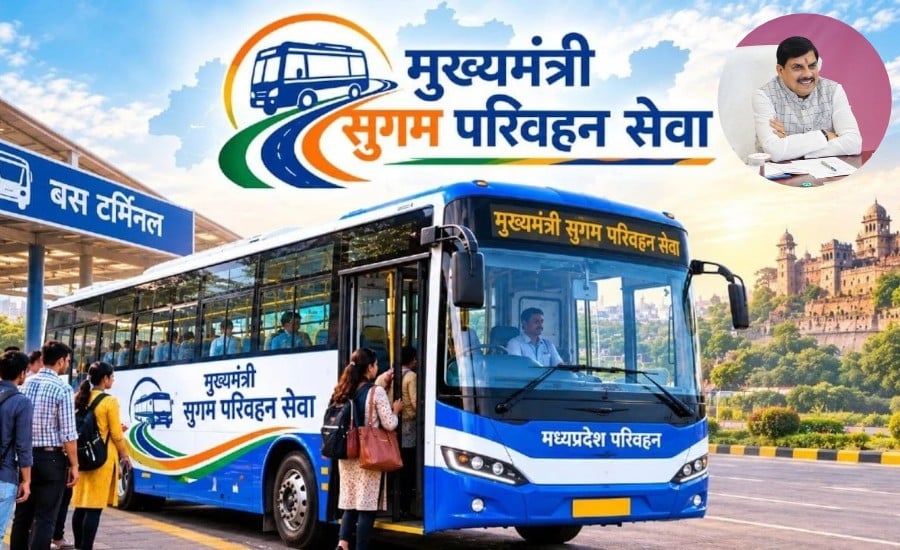
Bhopal: Madhya Pradesh will launch the Chief Minister Sugam Parivahan Seva on September 25, with Chief Minister Mohan Yadav scheduled to flag off 351 buses at a state-level programme at BHEL Dussehra Maidan in Bhopal.
Around 1,500 buses are expected to begin operations in the initial phase, covering both intercity and intracity routes. The service is aimed at expanding public bus connectivity across the state and providing structured passenger transport services.
351 Buses to Start From Seven Cities
The 351 buses being flagged off will comprise 120 intercity buses and 231 intracity buses.
Read Also: MP CM Mohan Yadav Seeks Tech Investments in Bengaluru as Companies Discuss ₹500 Crore-Plus Proposals
The city-wise allocation is:
- Indore: 145 buses — 50 intercity and 95 intracity
- Bhopal: 106 buses — 23 intercity and 83 intracity
- Jabalpur: 67 buses — 14 intercity and 53 intracity
- Rewa: 18 intercity buses
- Dewas: 10 intercity buses
- Katni: 3 intercity buses
- Bhind: 2 intercity buses
The first-phase rollout will therefore cover seven major cities.
15,000-Bus Target by 2031
The state government has set a longer-term target of operating more than 15,000 modern public buses by 2031 and connecting 75% of gram panchayats with bus services.
The plan also envisages redevelopment or modernisation of more than 180 bus stands, terminals and depots. The government has stated that the expanded network is intended to serve more than 30 lakh passengers daily. These are programme targets rather than figures representing the September 25 launch.
ITMS to Track Bus Operations
The new service will use an Intelligent Transport Management System (ITMS) for monitoring bus operations, including vehicle locations and operational schedules.
Command-and-control centres have been established through Madhya Pradesh Passenger Transport and Infrastructure Limited (MPYPIL) and its seven subsidiary companies. The buses are also being equipped with CCTV cameras, panic buttons and Vehicle Location Tracking Devices (VLTD).
The system is intended to provide real-time monitoring and support passenger safety, including measures for women and children.
Focus on Cleaner Public Transport
The state government has also said that the programme will give emphasis to clean fuels and electric buses as part of its public transport plans.
The service will involve private operators under a public-private partnership (PPP) model, with the government planning contractual and incentive mechanisms for their participation.
The September 25 launch marks the first phase of the state’s planned expansion of organised public bus services, with further routes and buses expected to be added under the longer-term programme.