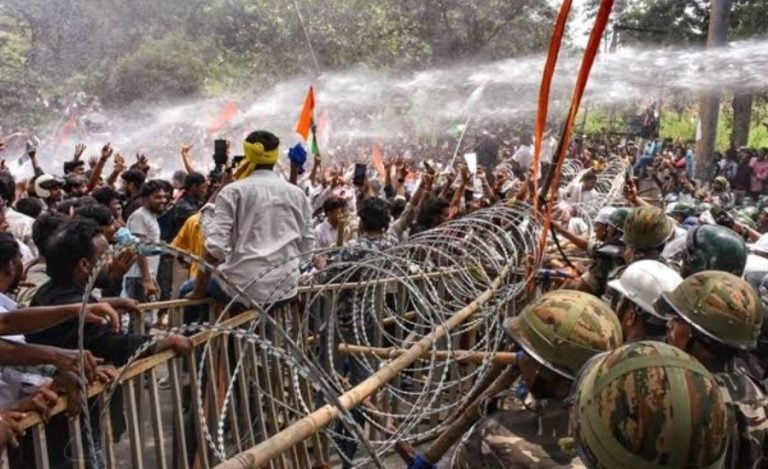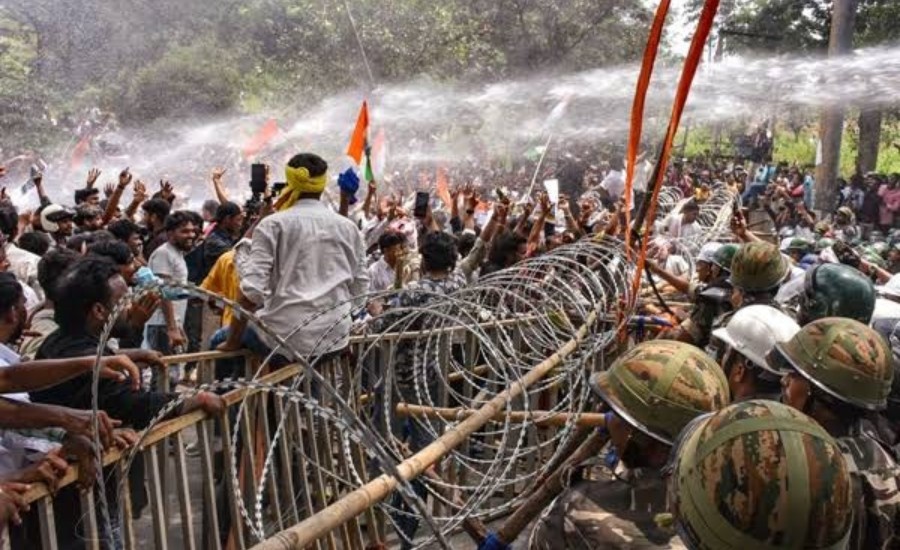
Mumbai: Peaceful protest is a fundamental pillar of democracy, enabling citizens to question the government, express dissent and demand change. However, the right to protest also comes with the responsibility to maintain peace, respect the law and protect public and private property. Former Maharashtra Director General of Police (DGP) Praveen Dixit, a 1977-batch Indian Police Service (IPS) officer of the Maharashtra cadre, and other former senior police officers have highlighted the need to balance democratic freedom with public safety and accountability, particularly as young people increasingly raise concerns over unemployment, education, healthcare, climate change and rising prices.
According to Dixit, political parties and organisations have every right to question the government and raise public grievances. The identity of the protest organiser is secondary; what matters is whether the demonstration remains peaceful and lawful. At the same time, the process of obtaining permission and complying with administrative conditions should not overshadow the democratic purpose of peaceful dissent.
Peaceful Protest Is Fundamental to Democracy
According to Dixit, political parties and organisations have every right to question the government, express grievances and demand change. The identity of the organiser is secondary; the key consideration is whether a protest remains peaceful and lawful.
However, organising demonstrations can be challenging due to police permissions, administrative requirements and the need to maintain public order. Traditionally, organisers have been required to seek permission from local police, with conditions potentially covering the venue, expected turnout and arrangements to maintain peace.
Dixit emphasised that these requirements should not overshadow the democratic purpose of peaceful dissent. Organisers must provide written undertakings where required and ensure that their actions match their assurances.
They are also expected to take steps to prevent violence, arson, looting, attacks on police personnel and journalists, and damage to public or private property.
Read also: Mumbai Protest Case: High Court Seeks Maharashtra’s Response to Detention Plea
Organisers Must Be Held Accountable for Violence
Dixit said that the right to protest cannot be treated as a licence to intimidate others, destroy property or engage in unlawful activities. When demonstrations turn violent, the state has a responsibility to protect citizens and safeguard public and private property.
Violations must be addressed according to law, with responsibility established through proper investigation rather than indiscriminate blame. Organisers cannot simply claim ignorance of unlawful acts or avoid responsibility for failing to control participants.
Written undertakings, he noted, should not be treated as mere formalities. Organisers must demonstrate that they are taking practical steps to maintain discipline and prevent demonstrations from turning violent.
The broader principle is that democratic freedom comes with responsibility. Democracies across the world recognise the right to peaceful protest, not violence, arson, stone-pelting or destruction in its name. Public figures, including French President Emmanuel Macron and Italian Prime Minister Giorgia Meloni, have also condemned violence associated with public disorder in their respective countries.
Praveen Dixit’s Advice to Young People
Dixit encouraged young people aspiring to enter public life to express dissent fearlessly while acting responsibly. He said they should question authority, speak against injustice and demand change while respecting the law and the rights of others.
According to him, leadership is not simply about gathering crowds or attracting attention on social media. It also involves persuasion, discipline, maintaining peace and accepting responsibility for one’s actions.
He added that young people should not be discouraged from raising their voices because organising a protest involves administrative hurdles. The challenge is to ensure that the exercise of this democratic right remains peaceful, lawful and mindful of the public’s interests.
As Dixit emphasised, the strength of a protest lies not in the damage it causes, but in the legitimacy of its cause, the discipline of its participants and the responsibility of its leaders.
Julio Ribeiro Calls for Responsible Conduct by Young Protesters
Julio Ribeiro, a retired 1953-batch Indian Police Service (IPS) officer and former Mumbai police commissioner, urged young protesters to act responsibly and respect the law.
At the age of 98, Ribeiro said young people should ensure their demonstrations do not cause inconvenience to ordinary citizens and should remain within the framework of the law.
His message underlines the importance of balancing the right to express dissent with the everyday needs and rights of the wider public.
D Sivanandhan Highlights Issues Raised by Gen Z
D Sivanandhan, a retired 1976-batch Indian Police Service (IPS) officer, former Mumbai Police Commissioner and Maharashtra DGP, praised Gen Z for being informed, articulate and aware of the challenges facing society.
He highlighted issues such as climate change, unemployment, rising prices and the disruptive impact of Artificial Intelligence (AI). He also commended young people for raising concerns about the National Eligibility-cum-Entrance Test (NEET), school infrastructure, health, hygiene and education.
However, Sivanandhan observed that legal restrictions, administrative hurdles and law-and-order concerns have made organising protests more difficult.
He said young people must understand that while protest is a democratic right, it also carries responsibilities. He urged them to challenge injustice fearlessly, remain within the law, uphold the Constitution and ensure that legitimate causes do not descend into disorder.
YP Singh Questions the Need for Police Permission
YP Singh, a 1985-batch Indian Police Service (IPS) officer of the Maharashtra cadre, who is now a lawyer, argued that the constitutionally guaranteed right to protest should not be unnecessarily restricted by police permission requirements.
He maintained that for peaceful demonstrations in public spaces or public gardens that do not obstruct traffic, informing the police should be sufficient.
Singh also identified political interference and what he described as police overzealousness in attempting to please political leaders as two major challenges. According to him, these factors can undermine the fundamental right to protest, which he described as a basic principle of the Constitution.
His perspective highlights the need to ensure that administrative procedures do not become unnecessary barriers to peaceful democratic participation.
Balancing Democratic Dissent with Public Order
The views of the former police officers and the former IPS officer-turned-lawyer highlight the different challenges involved in protecting the right to protest. While peaceful demonstrations allow citizens to question authority and demand accountability, organisers must also consider public safety, lawful conduct and the rights of other citizens.
The discussion points to the importance of responsible protest management, fair enforcement of the law and respect for constitutional freedoms. Young people should be able to raise their voices against injustice without fear, while authorities must ensure that lawful dissent is not unnecessarily restricted.
Ultimately, peaceful protest and public order need not be opposing goals. Responsible organisers, proportionate law enforcement and respect for democratic rights can help ensure that demonstrations remain effective, peaceful and lawful.