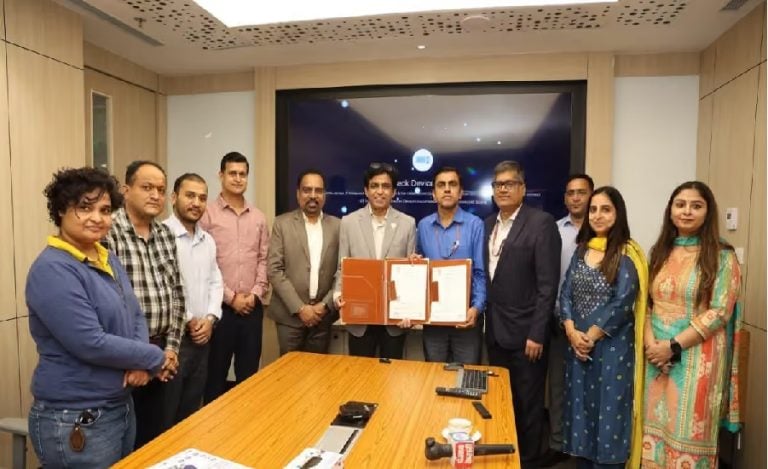
New Delhi: NTPC Limited has signed a 25-year Power Purchase Agreement (PPA) with US-based 247Solar to deploy its advanced solar thermal technology at Bhadla Solar Park in Rajasthan. The approximately 1 MW hybrid project marks the first commercial deployment of 247Solar’s technology and aims to provide reliable, round-the-clock clean electricity while reducing dependence on coal-based power.
India’s largest power utility will use the project to evaluate whether advanced solar thermal technology can address the intermittency of conventional solar and wind energy. The initiative comes as India’s electricity demand continues to rise, increasing the need for reliable, affordable and low-emission power sources.
According to 247Solar, the agreement follows several years of due diligence and represents an important step towards bringing its technology into wider commercial use in India.
NTPC and 247Solar to Develop Hybrid Solar Project at Bhadla
The proposed installation will have a capacity of approximately 1 MW and combine a 400 kW modular 247Solar Plant with several hundred kilowatts of photovoltaic (PV) solar capacity.
The project will be located at Bhadla Solar Park in Rajasthan, one of the world’s largest solar energy hubs. The site was selected because of its abundant sunshine and convenient grid interconnection for supplying electricity.
Rajasthan Renewable Energy Corporation Limited (RRECL) is supporting the project and has approved preliminary studies, site surveys and structural tests.
The project will allow NTPC to assess the performance of the technology under Indian operating conditions. If the demonstration proves successful, it could pave the way for wider deployment across India and provide an additional option for meeting the country’s growing electricity requirements.
How 247Solar’s Advanced Solar Thermal Technology Works
247Solar’s technology builds on the principles of concentrated solar power (CSP), using mirrors to concentrate sunlight onto a tower and generate high-temperature heat. The company says its system improves on conventional CSP designs through a simpler, modular and scalable configuration.
The concentrated sunlight heats ceramic pellets that store thermal energy for up to 20 hours. Hot air from the thermal storage system drives turbines to generate electricity, allowing the plant to continue producing power after sunset and during periods when sunlight is unavailable.
Under normal operating conditions, the turbines can generate electricity without combustion by using the stored solar heat. This capability helps address one of the major challenges associated with conventional solar and wind power: fluctuations in electricity generation depending on weather conditions and the time of day.
If stored heat becomes insufficient during extended cloudy periods or overnight demand, the turbines can also operate using liquid or gaseous fuels, including natural gas, green hydrogen or diesel. This fuel flexibility is designed to help maintain a steady electricity supply when solar energy and thermal storage alone cannot meet demand.
In addition to electricity generation, the technology can provide heat at temperatures of up to 1,000°C, making it potentially suitable for industrial processes that require high-temperature heat.
Key Benefits of 247Solar Technology Over Traditional CSP
247Solar highlights several potential advantages of its system compared with conventional concentrated solar power technologies.
- Lower costs: The company aims to reduce overall project and operating costs through a simplified system design.
- Faster deployment: Its modular configuration is intended to accelerate installation and bring projects online more quickly.
- Simpler design and operation: The technology is designed to simplify system architecture and day-to-day operations.
- High reliability: Thermal energy storage and flexible fuel options are intended to support a more consistent power supply.
- Grid independence: The company identifies the system’s potential to serve industrial facilities and infrastructure in weak-grid or off-grid locations.
- Cost-effective baseload power: The combination of stored solar heat and backup fuel capability aims to provide electricity beyond daylight hours.
- Industrial heat supply: The system can deliver heat of up to 1,000°C, potentially supporting energy-intensive industrial applications.
These are benefits claimed by the company and will need to be assessed through actual project performance and operating results.
Why the NTPC-247Solar Agreement Matters for India’s Energy Transition
India has been expanding renewable energy capacity while continuing to add conventional power generation to meet rising electricity demand. Solar photovoltaic plants produce less or no electricity after sunset, while wind generation can vary with weather conditions. These fluctuations create challenges for maintaining a reliable electricity supply.
The NTPC-247Solar project will test whether solar thermal energy storage, combined with flexible turbine operations, can help bridge these gaps and reduce the need for coal-based generation.
If successful, the technology could offer an additional solution for supplying dependable electricity to industrial and infrastructure facilities, particularly where reliable power is essential. Its ability to provide both electricity and high-temperature heat could also expand its potential applications beyond conventional power generation.
Rajasthan could emerge as an important testing ground for the technology, with the results potentially influencing future deployment decisions in India and other countries facing similar energy reliability challenges.
247Solar CEO Highlights India’s Growing Clean Energy Demand
Bruce Anderson, founder and CEO of 247Solar, said the technology addresses the intermittency of renewable energy while offering an alternative to costly and polluting coal-based power generation.
Anderson highlighted India’s rapidly growing demand for clean, reliable and affordable electricity, expressing confidence that the company’s technology could help meet these requirements.
He also said that, following several years of detailed due diligence, NTPC’s involvement would help bring the technology into wider use. The company expects the project’s results to attract interest from other markets, particularly those with industrial power requirements and limited access to strong electricity grids.
About NTPC Limited
NTPC Limited, formerly known as National Thermal Power Corporation, is a Government of India-owned power generation company and the country’s largest power utility. It operates under the Ministry of Power and has a diversified energy portfolio spanning thermal, hydro and renewable power. NTPC is expanding its clean energy initiatives as part of its efforts to support India’s growing electricity demand and energy transition.
Read also: NTPC Bongaigaon Signs MoA to Establish ₹13.28 Crore Archery Academy in Mizoram Under CSR Initiative