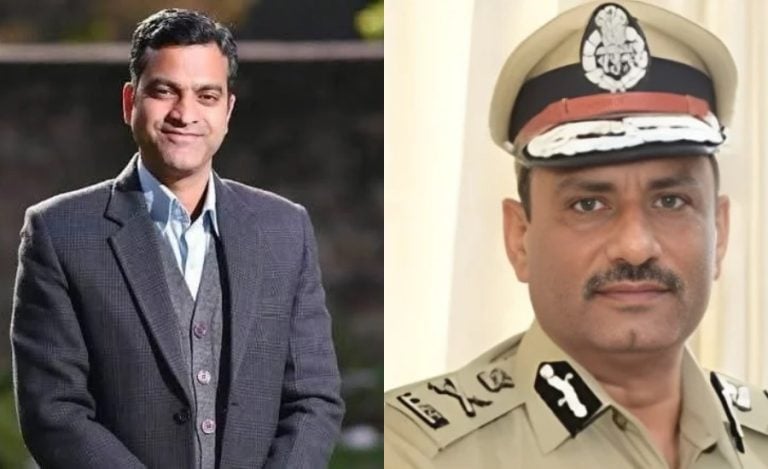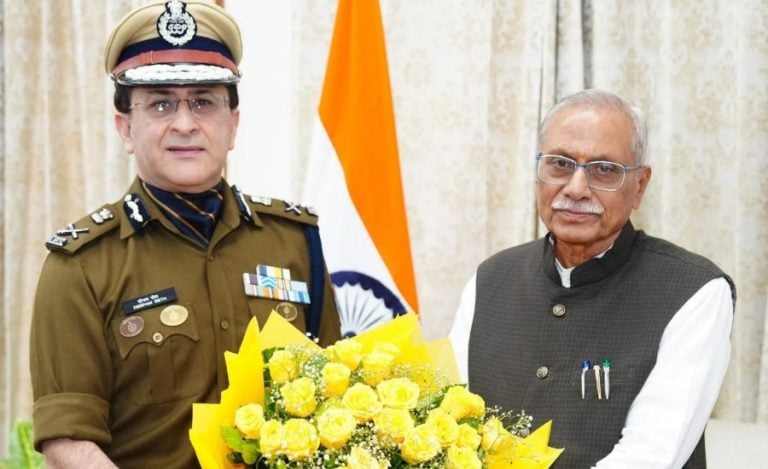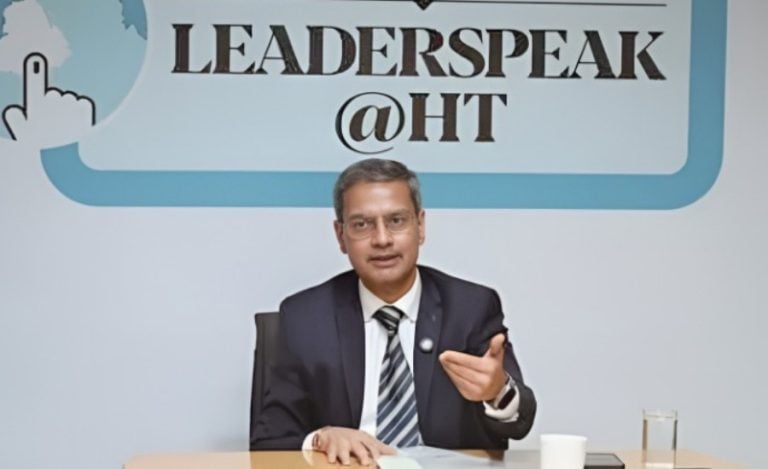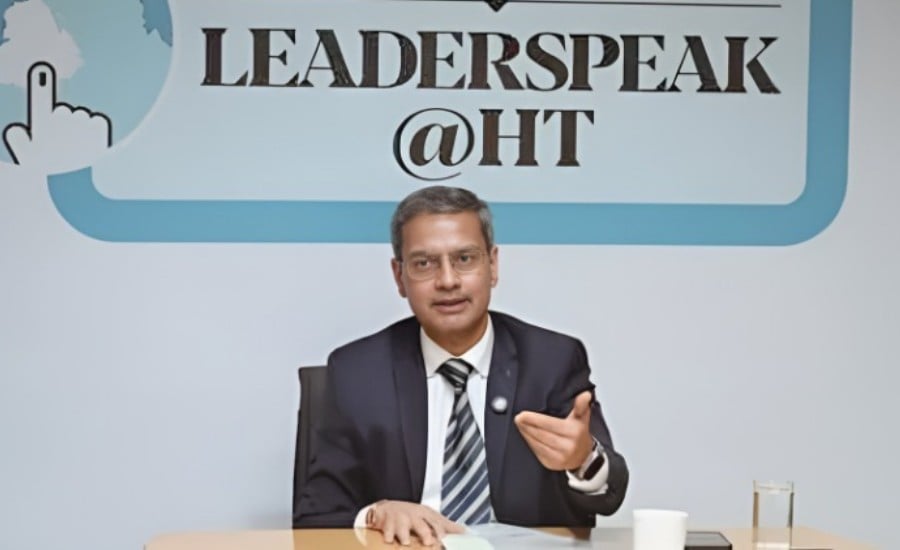
Chandigarh: Punjab Director General of Police (DGP) Gaurav Yadav, a 1992-batch IPS officer of the Punjab cadre, has asserted that the state police is operating without political interference in its campaign against drug trafficking, organised crime and terror networks, saying Chief Minister Bhagwant Mann has given the force the freedom to tackle law and order challenges.
In an interaction with media in Chandigarh on Monday, Yadav said the police was working professionally and coordinating with central agencies to maintain security in the border state.
“My force is working professionally, without any political meddling, and in tandem with central agencies to maintain the hard-won peace in Punjab,” he said.
“The chief minister’s mandate to us is clear. We will never allow the return of dark days,” he added, referring to the period of extremist violence in Punjab during the 1990s.
His remarks come amid criticism from opposition parties over the state’s law and order situation ahead of the next Assembly elections.
Punjab DGP Cites Crime Rate Below National Average
Defending the police’s performance, Yadav referred to National Crime Records Bureau (NCRB) figures and state crime statistics to highlight Punjab’s crime rate in comparison with the national average.
Read Also: Who Is Gaurav Yadav, Appointed Regular DGP of Punjab? UPSC Panel, 2-Year Tenure and Career Profile
According to the figures cited by him:
- Punjab’s crime rate: 153.8 per lakh population.
- National average: 252.3 per lakh population.
- IPC crimes: An 8% decline when comparing the 2022–2026 period with 2017–2021, as stated by the DGP.
- Chargesheeting rate: 82.5% in Punjab, according to his separate interaction with the newspaper.
Yadav also compared crime statistics from Punjab, Haryana and Delhi, arguing that several indicators showed a lower incidence of violent crime in Punjab.
“Professional policing should be judged by facts, not propaganda,” he said.
Yudh Nashian Virudh: Punjab Police Reports Large-Scale Drug Enforcement
Highlighting the state government’s anti-narcotics campaign, Yudh Nashian Virudh, launched on March 1, 2025, Yadav said sustained enforcement had helped disrupt drug supply networks.
He cited the following figures from the campaign:
- More than 88,000 arrests in drug-related cases.
- More than 44,000 kg of heroin recovered, according to the figures quoted in the interaction.
- Approximately 60% share of India’s heroin seizures attributed to Punjab.
- A 90% conviction rate in cases registered under the Narcotic Drugs and Psychotropic Substances (NDPS) Act, compared with 54% in Haryana.
In a separate interview, Yadav gave a more detailed account of the campaign, stating that 88,900 arrests had been made and 44,424 kg of heroin recovered.
He also said heroin seizures had increased 3.2 times, recovery of drug money had risen three times and seizures of synthetic drugs, including ICE, had increased 8.5 times.
The DGP credited the Anti-Narcotics Task Force (ANTF) with strengthening investigations and improving conviction outcomes in drug-related cases.
Organised Crime-Related Murders and Firing Incidents Decline
Yadav also presented figures on gangster-related violence, claiming a decline in organised crime incidents during 2026.
According to the statistics cited by him:
- Organised crime-related murders: Declined from 43 in the previous year to 24 in 2026.
- Firing incidents: Declined from 207 in the previous year to 128 in 2026.
He attributed the decline to sustained anti-gangster operations and cooperation with international law enforcement agencies.
The DGP specifically referred to the US Federal Bureau of Investigation’s (FBI) Operation Hard Ball, which he said had dealt a major blow to gangster networks.
Pakistan-Sponsored Narco-Terrorism and Drone Technology Remain Challenges
While defending the police’s performance, Yadav acknowledged that Punjab continued to face security challenges because of its geographical position along the international border with Pakistan.
He identified several emerging concerns:
- Narco-terrorism: Alleged attempts to use drug trafficking networks to support subversive activities.
- Drone-based smuggling: Rapid technological changes making cross-border surveillance and interception more challenging.
- Social media recruitment: Online platforms being used to approach young people for subversive activities through financial incentives.
- Pharmaceutical drug diversion: Habit-forming medicines manufactured in other states entering Punjab through supply networks.
Yadav said young people were sometimes offered amounts as low as ₹5,000 to participate in activities linked to subversive networks.
He also flagged the movement of habit-forming pharmaceutical drugs manufactured in Himachal Pradesh, Haryana, Uttar Pradesh and Gujarat into Punjab.
Calling for stronger inter-state coordination, he said regulatory agencies and law enforcement authorities needed to work together to prevent the diversion of such medicines.
Punjab Police Calls for Continued Coordination With Central Agencies
Yadav emphasised that maintaining security in Punjab required coordination between state police units and central investigative and security agencies.
He maintained that the fight against narcotics, organised crime and terror networks would require sustained enforcement, intelligence-sharing and professional investigation.
His remarks also come amid an ongoing political debate over law and order in Punjab, with the state government and opposition parties presenting different assessments of the security situation.
The DGP said the police would continue its operations against drug traffickers and gangster networks, asserting that the force’s work should be evaluated through crime data and enforcement outcomes.
Read Also: Punjab Empowers Six Senior IPS Officers to Exercise Preventive-Detention Powers Under PIT-NDPS Act