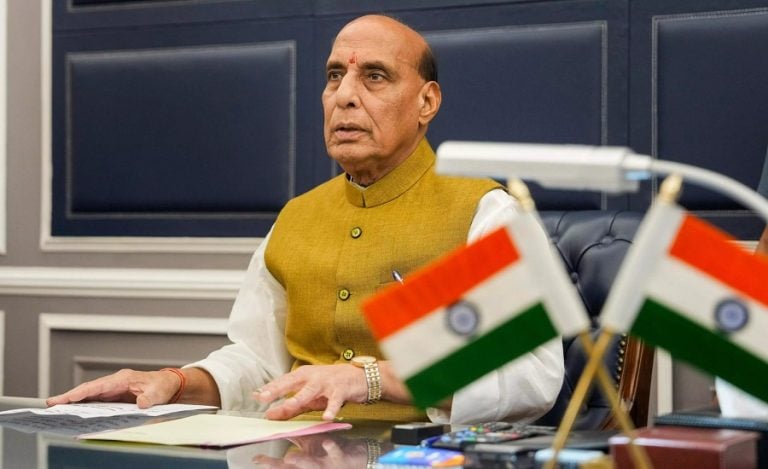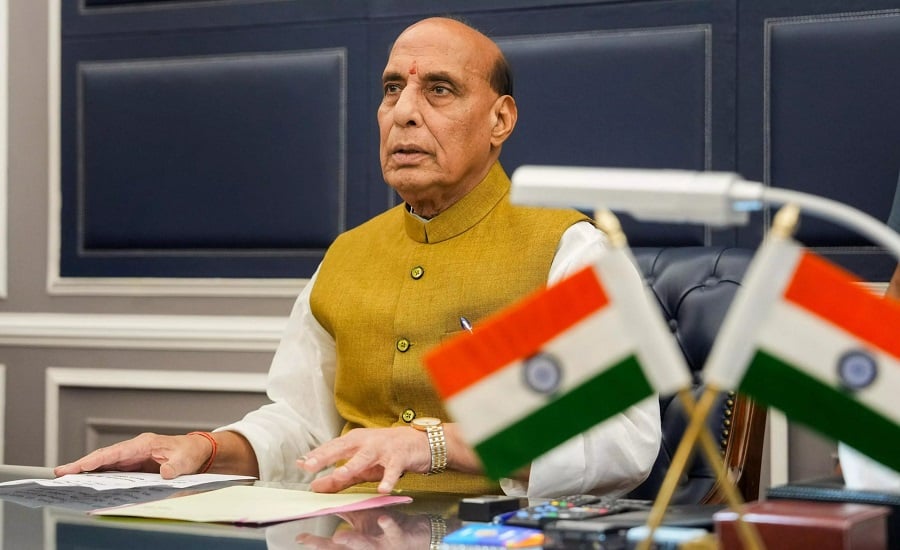
Cebu: India’s Defence Minister Rajnath Singh will lead the Indian delegation at the 13th ASEAN Defence Ministers’ Meeting-Plus (ADMM-Plus) in Cebu, Philippines, on October 28–29, 2026.
The meeting will bring together defence leaders from Southeast Asian nations and their dialogue partners to discuss regional and international security issues. Singh is expected to highlight India’s commitment to peace, stability and stronger defence cooperation in the Indo-Pacific region.
ADMM-Plus 2026: Rajnath Singh To Discuss Regional Security Issues
According to the Ministry of Defence, Rajnath Singh will address the meeting on the theme, “Exchange of Views on Regional and International Security Issues.”
Read also: How This Indian Indo-Pacific Strategy Will Protect The Country Amid China’s Rising Influence
The discussions are expected to cover shared security concerns and ways to improve cooperation among participating countries.
India’s participation reflects its focus on strengthening relations with Southeast Asian nations and supporting peace and stability across the Indo-Pacific.
India To Strengthen Defence Partnerships With Other Nations
During his visit to the Philippines, Rajnath Singh is scheduled to hold bilateral meetings with defence ministers from participating countries.
These discussions will focus on reviewing existing defence ties and exploring new opportunities for cooperation. The meetings may also help identify areas for stronger strategic partnerships, military cooperation and closer communication on regional security challenges.
What Is ADMM-Plus
The ASEAN Defence Ministers’ Meeting-Plus is a major regional platform for defence discussions and cooperation.
It brings together the defence ministers of ASEAN member states and eight dialogue partners: India, the United States, China, Russia, Japan, South Korea, Australia and New Zealand. The platform provides an opportunity for participating countries to discuss common security concerns and work together on regional challenges.
Philippines To Host The 2026 ADMM-Plus 2026
The Philippines is chairing ADMM-Plus in 2026 and will host the meeting in Cebu on October 28–29.
The event is an important opportunity for participating countries to strengthen dialogue and build closer defence relationships. As regional security challenges become more complex, such meetings can help countries improve coordination and explore peaceful ways to address shared concerns.
India’s Act East Policy And ASEAN Relations
India’s participation in ADMM-Plus supports its Act East Policy, which aims to strengthen engagement with Southeast Asian countries and the wider Indo-Pacific region.
India became an ASEAN dialogue partner in 1992. The first ADMM-Plus meeting took place in Hanoi, Vietnam, in October 2010.
Since 2017, defence ministers have met annually under this framework to strengthen cooperation between ASEAN members and their dialogue partners. India is also co-chairing the Experts’ Working Group on Counter-Terrorism with Malaysia for the 2024–2027 cycle.
Why Is The ADMM-Plus 2026 Meeting Important For India
The meeting gives India an opportunity to discuss regional security priorities directly with defence leaders from several important countries.
It also supports India’s efforts to build strategic partnerships, improve defence cooperation and contribute to stability in the Indo-Pacific. Closer cooperation through regional platforms can help countries address challenges such as terrorism and other shared security concerns through dialogue and coordinated action.
Read also: Explained: Why Great Nicobar Airport Project Is So Crucial for India in the Indo-Pacific Region
FAQs
The main purpose of ADMM-Plus is to strengthen defence cooperation and discuss regional and international security issues among ASEAN member states and their dialogue partners.
Rajnath Singh will lead the Indian delegation at the 13th ADMM-Plus meeting in Cebu, Philippines, on October 28–29, 2026.
ADMM-Plus helps India strengthen defence partnerships, discuss shared security concerns and support peace and stability in the Indo-Pacific region under its Act East Policy.