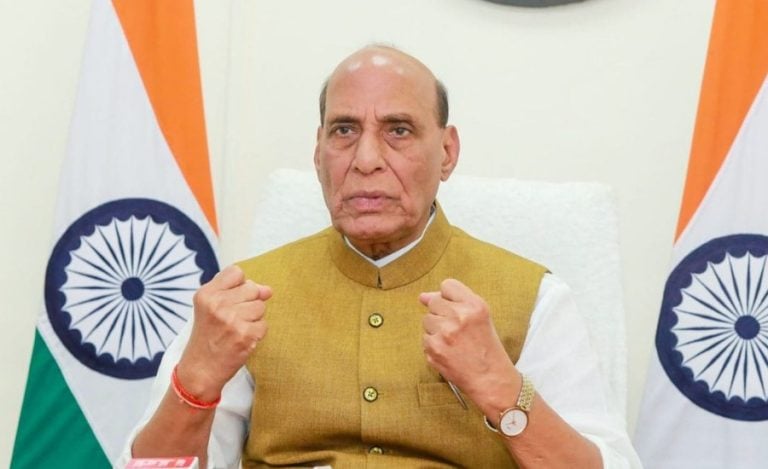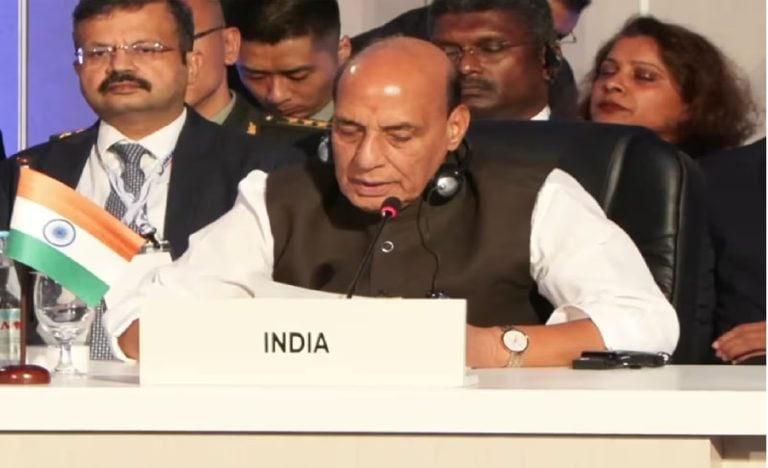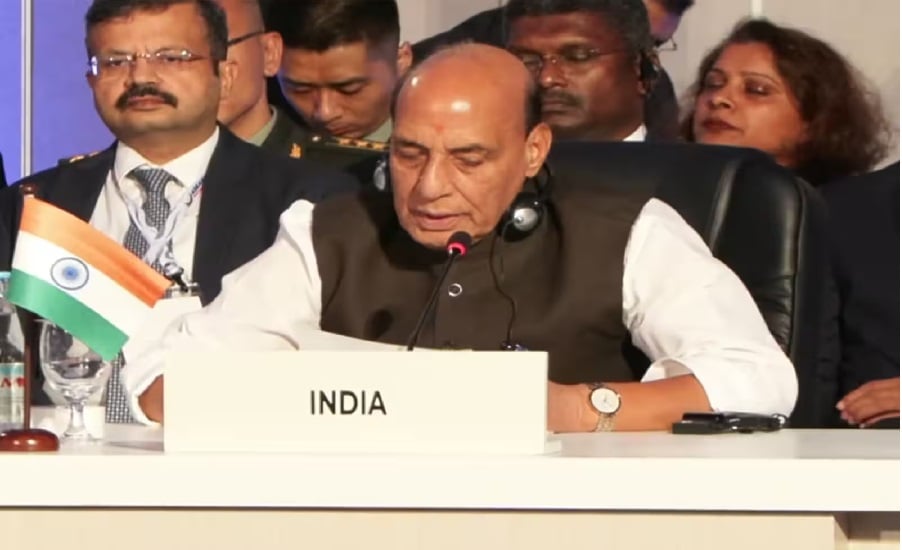
New Delhi: India is ready to share its practical counter-terrorism experience with regional partners to strengthen collective security, Defence Minister Rajnath Singh said while addressing the 13th ASEAN Defence Ministers’ Meeting-Plus (ADMM-Plus) in Cebu, Philippines, on October 29, 2026. He reaffirmed India’s commitment to eradicating terrorism in all its forms and strengthening cooperation among Indo-Pacific countries through joint exercises, intelligence sharing and capacity-building programmes.
Singh said India’s counter-terrorism expertise had been shaped by decades of confronting complex cross-border security challenges. Describing it as experience gained on the ground rather than theoretical knowledge, he said India’s operational approach had been tested and refined through real-world engagements.
He cited Operation Sindoor as a demonstration of India’s proactive, battle-tested doctrine, stating that the operation dismantled terrorist infrastructure and reinforced India’s firm position against state-sponsored terrorism.
India Ready to Share Counter-Terrorism Expertise
Singh emphasised that terrorism does not respect national borders and requires coordinated responses from countries across the region. India, he said, was prepared to share its operational experience with ADMM-Plus partners through joint military exercises, training and capacity-building initiatives, as well as stronger intelligence-sharing mechanisms.
Counter-terrorism remains an important area of cooperation under the ADMM-Plus framework. India and Malaysia are co-chairing the Experts’ Working Group on Counter-Terrorism for the 2024–2027 cycle, providing a platform to strengthen cooperation and develop practical approaches to shared security threats.
The Defence Minister’s remarks underlined New Delhi’s position that regional security depends on sustained cooperation, information exchange and the ability of partner countries to respond collectively to terrorism and other transnational threats.
Read also: ADMM-Plus 2026: Rajnath Singh To Discuss Regional Security In Philippines
India Reaffirms Commitment to ASEAN Centrality and Indo-Pacific Stability
Singh reiterated India’s support for ASEAN centrality and its vision of a secure, open, inclusive, resilient and rules-based Indo-Pacific. He said peace and stability in the region required collective commitment, mutual trust and practical cooperation.
India’s engagement with ASEAN, he added, was based on long-term shared interests and mutual respect. He also recalled the second ASEAN-India Defence Ministers’ Informal Meeting, held in Kuala Lumpur in October 2025, which reaffirmed the commitment to strengthening the defence and security components of the ASEAN-India Comprehensive Strategic Partnership.
The cooperation is also guided by the ASEAN-India Plan of Action for 2026–2030, which provides a framework for advancing engagement across areas of common interest.
Referring to the theme of the 13th ADMM-Plus meeting, ‘Navigating Our Future, Together’, Singh said it reflected India’s foreign and defence policy outlook as well as its civilisational ethos of ‘Sarve Bhavantu Sukhinah’, meaning “May all beings be happy”.
He said the theme highlighted the importance of solidarity and the collective ability to use the region’s geographical, economic and strategic diversity to address shared challenges. India, he added, supported an international system based on mutual trust, cooperation and collective responsibility.
Maritime Security a Key Pillar of India-ASEAN Cooperation
Singh identified maritime cooperation as a central element of India’s engagement with ASEAN in 2026. He highlighted the designation of 2026 as the ASEAN-India Year of Maritime Cooperation and the conduct of the second ASEAN-India Maritime Exercise.
He said India’s commitment to maritime security was backed by a long operational record, including the Indian Navy’s uninterrupted presence in volatile maritime corridors such as the Gulf of Aden since 2008.
According to Singh, Indian naval deployments have helped escort thousands of merchant vessels and thwart dozens of hijacking attempts on the high seas. These efforts, he said, have supported the safety of commercial shipping regardless of the vessels’ flags or nationalities.
He described the protection of commercial shipping as an important responsibility amid growing transnational threats to international trade routes. India, he said, would continue to maintain an operational presence and work with international partners to safeguard maritime security.
Singh reiterated that India intended to remain a reliable net security provider in the Indian Ocean Region and the wider Indo-Pacific.
Freedom of Navigation Not Directed Against Any Country
The Defence Minister stressed that maritime security was closely linked to the economic well-being and prosperity of countries across the region. India’s emphasis on international law, including the United Nations Convention on the Law of the Sea (UNCLOS), and its advocacy of freedom of navigation and overflight, he said, were not directed against any particular country.
Instead, these principles were intended to protect the shared interests of regional stakeholders that depend on open sea lanes and stable maritime governance.
Singh also highlighted areas in which India was ready to strengthen cooperation with ASEAN partners, including maritime safety, search and rescue, humanitarian assistance, professional exchanges and capacity building.
He called for practical action and international cooperation to address emerging threats to shipping and ensure the continued security of vital sea lines of communication.
Rajnath Singh Proposes Defence ‘Youth Bridge’ With ASEAN
In a proposal aimed at strengthening long-term regional ties, Singh called for the establishment of a dedicated defence ‘Youth Bridge’ to deepen connectivity between India and ASEAN.
The proposed initiative would focus on institutional and people-to-people links, digital innovation and capacity building, in line with ADMM-Plus initiatives. It would also seek to create more opportunities for young people to contribute to regional peace and security.
Singh said the shared demographic profile and aspirations of India and ASEAN’s young populations provided a strong foundation for closer cooperation. Greater youth engagement, he added, could help build a more peaceful, resilient and prosperous Indo-Pacific.
The proposal aligns with the broader ‘Youth, Peace and Security’ agenda, which emphasises the role of young people in preventing conflict, strengthening resilience and supporting lasting peace.
India Calls for Collective Responsibility in Regional Security
Singh’s address at the 13th ADMM-Plus meeting brought together India’s priorities on counter-terrorism, maritime security, ASEAN engagement and youth cooperation.
His remarks highlighted New Delhi’s readiness to share its operational experience with regional partners while strengthening practical mechanisms for intelligence exchange, joint exercises and capacity building.
By combining counter-terrorism cooperation with maritime security and people-to-people engagement, India is seeking to reinforce its partnerships across the Indo-Pacific and support a regional order founded on international law, cooperation and collective responsibility.
Read also: Rajnath Singh to Take India’s Defence Agenda to ASEAN-Plus Summit in Philippines on October 28