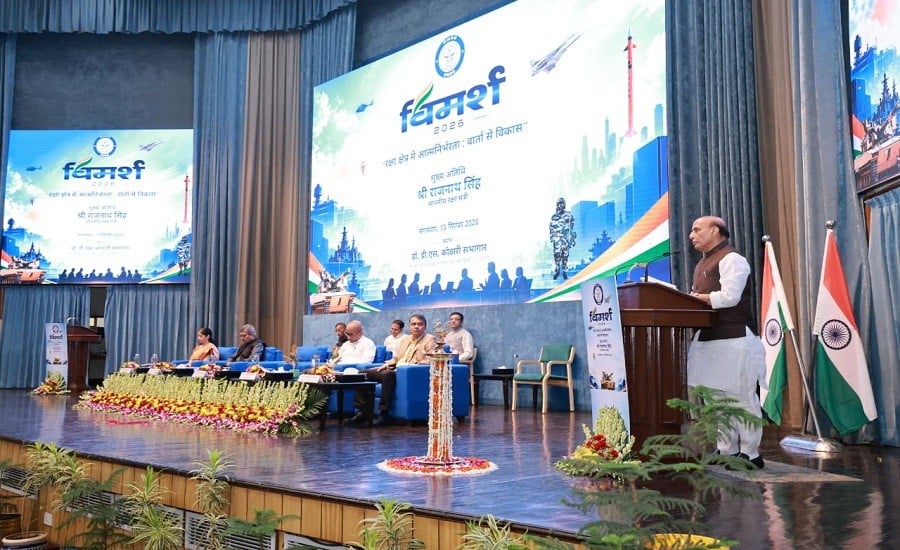
New Delhi: Defence Minister Rajnath Singh on Tuesday unveiled a series of policy initiatives aimed at reducing technical and financial entry barriers for Micro, Small and Medium Enterprises (MSMEs) and deep-tech start-ups in the defence sector.
The initiatives were announced at the DRDO-Industry Synergy Meet ‘VIMARSH 2026’, held under the theme ‘Varta se Vikas’. The measures focus on direct funding, incubation support, easier access to DRDO testing facilities and stronger industry participation in defence research and development.
Singh also launched a standardised and secure framework for sharing DRDO-developed software source codes with licensee industries. The framework is intended to accelerate software-defined defence capabilities and help industries address technology obsolescence.
Rajnath Singh Unveils Support Measures for MSMEs and Deep-Tech Start-ups
The new initiatives are designed to make it easier for smaller companies and technology start-ups to participate in India’s defence ecosystem.
Key measures include:
- Direct funding support for eligible MSMEs and start-ups.
- Incubation and mentorship support for emerging defence technologies.
- Dedicated access to DRDO testing facilities.
- Measures to simplify procedural compliance.
- Faster access to DRDO facilities.
- Steps to reduce technology licensing timelines.
- Greater focus on industry-led research and development.
- Stronger academia-industry collaboration.
The initiatives are expected to encourage private-sector participation in emerging technologies, including artificial intelligence, quantum computing, hypersonics and directed-energy systems.
Read also: Rajnath Singh: Defence Forces Have Freedom, Resources to Respond Decisively to Threats
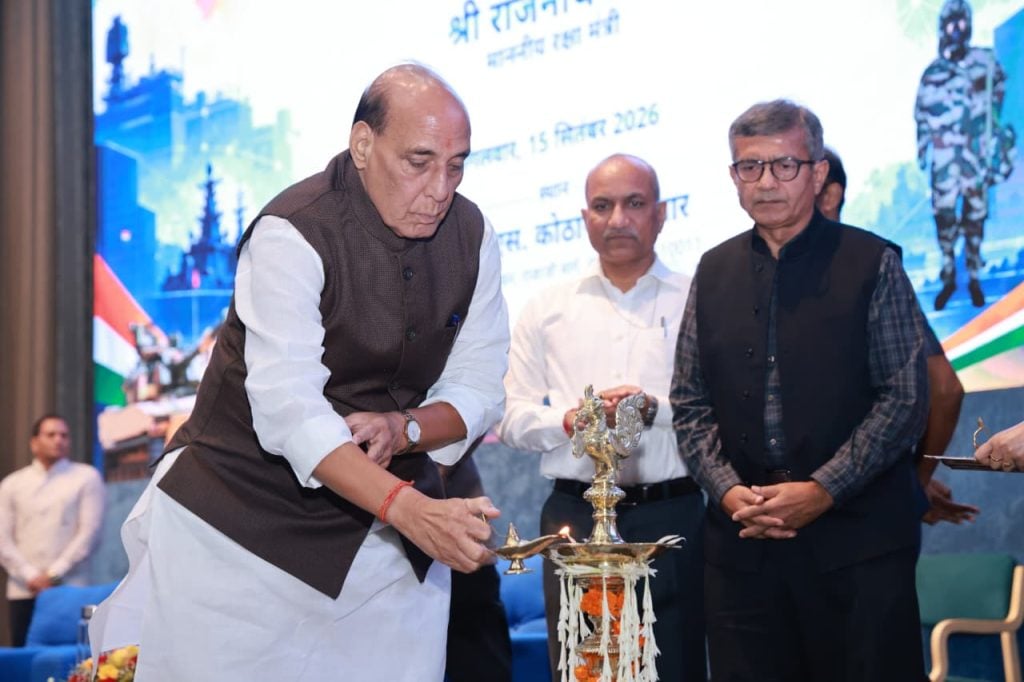
DRDO Launches Software Source Code Sharing Framework
A major announcement at VIMARSH 2026 was the launch of a standardised and secure framework for sharing DRDO-developed software source codes with licensee industries.
The framework aims to help industries develop and upgrade software-driven defence systems while addressing the problem of technology obsolescence.
The initiative is expected to strengthen India’s capabilities in software-defined defence technologies and enable faster technology absorption by domestic manufacturers.
Nine Technology Transfer Agreements Handed Over to 13 Manufacturing Partners
Rajnath Singh also witnessed the handover of nine Licensing Agreements for Transfer of Technology (LAToTs) to 13 manufacturing partners.
The agreements will enable the commercial production of advanced defence systems developed by DRDO.
The expansion of technology transfers is aimed at increasing indigenous manufacturing capacity and creating more opportunities for private industry and MSMEs to participate in defence production.
According to DRDO Chairman and Secretary, Department of Defence R&D, Rajesh Kumar Singh, more than 2,300 Technology Transfers (ToTs) have so far been handed over to over 1,100 industries.
He said DRDO has also made technologies related to approximately 50 missiles available to industry to encourage greater private-sector participation.
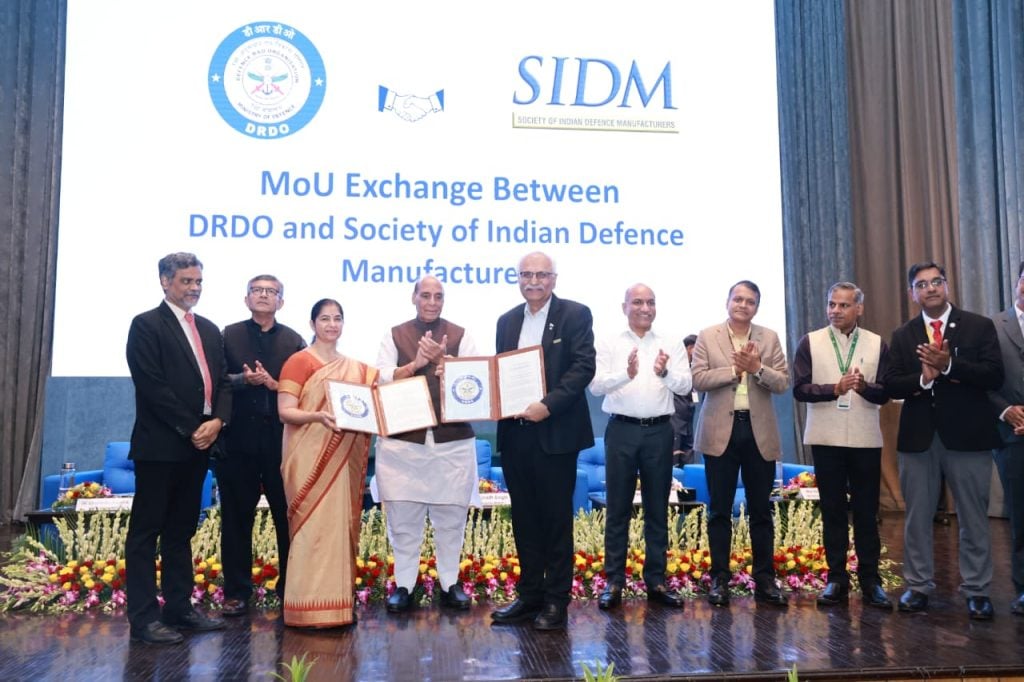
DRDO Signs MoUs with SIDM and Laghu Udyog Bharati
Strategic Memoranda of Understanding (MoUs) were exchanged between DRDO and:
- Society of Indian Defence Manufacturers (SIDM)
- Laghu Udyog Bharati (LUB)
The partnerships are aimed at expanding DRDO’s industry outreach and increasing participation from enterprises at the grassroots level.
The initiatives are expected to create stronger links between DRDO, established defence manufacturers, MSMEs and emerging technology companies.
DRDO Partners with QCI for SAMAR 2.0
DRDO also signed a contract with the Quality Council of India (QCI) for System for Advance Manufacturing Assessment and Rating (SAMAR) Version 2.0.
The framework will help benchmark the manufacturing maturity of domestic defence enterprises and support improvements in manufacturing capabilities.
SAMAR 2.0 is expected to contribute to higher manufacturing standards and strengthen the competitiveness of Indian defence companies.
Rajnath Singh Calls for End-to-End DRDO-Industry Collaboration
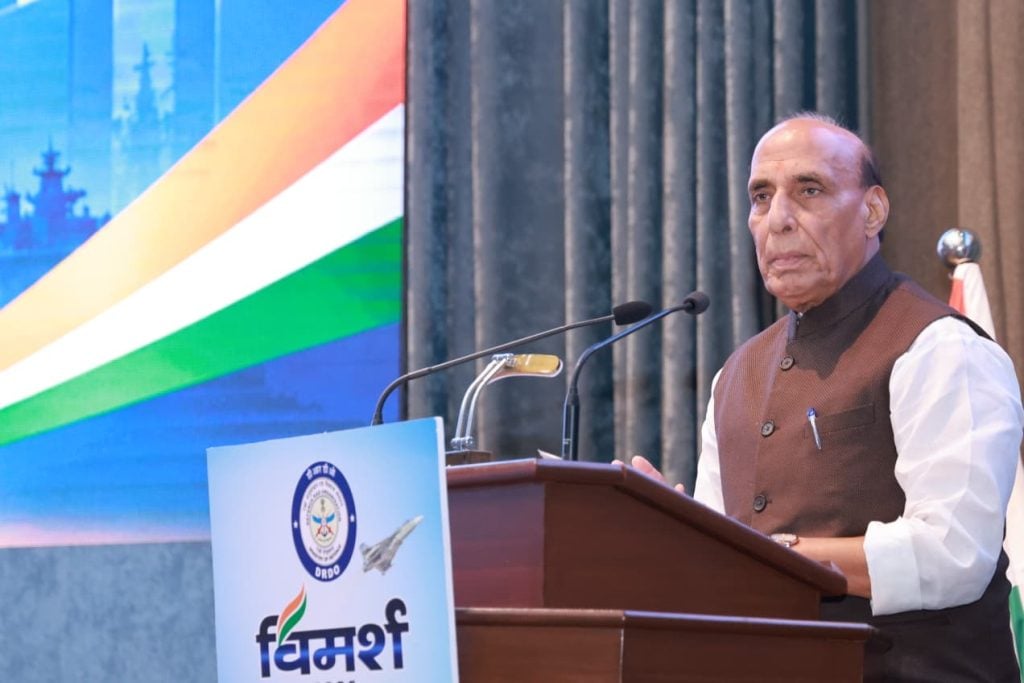
Addressing the gathering, Rajnath Singh said collaboration between DRDO and industry should go beyond production and cover the entire defence technology value chain.
He highlighted the need for cooperation in:
- Research and development
- Product design
- Testing
- Certification
- Manufacturing
- Technology absorption
Singh said this broader partnership would help India emerge as a global defence manufacturing hub.
He emphasised that DRDO brings knowledge and technology, industries provide scale and manufacturing capabilities, start-ups contribute innovation and agility, while the youth provide the vision for a developed India.
Defence Self-Reliance Targeted for 2047
Singh said the vision of Viksit Bharat extends beyond economic growth and includes technological self-reliance, social inclusion, environmental sustainability and strategic security.
He said India should aim to achieve Aatmanirbharta in critical technologies by 2047, while substantially increasing indigenous content, expanding defence exports and establishing a stronger presence in global supply chains.
The Defence Minister also highlighted several reforms undertaken under Prime Minister Narendra Modi, including:
- Positive Indigenisation Lists
- Make in India initiatives
- Innovations for Defence Excellence (iDEX)
- ADITI programme
- Greater private-sector participation in defence R&D
- Allocation of 25% of the defence R&D budget to the private sector
These measures are aimed at reducing import dependence and strengthening domestic defence capabilities.
Technology Development Fund and iDEX Supporting Start-ups
Singh highlighted the role of the Technology Development Fund (TDF) in supporting defence start-ups and said several technologies supported through the programme have already reached the production stage.
He also highlighted iDEX as an important platform for enabling start-ups to develop solutions based on actual operational requirements of the armed forces.
According to the Defence Minister, start-ups and MSMEs are increasingly contributing components, sub-systems and advanced technologies for major defence platforms.
He stressed that these companies need to be integrated more closely into the defence supply chain alongside large industries.
Focus on AI, Quantum Computing and Hypersonic Technologies
The government is placing greater emphasis on emerging technologies that could shape future defence capabilities.
The new initiatives focus on encouraging investment and innovation in areas such as:
- Artificial intelligence
- Quantum computing
- Hypersonic technologies
- Directed-energy systems
- Drone technology
- Cybersecurity
Singh said MSMEs and start-ups could play an important role as India moves from being a defence importer to becoming a major defence exporter.
He also called on MSMEs to focus on quality, timely delivery, innovation and global standards while building partnerships with larger companies.
Rajnath Singh Stresses Technology Leadership in Future Warfare
Singh said technological self-reliance should become an integral part of India’s national approach.
He noted that companies investing in emerging technologies today could become leaders in the future.
The Defence Minister emphasised that technological leadership would be critical to gaining strategic advantages in future warfare.
VIMARSH 2026 Aims to Build Collaborative Defence Ecosystem
Defence Secretary and Secretary, Department of Defence R&D, and DRDO Chairman Rajesh Kumar Singh said VIMARSH 2026 was designed to align commercial innovation with national defence readiness.
With the theme ‘Varta se Vikas’, the forum sought to move India’s defence ecosystem beyond a traditional buyer-seller relationship towards a collaborative and co-created technology ecosystem.
He said technology transfers had helped create parallel production lines to meet the requirements of the armed forces while also benefiting MSMEs.
More than 250 defence industry leaders, representatives of industry chambers, senior civil and military officials and DRDO scientists attended the event. The Secretary, Department for Promotion of Industry and Internal Trade (DPIIT), also participated.
DRDO Releases Two Key Documents
Two important documents were released during VIMARSH 2026.
Defence Systems for Resilient Bharat
The book ‘Defence Systems for Resilient Bharat – Advancing Aatmanirbharta in Defence’ documents major defence systems developed by DRDO’s technology clusters between 2014 and 2026.
It highlights the organisation’s contribution to strengthening indigenous defence capabilities and advancing self-reliance.
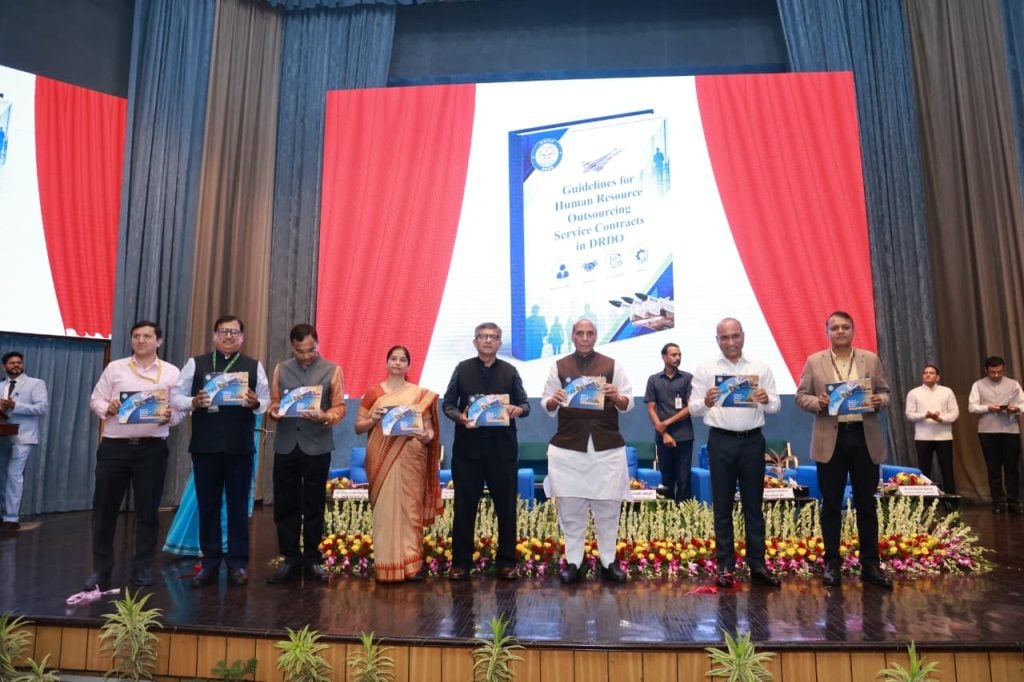
Guidelines for Human Resource Outsourcing Service Contracts
DRDO also released the ‘Guidelines for Human Resource Outsourcing Service Contracts in DRDO’.
The guidelines provide a framework covering:
- Service specifications
- Procurement procedures
- Selection of service providers
- Contract administration
- Performance monitoring
- Compliance with contractual and statutory requirements
The framework is intended to support efficient and compliant HR outsourcing across DRDO laboratories.
Technical Sessions Focus on Faster Defence Technology Induction
Technical sessions at VIMARSH 2026 featured roadmaps presented by Directors General of DRDO’s technological clusters.
The discussions covered areas including:
- Aeronautical systems
- Missiles
- Armaments
- Microelectronics
- Naval systems
DRDO headquarters also presented measures aimed at simplifying procedural requirements, improving access to facilities and reducing licensing timelines.
A high-level panel discussion involving representatives from DRDO, the Department of Defence Production and the armed forces focused on accelerating technology absorption.
The panel also discussed optimising Development-cum-Production Partner (DcPP) models and ensuring faster induction of indigenous technologies into active military service.
VIMARSH 2026 Strengthens DRDO-Industry Partnership
VIMARSH 2026 was organised to strengthen India’s defence-industrial framework by bringing together DRDO’s technological research, deep-tech start-ups and the country’s established manufacturing ecosystem.
The meet focused on increasing private-sector participation, improving technology absorption and creating stronger pathways from defence research to commercial production.
The initiatives announced at the event are expected to provide MSMEs and start-ups with greater access to funding, testing, mentorship and DRDO technologies, supporting India’s broader goal of building a self-reliant and globally competitive defence industry.