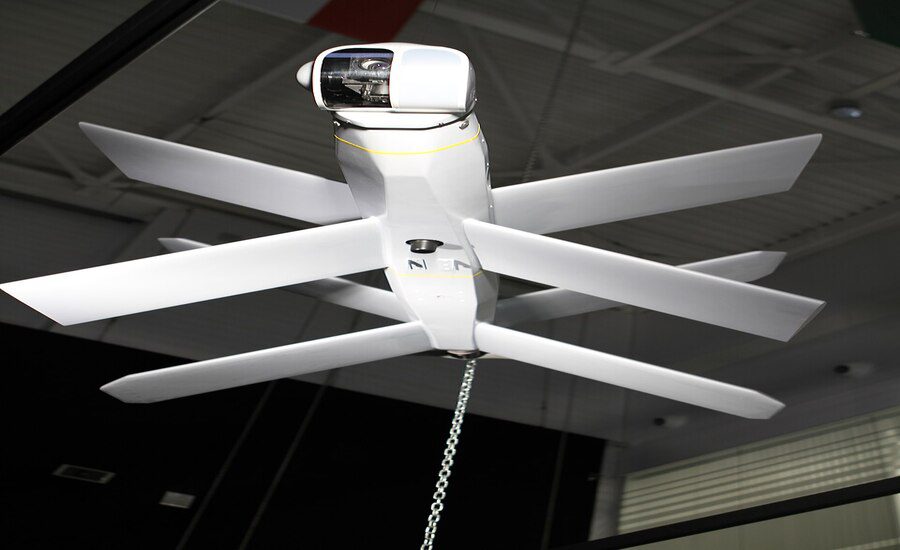
New Delhi: In a significant move that may reshape defence collaboration between Russia and India, Moscow has reportedly offered MoscowIndia its combat-tested ZALA Lancet-3 loitering munition (often referred to simply as “Lancet-3”).
According to defence-industry reports, this offer goes beyond a mere sale — it potentially includes licensed production and full technology transfer. If accepted, the offer could provide the Indian armed forces with a loitering-munition capability of proven battlefield performance, at a time when New Delhi is accelerating its interest in precision “kamikaze” drones for deep-strike and counter-terrorism roles.
This development comes amid intensifying regional tensions, evolving combat doctrines and New Delhi’s growing ambition to modernize drone warfare capabilities.
Background of Lancet-3 Loitering Munition
The Lancet series — developed by Russian defence firm ZALA Aero Group (a subsidiary of Kalashnikov Concern) — belongs to a class of weapons known as “loitering munitions” or suicide drones. These UAVs can loiter over contested areas for a period before diving into a target and detonating their warheads.
Read also: Revolution in Defence: Indian Army Gets 500 Blast-Resistant 3D-Printed Bunkers Built in Just 7 Days!
The Lancet family traces its lineage to earlier systems such as the KUB-BLA (also known as “Cube”), but the Lancet-3 represents a more advanced and combat-proven variant, refined through deployment in real conflicts.
Technical Features & Combat Performance of Lancet-3 Loitering Munition
The Lancet-3 is designed to strike a variety of targets — including armored vehicles, artillery pieces, radars, and other high-value military assets. Its design typically includes a fuselage with dual X-shaped wings, a nose-mounted optical sensor, and a rear-mounted electric motor and propeller.
It is described as a lightweight system: takeoff weight around 12 kg in some configurations, with a warhead payload of roughly 3 kg (though heavier warheads up to 5 kg have been reported in more advanced versions).
In terms of performance, Lancet-3 offers a loitering endurance of approximately 30–40 minutes and an operational range sufficient for deep-strike missions (flight range has been variously reported in open sources).
Its effectiveness in conflict zones — most notably in the Russo‑Ukrainian War — has been frequently highlighted.
Reports credit Lancet drones with destroying enemy artillery, armored vehicles (including main battle tanks), radars, and other critical targets — contributing significantly to Russia’s evolving drone-centric warfare doctrine.
Taken together, these attributes make Lancet-3 among the most battle-tested, cost-effective and precise loitering munitions in active service today.
Russia’s Offer to India: What’s on the Table?
Combat-Proven Capability Meets Demand: According to defense-industry sources, Russia’s proposal to India involves not just exporting Lancet-3 drones, but — in a departure from traditional arms deals — offering licensed production and technology transfer, enabling India to produce these drones locally.
The proposition reportedly comes at a time when the Indian armed forces — both the Army and the Air Force — are actively seeking to expand their loitering-munition and kamikaze-drone inventory.
India’s drive for such capabilities is driven by the need for deep-strike weapons, beyond-line-of-sight precision attack systems, high-altitude conflict readiness (notably along the Line of Actual Control with China), and enhanced counter-terrorism capabilities.
Strategic and Diplomatic Timing: This offer appears to coincide with a broader push by Moscow to deepen defence-industrial collaboration with India. Alongside potential deals for advanced fighter jets, Russia’s overture regarding Lancet-3 suggests an eagerness to embed drone technology transfer and production inside Indian territory — potentially as part of a larger multipronged strategy to rejuvenate Indo-Russian defence ties.
For India, which is simultaneously ramping up indigenous drone programmes and exploring foreign procurements, the offer presents both an opportunity and a strategic decision point: harness proven technology quickly — or continue to invest in domestic systems to ensure long-term self-reliance.
Key Implications of Lancet-3 Loitering Munition for India’s Defence Capabilities
Rapid Capability Enhancement: If India accepts the offer and goes ahead with local production, the Indian armed forces could quickly gain access to a proven loitering-munition platform — without waiting years for indigenous systems to mature. This would significantly cut the time between acquisition and deployment, providing a credible precision-strike capability in both conventional conflict and asymmetric counter-terrorism settings.
Strategic Flexibility for High-Altitude and Border Warfare: Given India’s geographic realities — including high-altitude borders with China and varied terrain in Kashmir and the Northeast — a lightweight, loitering-munition system like Lancet-3 could offer unique tactical advantages. Its ability to loiter, surveil, and strike (potentially even in contested or electronically degraded environments) would add flexibility to India’s strike doctrine, extending beyond traditional artillery or missile-based systems.
Balancing Indigenous Development with Dependence: On the flip side, acceptance of foreign tech-transfer and production may slow down the push for fully indigenous loitering-munition systems. India has already initiated multiple drone and kamikaze-munition efforts (from both government and private sector), but none have yet matched Lancet-3’s range, payload, or battlefield-proven reliability.
Thus, the decision India makes will reflect a strategic trade-off: immediate capability vs long-term self-reliance.
Broader Implications of Lancet-3 Loitering Munition: Changing Nature of Drone Warfare
The growing interest in systems like Lancet-3 underscores a broader shift in modern warfare: drones and loitering munitions are increasingly becoming frontline weapons. Unlike traditional missiles or artillery, loitering munitions combine reconnaissance, target-acquisition, precision strike and self-destruction — often in a single platform.
Such systems enable militaries to attack dynamic or fleeting targets, from moving armored convoys to well-hidden artillery units — offering a level of tactical agility previously reserved for more expensive and complex platforms.
Defence Industrial Collaboration and Geopolitics: Russia’s offer of Lancet-3 to India, especially with a technology-transfer clause — signals a renewed emphasis on deep defence-industrial cooperation. In the context of evolving global alliances and shifting power balances, such collaboration could reshape regional defence postures.
For India, integrating Russian drone technology into its own defence-industrial base would be a substantial boost, but also a geopolitical signal of continued strategic alignment with Moscow in the defence domain.
Accelerated Drone Proliferation — And the Counter-Drone Imperative: As loitering munitions proliferate, the demand for counter-drone and anti-UAV defenses will rise accordingly. Countries adopting drones like Lancet must also invest in surveillance, electronic-warfare, and air-defence systems tailored for low-altitude, small-UAV threats. The cycle of innovation and counter-innovation is likely to intensify.
What Could Happen Next — Potential Scenarios
Formal signing of agreement & licensed production: India accepts the offer; sets up production lines under licence; integrates Lancet-3 into its drone and strike inventory within the next few years.
Selective procurement without full transfer: India procures a limited number of Lancet-3 units for evaluation and temporary deployment, while continuing to invest in indigenous loitering-munition projects.
Decline or postponement in favour of indigenous systems: India may decide to rely on domestic R&D and private-sector drone projects, avoiding large-scale foreign dependence.
Hybrid strategy: A mix of imported systems plus accelerated indigenous development to ensure both immediate capability and long-term technological autonomy.
Each of these paths carries strategic, economic and geopolitical trade-offs — and will depend heavily on India’s defence priorities, threat perceptions, and long-term doctrine.