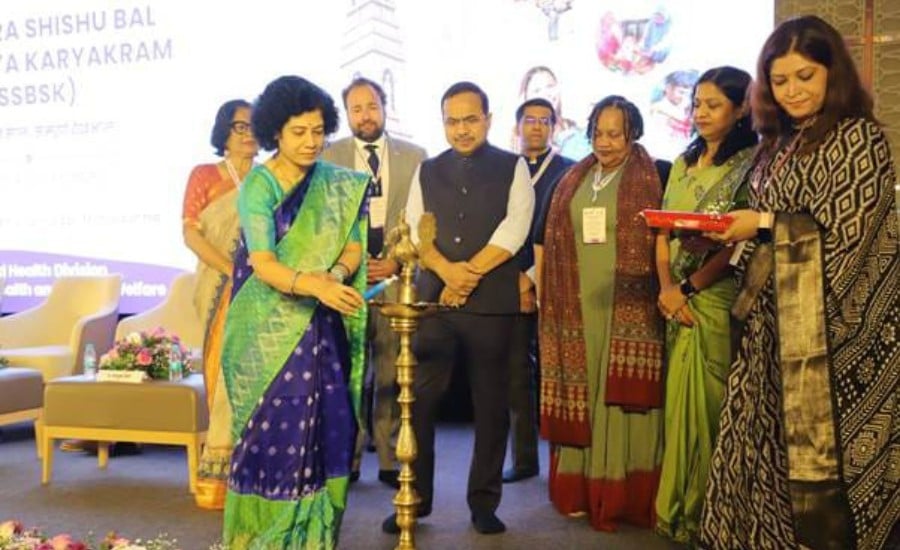
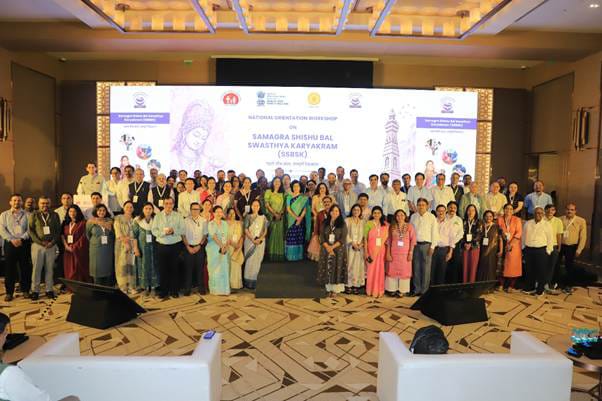
Chhatrapati Sambhajinagar: The Union Ministry of Health and Family Welfare held a two-day national workshop on the Samagra Shishu Bal Swasthya Karyakram (SSBSK) on August 24–25, focusing on early identification of health risks, differentiated follow-up and continuity of care for newborns and young children.
The workshop, held in Chhatrapati Sambhajinagar, Maharashtra, brought together senior Union and state health officials, State Nodal Officers for Child Health and ASHA programmes from all 36 States and Union Territories, technical experts and development partners.
Focus on First Three Years of Life
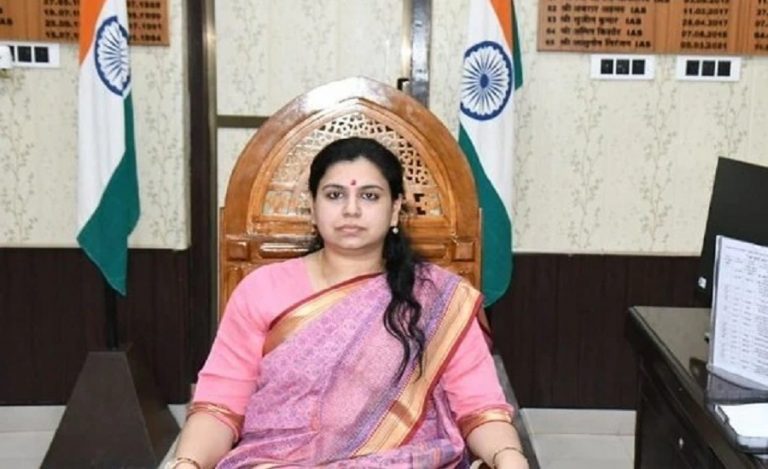
Addressing the workshop, Aradhana Patnaik, Additional Secretary and Mission Director, National Health Mission, said India has made progress in reducing newborn and child mortality but needs greater attention to vulnerable children.
She highlighted the importance of the first seven days of life for newborn survival and the first three years for optimal brain development, emphasising SSBSK’s continuum-of-care approach.
Patnaik called for a shift towards:
- Early identification of health and developmental risks
- Risk-based follow-up of vulnerable children
- Timely referral and intervention
- Stronger supervision and programme monitoring
- Coordination among frontline health and community workers
She also stressed the role of ASHA workers, ANMs, Community Health Officers, Medical Officers and Anganwadi Workers in implementing the programme.
Shaishav App to Track At-Risk Children
A key component of the workshop was the Shaishav App, the digital platform developed to support SSBSK implementation.
The application is designed to facilitate:
- Identification and digital line-listing of at-risk newborns and children
- Scheduling and tracking of home visits
- Referral follow-up
- Supportive supervision
- Programme monitoring
- Creation of longitudinal child health profiles
The platform is intended to maintain continuity of information as children move from the newborn stage into early childhood.
Risk-Differentiated Care at the Centre
The workshop focused on implementing SSBSK’s risk-differentiated care model, under which children identified as being at risk receive intensified monitoring and follow-up.
This includes:
- Additional home visits
- Closer health and developmental monitoring
- Strengthened referral support
- Joint home visits by frontline workers and primary healthcare teams
- Better coordination between home-based care and health facilities
Participants also discussed ways to prevent children identified with health, nutrition, growth or developmental concerns from being lost to follow-up.
Technical Sessions Cover Child Health and Development
The technical sessions addressed multiple aspects of SSBSK implementation, including:
- Risk identification and differentiated care
- Home-visit schedules
- Maternal postnatal and mental health
- Infant and young child feeding
- Growth and developmental monitoring
- Nurturing care and early childhood development
- Identification of danger signs
- Referral and follow-up
- Joint home visits
- Supportive supervision
- Use of the Shaishav App
The discussions also covered the role of platforms such as VHSNDs and Ayushman Arogya Mandir–Sub Centres in strengthening community and primary-level follow-up.
Family Participation Emphasised
The workshop highlighted the role of families in nurturing care and early childhood development.
Participants discussed involving mothers, fathers, grandparents and other family members in responsive caregiving, age-appropriate play and communication, appropriate feeding and early identification of health or developmental concerns.
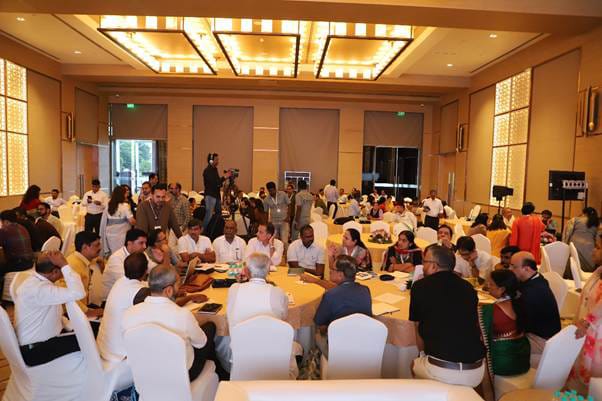
States also participated in group discussions on implementation preparedness, operational challenges, training requirements, capacity building and convergence mechanisms.
SSBSK Resources Released
During the inaugural session, programme resources were released, including:
- SSBSK inauguration video
- Shaishav App video
- SSBSK training videos for frontline workers
These resources are intended to support programme communication, orientation and capacity building.
What is SSBSK?
The Samagra Shishu Bal Swasthya Karyakram (SSBSK) was launched by Union Health and Family Welfare Minister J.P. Nadda on June 29, 2026.
The programme brings Home-Based Newborn Care (HBNC) and Home-Based Young Child Care (HBYC) into a unified, risk-stratified and digitally enabled continuum of home- and community-based care covering children from birth to 36 months.
Under the programme’s approach, “पहले तीन साल, सम्पूर्ण देखभाल”, the focus extends beyond child survival to include:
- Healthy growth and development
- Nutrition
- Nurturing care
- Maternal well-being
- Early identification of illness and developmental concerns
- Timely referral and follow-up
The programme provides intensified follow-up and additional home visits for at-risk newborns and children, along with joint visits involving frontline workers and primary healthcare teams.
Read Also: Bihar to Set Up ‘ASHA Ghar’ in Every District for Training and Support of Health Workers