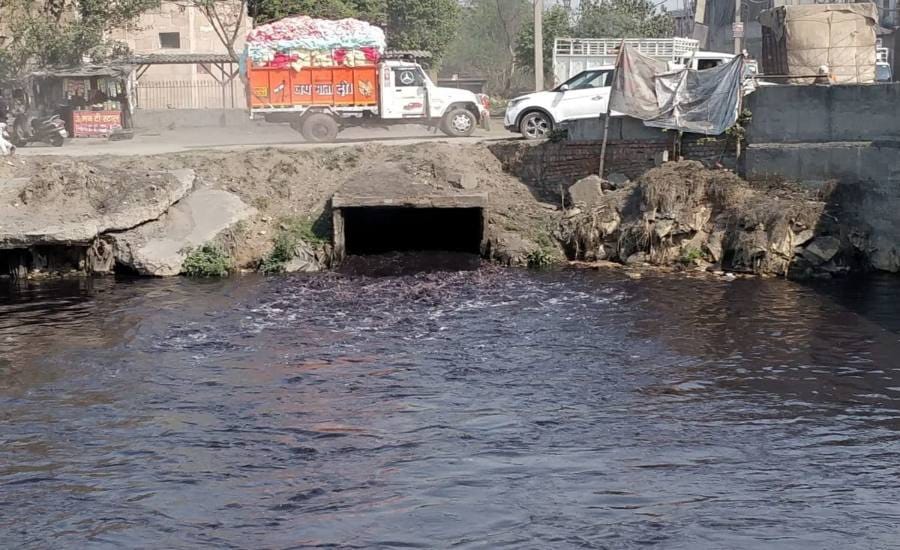
Chandigarh: Questions over pollution monitoring in Punjab’s Sirsa and Sutlej rivers have intensified after Ropar MLA Dinesh Chadha sought action from the Punjab Pollution Control Board (PPCB), alleging that the agency is not testing river water for pharmaceutical compounds, toxic metals and other industrial pollutants.
The issue has gained attention because scientific research has previously documented pharmaceutical contamination in the Sirsa River, while recent water-quality monitoring has also recorded high levels of bacterial pollution. The Sirsa flows through Himachal Pradesh’s Baddi-Barotiwala-Nalagarh (BBN) industrial belt before entering Punjab and eventually joining the Sutlej in Ropar district.
Chadha has written to PPCB Chairman Vipin Kumar Jindal seeking action and raised concerns over whether the existing monitoring system adequately tracks pollutants that may move downstream from the industrial belt.
Why the Sirsa River Matters for Punjab
The Sirsa is an important tributary of the Sutlej. After passing through the industrial areas of Himachal Pradesh, it enters Punjab and merges with the Sutlej near Tallewal in Ropar district.
This makes pollution in the Sirsa a concern beyond the river itself. Contaminants entering the Sirsa can potentially move into the Sutlej and, subsequently, into canal systems connected to the river.
Recent developments have already highlighted concerns about pollution reaching Punjab through the Sirsa system. PPCB has previously written to pollution-control authorities in Himachal Pradesh and Haryana over widespread pollution in the Sirsa rivulet and its eventual movement into the Sutlej.
Read Also: Punjab’s ₹750 Crore Village Push: 3,763 SC-Dominated Villages to Get Development Funds
Study Finds Pharmaceutical Compounds in Sirsa
A 2024 study published in Environmental Pollution examined pharmaceutical compounds in the Sirsa River in the BBN region. Researchers studied four pharmaceuticals — ciprofloxacin, norfloxacin, cetirizine and citalopram oxalate.
The study found concentrations ranging from non-detection to 50 micrograms per litre for the selected compounds, while ciprofloxacin reached 50–100 micrograms per litre and cetirizine reached 100–150 micrograms per litre at some locations receiving wastewater discharges.
The researchers also assessed potential ecological risks. Their analysis reported high ecological risk quotients for algae for all four pharmaceuticals at the studied locations, while risks were also identified for other aquatic organisms under certain exposure scenarios.
However, the researchers cautioned that calculated risk values alone could not establish whether the river water was categorically safe or unsafe because the assessment depends on factors such as toxicity data and species sensitivity. They called for further research.
The findings are particularly relevant because the BBN region is a major pharmaceutical manufacturing cluster, and the study examined river locations receiving wastewater and areas near pharmaceutical facilities.
Heavy Metals Add Another Layer
The pollution concerns are not limited to pharmaceutical residues.
Another study cited in the current controversy examined metal contamination in the Sirsa and reported mercury, chromium, cadmium, lead and thallium. These substances are persistent pollutants and can accumulate in sediments and aquatic food chains.
The findings pointed towards possible industrial sources, including chemical, metal-processing, dyeing and textile units.
The presence of such pollutants makes regular and comprehensive monitoring important because conventional water-quality indicators may not capture every chemical or pharmaceutical contaminant.
PPCB Data Also Shows High Pollution Levels
The latest concerns come against the backdrop of PPCB monitoring data from earlier periods.
Monitoring between July 2025 and March 2026 had shown significant variation and elevated levels of several pollution indicators near Ghanauli, including very high total and faecal coliform counts.
Fresh monitoring has continued to show concerns. A PPCB assessment reported in October 2026 found extremely high bacterial contamination in the Sirsa during August, with the latest findings following the earlier monitoring period.
This adds another dimension to the debate: while pharmaceutical and heavy-metal contamination requires specialised testing, conventional indicators are also showing deterioration in parts of the river.
MLA Seeks Action From Pollution Control Board
Ropar MLA Dinesh Chadha has raised the issue with the PPCB chairman, alleging that river water is not being adequately tested for chemical, pharmaceutical and heavy-metal contamination.
The allegation concerns the scope of monitoring rather than establishing that the PPCB has caused the pollution. The board’s chairman, Vipin Kumar Jindal, was not available for comment despite repeated phone calls and WhatsApp messages, according to the report.
The matter therefore leaves an important question for regulators: whether routine river monitoring should include a wider range of emerging pollutants alongside established water-quality parameters.
Plastic Waste Creates Another Concern
Pollution reaching Punjab through the Sirsa is also not limited to substances dissolved in water.
Sources cited in the report said plastic bottles and other solid waste carried downstream had become a concern for irrigation authorities. A proposal was under consideration to install a floating barrier near the Ropar headworks to intercept plastic and other solid waste before it enters the Sutlej and connected canal networks.
Such a measure would address visible solid waste, while chemical and pharmaceutical pollutants would require a separate monitoring and treatment approach.
Why Coordinated Monitoring Matters
The Sirsa pollution issue crosses state boundaries. Industrial activity and wastewater sources in Himachal Pradesh can affect water quality downstream in Punjab, making coordination between pollution-control agencies important.
For Punjab, the concern is also linked to the Sutlej and the canal network emerging from it. Environmental monitoring therefore needs to track pollution at different points along the river system rather than looking at individual locations in isolation.
The immediate focus is likely to remain on whether the PPCB expands testing for pharmaceutical compounds, heavy metals and other emerging pollutants in addition to routine water-quality indicators.
For communities, farmers and irrigation systems dependent on the river network, stronger monitoring can provide clearer information about the nature, sources and movement of pollution. The scientific evidence already available on pharmaceutical contamination in the Sirsa makes continued assessment particularly relevant, while recent monitoring shows that bacterial pollution remains another concern.
Read Also: Punjab Govt Hands 523 Appointment Letters, Expands Jobs, Healthcare & Employee Welfare Reforms