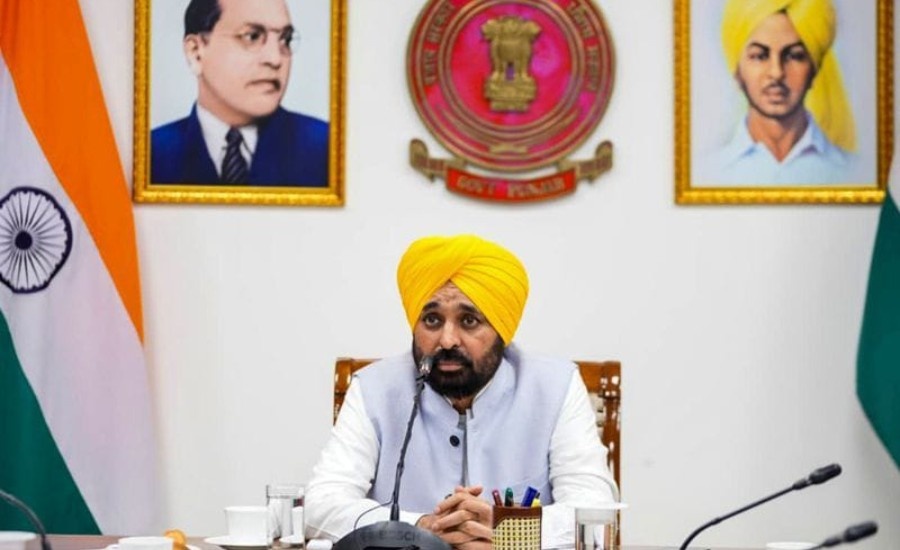
Chandigarh: Punjab Chief Minister Bhagwant Singh Mann has announced a development programme worth more than ₹750 crore for 3,763 villages where the Scheduled Caste population exceeds 40%, with the government planning need-based funding for public infrastructure, livelihoods and essential services.
The announcement came during a meeting chaired by the Chief Minister to review the functioning of the Social Justice, Empowerment and Minorities Department. The programme aims to give these villages a coordinated development push while ensuring that funds are allocated according to local requirements.
The Social Justice, Empowerment and Minorities Department will serve as the nodal department, while the Rural Development and Horticulture Departments will provide support for implementation.
₹20 Lakh Initial Funds for Each Village
Under the programme, every identified village will initially receive ₹20 lakh as untied funds. The allocation can be increased after assessing the utilisation of the initial amount and identifying additional requirements.
Deputy Commissioners will identify and prioritise development works according to the specific needs of individual villages. This approach is intended to allow districts to direct funds towards projects that have the greatest local relevance.
The government will also prepare a Specific Village Development Plan (VDP) for every village. These plans are expected to make development works more coordinated, need-based and result-oriented.
With 3,763 villages covered, the initial ₹20 lakh allocation alone represents a potential ₹752.6 crore, broadly matching the government’s announced programme of more than ₹750 crore.
Read Also: From Rehabilitation to Self-Reliance: Punjab Trains 48 Children in Job-Ready Skills
From RO Systems to Solar Street Lights
The untied funds can be used for a range of essential public facilities based on the requirements identified in each village.
Possible works include:
- RO water systems
- Additional rooms in government schools
- Libraries
- Ambulances
- Mohalla Clinics
- Solar street lights
- Other locally required infrastructure
The flexibility of untied funding means villages can prioritise different needs instead of following a single list of works across the state.
The Rural Development Department has already prepared a broad framework for the effective and judicious utilisation of the funds.
Focus on Livelihoods and Economic Empowerment
The programme also goes beyond physical infrastructure by including direct support for livelihood generation.
The Chief Minister said a ₹50,000 grant-in-aid will be provided to individuals for starting or strengthening income-generating activities.
The objective is to help beneficiaries build sustainable livelihoods and improve their economic self-reliance.
Post-Matric Scholarship Payments Reach 97%
During the meeting, Mann also reviewed the implementation of the Post-Matric Scholarship Scheme.
According to the Chief Minister, 97% of scholarship payments have already been disbursed. He directed officials to ensure that the remaining payments are released without unnecessary delay.
The scheme provides financial support to eligible students pursuing post-secondary education and is aimed at reducing financial barriers to continuing their studies.
Need-Based Development Plans for Villages
The government has placed Deputy Commissioners at the centre of identifying and prioritising works. This means the specific development needs of each village will determine how funds are used.
A village requiring better drinking-water facilities could prioritise an RO system, while another may need additional school infrastructure, street lighting, healthcare facilities or other public amenities.
The proposed Village Development Plans are intended to bring these requirements together in a structured manner and help coordinate the work of different departments.
Infrastructure and Livelihoods in One Programme
The initiative combines village infrastructure with livelihood support and educational assistance.
The more than ₹750 crore allocation will support development works across 3,763 villages, while the ₹50,000 livelihood grant is aimed at helping individuals generate income. At the same time, the government says 97% of Post-Matric Scholarship payments have already been disbursed.
Mann said the objective was not merely to spend money but to improve the quality of life in the identified villages.
The Chief Minister also said that social justice should focus on dignity, opportunity and empowerment, alongside welfare measures.
Senior Officials Review Implementation
The programme will require coordination between departments and district-level authorities for identifying projects, preparing village plans and monitoring fund utilisation.
Chief Secretary KAP Sinha, Principal Secretary to Chief Minister Dr Ravi Bhagat and other senior officials were also present at the meeting.
The broader impact of the programme will depend on how effectively village development plans are prepared, funds are utilised and projects are completed. With the initial allocation designed as untied support, local prioritisation and monitoring will remain important to ensure spending responds to actual needs.
Punjab’s initiative brings together rural infrastructure, livelihood assistance and educational support, with the stated objective of expanding development opportunities in villages where the Scheduled Caste population exceeds 40%.
Read Also: Japan Visit Ahead: Punjab CM Mann Invited to Asian Games Hockey Semis and Finals