New Delhi: The Supreme Court has intervened in the case of IAS officer Rinku Dhugga, staying her reinstatement after the Centre challenged the Delhi High Court’s decision to overturn her compulsory retirement. The case stems from the 2022 controversy involving the alleged early closure of Delhi’s Thyagaraj Stadium to enable Dhugga to walk her dog.
Supreme Court Stays Rinku Dhugga’s Reinstatement
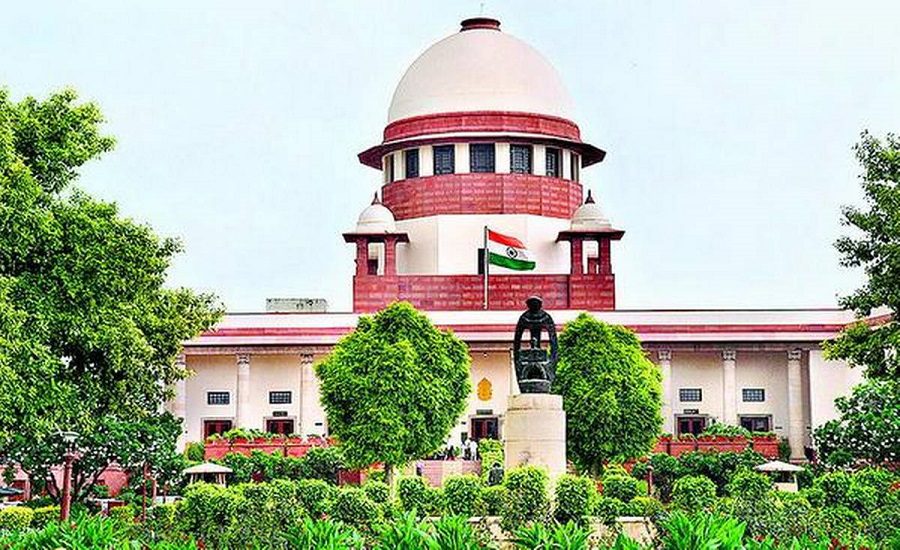
A bench comprising Chief Justice of India Surya Kant and Justices Joymalya Bagchi and V. Mohana issued notice to Dhugga on the Centre’s challenge to the Delhi High Court judgment.
In its order dated September 7, the Supreme Court directed that Dhugga’s reinstatement would remain stayed while the Centre’s challenge is considered.
The matter has been listed for further hearing on October 13. The Centre was represented by Additional Solicitor General Aishwarya Bhati.
Thyagaraj Stadium Controversy Involving IAS Officer
The controversy dates back to 2022, when Rinku Dhugga and her husband, who is also an IAS officer, were accused of having the Thyagaraj Stadium emptied to enable Dhugga to walk her dog.
Photographs and reports of the incident triggered public criticism and drew significant attention.
The controversy subsequently became part of the proceedings concerning the disciplinary action taken against Dhugga.
How Did the Case Reach the Supreme Court?
Dhugga had challenged the Centre’s decision to compulsorily retire her before the Central Administrative Tribunal (CAT).
The CAT ordered her reinstatement. The matter was subsequently considered by the Delhi High Court, which upheld the CAT’s decision in its April 15 judgment.
The Centre then approached the Supreme Court challenging the High Court’s decision.
The Supreme Court has now stayed Dhugga’s reinstatement pending further proceedings.
Why Did the Delhi High Court Set Aside Her Compulsory Retirement?
The Delhi High Court had examined the circumstances surrounding the Centre’s decision to compulsorily retire Dhugga.
The court noted that the Thyagaraj Stadium incident had resulted in a minor punishment in disciplinary proceedings.
The High Court also considered an allegation relating to her unauthorised absence, with both issues having been cited in connection with the decision to compulsorily retire her.
However, the court found that the decision of the review committee recommending compulsory retirement could not be sustained because it had failed to consider several relevant aspects of Dhugga’s service record.
High Court Examined Dhugga’s Service Record
The Delhi High Court highlighted several aspects of Dhugga’s service record while setting aside the compulsory retirement decision.
These included:
- The absence of adverse remarks in her Annual Performance Appraisal Reports (APARs).
- Her outstanding grading in the preceding years.
- The fact that she was being considered for promotion.
- The nature and outcome of the disciplinary proceedings linked to the allegations.
The court held that these factors should have been properly considered by the review committee before recommending compulsory retirement.
Court’s Observation on Compulsory Retirement
The Delhi High Court also examined the purpose of compulsory retirement in government service.
It observed that compulsory retirement is intended to remove officers considered to be “deadwood” from service.
According to the High Court’s reasoning, this principle could not be applied to Dhugga’s case in view of her service record and the other relevant circumstances.
The Centre, however, has challenged this decision before the Supreme Court, which has now stayed her reinstatement and issued notice to Dhugga.
The Supreme Court will hear the matter further on October 13.
Read also: Why This Supreme Court Judgment Could Change Human Rights Litigation In India