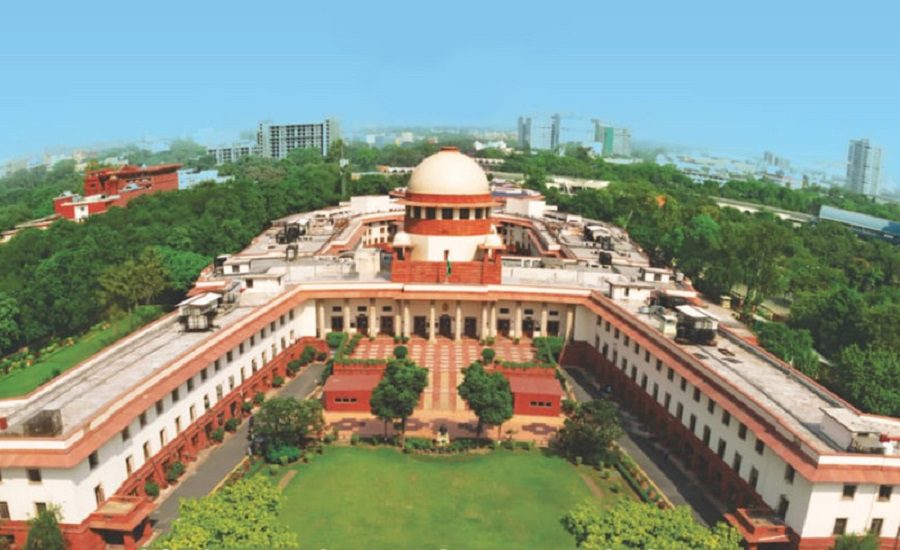
New Delhi: The Supreme Court ruling has brought relief to an Army veteran who developed rheumatoid arthritis while serving in Kargil under Operation Rakshak. On October 28, 2026, the Supreme Court dismissed the Central Government’s appeal and upheld the decision granting him a War Injury Pension instead of a disability pension.
The Court also asked the Ministry of Defence (MoD) to create clear and comprehensive rules for pension benefits. It said confusion over the applicable rules must be removed to ensure fairness and good governance.
War Injury Pension: Supreme Court Rejects Centre’s Appeal
A bench of Justice Pamidighantam Sri Narasimha and Justice Alok Aradhe dismissed the Union Government’s appeal against earlier decisions of the Armed Forces Tribunal (AFT) and the Punjab and Haryana High Court.
Read also: Can Voters Sue Candidates Over False Election Affidavits? Supreme Court Explains
Both authorities had supported the veteran’s claim for a War Injury Pension. The Centre challenged these decisions, arguing that his medical condition did not qualify for the benefit under the applicable defence policy.
However, the Supreme Court found no sufficient reason to overturn the earlier decisions.
Background Of The Kargil Veteran’s Case
Narender Kumar joined the Indian Army in December 1996. He was posted in Kargil from July 2003 to July 2005 as part of Operation Rakshak.
During this posting, he was diagnosed with seropositive rheumatoid arthritis in January 2005. He was later diagnosed with two spinal conditions while serving in West Bengal.
Kumar left military service in January 2013. The Release Medical Board assessed his disabilities as aggravated by military service at 70%, which was rounded up to 75% for life. He was initially granted a disability pension containing service and disability elements.
Why Did The Veteran Seek War Injury Pension
Around six years after his discharge, Kumar approached the Armed Forces Tribunal seeking a War Injury Pension instead of his existing disability pension.
He argued that his rheumatoid arthritis developed during his posting in Kargil under Operation Rakshak and should qualify for the higher pensionary benefit under the Ministry of Defence’s policy.
In April 2024, the AFT accepted his claim. It found that the illness had developed during his Kargil posting and allowed the War Injury Pension benefit. The Punjab and Haryana High Court upheld the tribunal’s decision in August 2025.
Why Did The Centre Challenge The Decision
The Union Government argued that Kumar was not eligible for a War Injury Pension under Category E(i), Paragraph 4.1 of the Ministry of Defence policy letter dated January 31, 2001.
According to the Centre, the provision applied to operations specifically notified by the government for the relevant pension benefits.
It argued that Operation Rakshak, which covers operational duties in Jammu and Kashmir, was not covered in the required manner. The Centre also referred to other ongoing operations, such as Operation Rhino in Assam, to support its position.
The government maintained that Kumar’s rheumatoid arthritis did not qualify for a War Injury Pension under the policy.
What Did The Supreme Court Say About Pension Rules
The Supreme Court rejected the Centre’s interpretation of the policy. It observed that there was no sufficient basis to exclude Operation Rakshak from the scope of Category E(i).
The Court said that the government must interpret its policies according to their actual wording. It cannot apply a narrow interpretation that goes against the policy’s language or leads to unfair, arbitrary or discriminatory results.
The bench also stressed that pension-related policies should receive a liberal interpretation when their wording supports such an approach.
In simple terms, the government cannot deny a pension benefit by adding restrictions that are not supported by the policy itself.
War Injury Pension: Supreme Court Asks Defence Ministry To Make Clear Rules
Along with dismissing the Centre’s appeal, the Supreme Court raised concerns about confusion surrounding the Ministry of Defence’s rules, regulations, instructions and policies.
The bench said that the government should introduce comprehensive and clearly identifiable subordinate legislation to explain the rules governing service personnel and pension benefits.
The Court also suggested that whenever the government notifies an operation under Category E(i), it should clearly state whether the related War Injury Pension benefits will apply. This would help serving and retired personnel understand their entitlements and reduce disputes over pension claims.
Read also: How Supreme Court Collegium System Appoints Judges And Why It Faces Criticism
FAQs
On October 28, 2026, the Supreme Court dismissed the Centre’s appeal and upheld the War Injury Pension granted to Narender Kumar by the Armed Forces Tribunal and the Punjab and Haryana High Court.
The Supreme Court upheld the pension because the veteran developed rheumatoid arthritis while posted in Kargil under Operation Rakshak, and the Court found no sufficient basis to exclude the operation from the relevant policy provision.
The Supreme Court asked the Ministry of Defence to establish clear and comprehensive rules governing service and pension benefits. It also said the government should clearly state which pension benefits apply when notifying operations under the relevant policy.