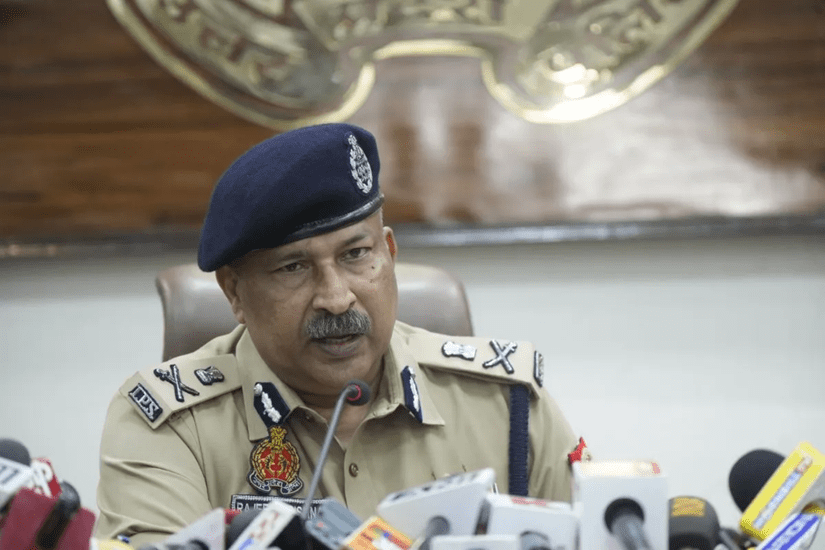
Lucknow: Uttar Pradesh Director General of Police (DGP) Rajeev Krishna, an IPS officer of 1991 batch, on Wednesday emphasised the importance of close coordination between the police and civil administration while interacting with 41 trainee Provincial Civil Service (PCS) officers undergoing the 90th Foundation Training Programme at the Police Headquarters in Lucknow.
Addressing the probationary officers, the DGP said effective governance, efficient law and order management, and public trust in the administration depend on seamless cooperation between administrative officers, the police, and other government departments.
Coordination Is the Foundation of Good Governance
Rajeev Krishna told the trainee officers that, after completing their training, they would assume critical administrative responsibilities, with the post of Sub-Divisional Magistrate (SDM) being among the most significant due to its direct interaction with citizens.
He observed that better coordination between administrative officers and the police ensures timely, transparent and impartial resolution of public grievances.
“Better coordination between the administration and police is the foundation of good governance, effective law and order management and public trust in the system,” the DGP said.
Read also: IPS Rajeev Krishna: The Engineer Who Rose to Lead Uttar Pradesh Police as DGP
SDMs Play a Crucial Administrative Role
Highlighting the responsibilities of SDMs, Rajeev Krishna said they occupy a pivotal position at the tehsil level, overseeing a wide range of functions, including:
- Revenue administration
- Judicial responsibilities
- Maintenance of law and order
- Public grievance redressal
He noted that SDMs serve as the primary interface between the government and citizens, making their role critical in ensuring responsive and accountable governance.
Focus on Timely Disposal of Land Disputes
The DGP laid particular emphasis on the need for fair and time-bound resolution of land and property disputes, describing them as among the most sensitive issues handled by the administration.
He observed that land is not merely an economic asset but is closely linked to people’s livelihood, dignity and long-term security. Prompt and impartial disposal of such disputes, he said, helps maintain social harmony and public confidence in government institutions.
Public Grievance Redressal Must Be Continuous
Calling grievance redressal an ongoing responsibility rather than a one-time exercise, Rajeev Krishna urged the trainee officers to regularly monitor complaints received from the public and address them with empathy and efficiency.
He stressed that citizens expect prompt responses from the administration and that effective grievance handling plays a vital role in strengthening trust in governance.
Attention to Basic Public Services
The DGP also highlighted the responsibility of SDMs in addressing everyday issues that directly affect citizens’ lives.
These include ensuring:
- Availability of fertilisers
- Supply of quality seeds
- Reliable electricity
- Adequate irrigation
- Safe drinking water
According to him, proactive intervention in such matters contributes significantly to improving public welfare and enhancing confidence in the administration.
Preparing Future Administrators
The interaction formed part of the 90th Foundation Training Programme for Provincial Civil Service officers and focused on preparing future administrators for the challenges of governance at the grassroots level.
Rajeev Krishna encouraged the trainee officers to adopt a citizen-centric approach, work in close coordination with the police and other departments, and uphold transparency, accountability and fairness in public administration.