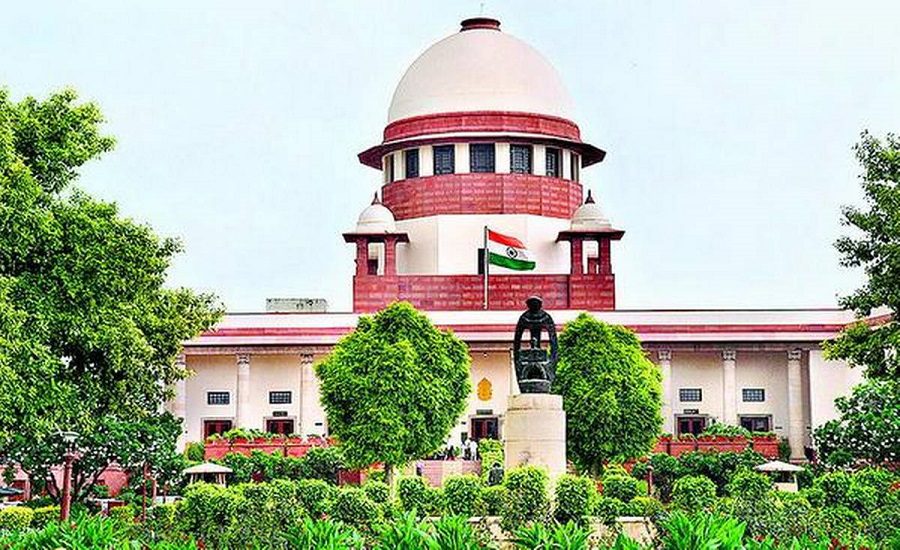
New Delhi: In a significant interim direction that could impact the subordinate judiciary across the country, the Supreme Court has asked all states and Union Territories to consider increasing the retirement age of judicial officers from 60 years to 61 years, subject to consultation with their respective High Courts.
The direction was issued by a Bench comprising Chief Justice of India Surya Kant, Justice Joymalya Bagchi, and Justice V. Mohana while hearing a petition seeking a uniform enhancement of the retirement age of district judiciary judges from 60 to 62 years across India.
The Court clarified that the interim arrangement would come into effect from April 1, 2026, wherever the concerned state government and jurisdictional High Court agree to the proposal.
States and High Courts Asked to Take a Decision
In its order, the Supreme Court directed all state governments and Union Territories to consult their respective High Courts and take a decision on enhancing the retirement age of judicial officers.
The Bench observed, “All state governments and Union Territories are directed to take a decision, in consultation with their respective jurisdictional High Courts, on this issue. In case they agree, judicial officers in such states shall be permitted to continue in service up to the age of 61 years. Such continuation shall remain subject to the final outcome of these proceedings.”
The Court has directed both the states and the High Courts to place their respective positions on record within two weeks.
However, it said states and High Courts already supporting the enhancement need only file a brief statement indicating their concurrence instead of detailed counter affidavits.
Read also: CJI Surya Kant Explains How the Collegium Selects Supreme Court and High Court Judges
Interim Order Will Not Affect Final Verdict
The Bench made it clear that the present direction is purely an interim arrangement and will not influence the Court’s final decision on the larger constitutional question of whether the retirement age of district judicial officers should be uniformly increased from 60 to 62 years nationwide.
“We clarify that the question of law formulated at the outset shall be decided by this Court independently, irrespective of the stand that may be taken by the states or the High Courts,” the Bench observed.
Background: Demand for Uniform Retirement Age
The petition before the Supreme Court seeks uniformity in the retirement age of district judiciary officers across all states.
Currently:
- Supreme Court judges retire at 65 years
- High Court judges retire at 62 years
- Most district judicial officers retire at 60 years, although some states have already taken steps to increase the age.
The issue stems from the Supreme Court’s 2002 judgment, which declined to accept the recommendation of the Justice K. Jagannatha Shetty Commission that had proposed raising the retirement age of district judges to 62 years.
Some States Already Moving Towards Higher Retirement Age
During the hearing, the Bench was informed that the Full Court of the Madhya Pradesh High Court has passed a resolution recommending enhancement of the retirement age of judicial officers from 60 to 62 years.
The Court also noted that Telangana has already moved in a similar direction.
However, certain High Courts, including the Punjab and Haryana High Court, have opposed the proposal, pointing out that the retirement age of government employees in their respective states remains 60 years or below.
Recognising these divergent views, the Supreme Court adopted an interim approach by allowing an increase to 61 years wherever there is consensus between the state government and the High Court.
Earlier Interim Relief in Madhya Pradesh
The present order builds upon an earlier interim direction issued on November 20, 2025, by a Bench headed by then Chief Justice B.R. Gavai, which raised the retirement age of judicial officers in Madhya Pradesh from 60 to 61 years.
At that time, the Court observed that there was little justification for denying judicial officers the benefit when the state government itself had agreed to increase the retirement age.
“It is needless to say that judicial officers as well as other employees of the state government draw salaries from the same public exchequer,” the Bench had remarked while noting that other state government employees in Madhya Pradesh retire at 62 years.
Final Decision Yet to Be Taken
While the latest direction may provide immediate relief to judicial officers in states that support the proposal, the larger question of a uniform retirement age of 62 years for district judiciary judges across India remains pending before the Supreme Court.
The matter is expected to be taken up again after the responses from the states, Union Territories and High Courts are received.
Read also: Supreme Court Disruption Case: Lucknow University Suspends Students, Orders Campus Ban