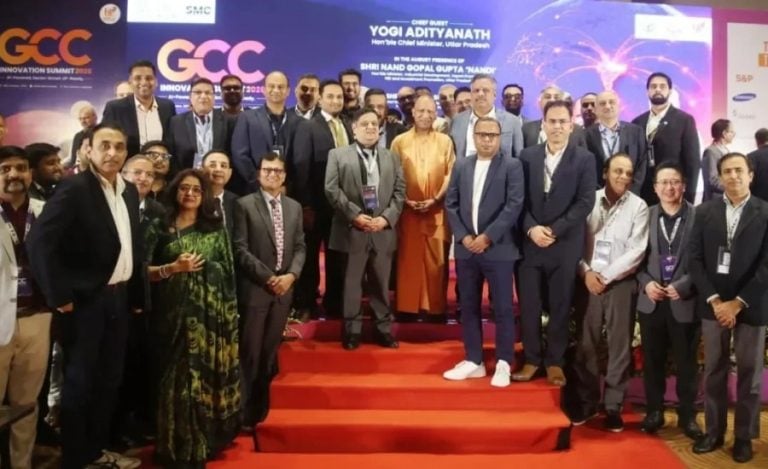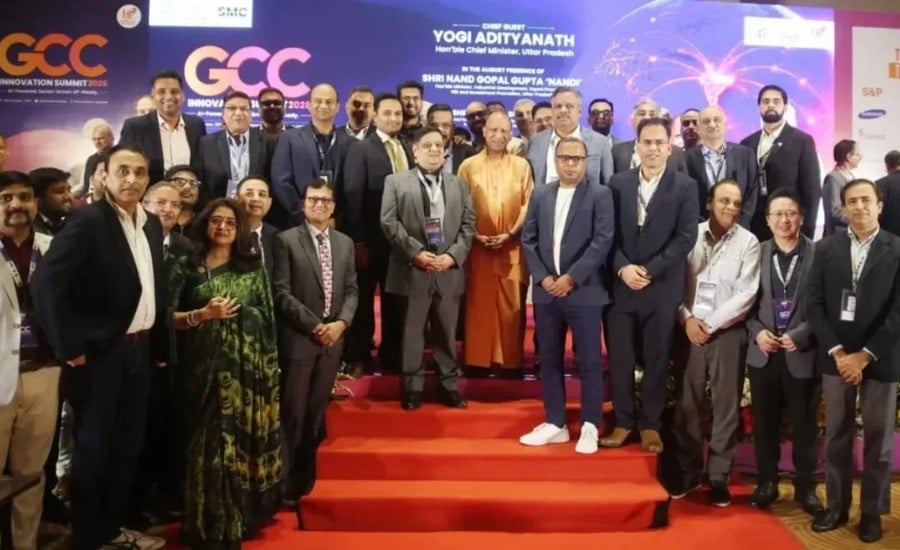
Lucknow: Uttar Pradesh has stepped up its efforts to attract global technology investments, with the state government signing 15 memoranda of understanding (MoUs) with companies and talent-development partners at the UP GCC Innovation Summit 2026 in Lucknow on October 26.
The summit also saw the issuance of Letters of Comfort (LoCs) to five prospective investors and the exchange of agreements with 13 educational institutions to strengthen industry-academia collaboration.
Chief Minister Yogi Adityanath outlined the state’s ambition to establish more than 500 Global Capability Centres (GCCs) by 2031, positioning Uttar Pradesh as a destination for advanced technology, research, innovation and high-value employment.
Organised by the IIT Kanpur Alumni Association in collaboration with Invest UP and HCLTech, the summit brought together industry leaders, investors, policymakers, technology experts and academic institutions to explore opportunities in artificial intelligence (AI), digital transformation and global business services.
Five Investors Receive Letters of Comfort
The state government issued Letters of Comfort to five companies as part of its efforts to facilitate prospective investments and encourage businesses to establish or expand their operations in Uttar Pradesh.
Read Also: UP’s GCC Expansion Plan: 15 MoUs, Five Investor Letters Expected at Lucknow Summit
The companies named in the announcement were:
- Havells India Limited
- Ameriprise India LLP
- MetLife Global Operations Support Center Private Limited
- LG Soft India Private Limited
- WSP Consultants India Private Limited
However, the formal issuance of the Letter of Comfort for WSP Consultants India remained subject to approval from the state’s Industrial Development Minister.
The initiative is intended to strengthen engagement with prospective investors and help move investment proposals towards implementation.
Companies Sign MoUs to Expand GCC Operations
The 15 MoUs signed at the summit cover partnerships with companies and talent-development organisations. The collaborations are intended to encourage new GCC operations, support business expansion and strengthen the state’s technology ecosystem.
Companies identified among the GCC and business partners include:
- EY Global Delivery Services (EY GDS)
- AML RightSource
- Computacenter
- MetLife
- DSV
- DAMAC
- Altruist
- Smartworks
Smartworks plans to establish two dedicated campuses in Lucknow, according to reports on the summit.
The partnerships are expected to support the expansion of business operations and create opportunities in areas such as technology services, digital transformation, analytics and specialised business functions.
Paytm, AWS, Barclays and IBM to Support Skill Development
Alongside investment promotion, the summit placed emphasis on developing a skilled workforce capable of meeting the requirements of global companies.
Paytm, Amazon Web Services (AWS), Barclays, IBM and Naukri were among the organisations partnering with the state on training and skill-development initiatives.
Paytm signed two MoUs under the programme.
The collaborations aim to strengthen workforce readiness by aligning training with industry requirements and the changing needs of technology-driven businesses.
Key areas of focus include:
- Technology skills: Preparing candidates for specialised roles in digital and technology services.
- Artificial intelligence: Building capabilities relevant to AI-enabled business operations.
- Industry-linked training: Aligning workforce development with the requirements of participating companies.
- Employment opportunities: Improving access to skilled roles associated with GCCs and global business operations.
These partnerships form part of the state’s broader effort to connect investment promotion with talent development and employment generation.
13 Educational Institutions Join Industry-Academia Initiative
The summit also facilitated agreements with 13 educational institutions to strengthen links between academic programmes and industry requirements.
The participating institutions included:
- Indian Institute of Technology (IIT) Kanpur
- IIT Roorkee
- Indian Institute of Management (IIM) Lucknow
- IIT (BHU) Varanasi
- Aligarh Muslim University
- Shiv Nadar University
- Motilal Nehru National Institute of Technology (MNNIT) Allahabad
- University of Lucknow
- Indian Institute of Information Technology (IIIT) Allahabad
- IIIT Lucknow
- Deen Dayal Upadhyaya Gorakhpur University
- Amity University
- Dr APJ Abdul Kalam Technical University
The proposed collaborations are intended to strengthen industry-linked education, specialised training and research and innovation capabilities.
Greater coordination between companies and academic institutions could help align curricula and training programmes with the skills required for emerging technology roles.
Uttar Pradesh Targets More Than 500 GCCs by 2031
Uttar Pradesh currently has more than 200 operational GCCs, according to figures cited by the state government.
These centres operate across sectors including banking and financial services, engineering, manufacturing, healthcare, semiconductors, technology and digital services.
GCCs are specialised centres established by multinational companies to perform functions for their parent organisations. Their responsibilities may include technology development, research and development, engineering, analytics, finance and other global business operations.
The state aims to attract new centres while encouraging existing facilities to expand into higher-value activities.
The government is also seeking to broaden GCC development beyond established technology locations by strengthening the investment ecosystem, workforce availability and infrastructure in cities across Uttar Pradesh.
GCC Policy Offers Investment Incentives
The Uttar Pradesh GCC Policy 2024 is a key component of the state’s strategy to attract multinational companies.
The policy provides eligible projects with financial incentives, subject to prescribed conditions and investment categories.
These include:
- Capital subsidy: Up to 25% of eligible capital investment, subject to applicable limits.
- Land subsidy: Incentives ranging from 30% to 50%, depending on eligibility and the relevant provisions.
- Operational support: Subsidies on specified operating expenses within prescribed limits.
- Interest subsidy: Support on eligible term loans, subject to policy conditions.
- Employment and skill development: Incentives intended to encourage recruitment and workforce training.
- Research and innovation: Support for eligible innovation initiatives and academic partnerships.
The availability and extent of incentives depend on project eligibility, investment commitments, employment requirements and compliance with the policy.
Noida and Greater Noida remain important locations for GCC investment because of their proximity to Delhi and established commercial and technology infrastructure. Lucknow is also being positioned as a growth centre, with the state seeking to expand opportunities across additional cities.
AI and Innovation at the Centre of UP’s GCC Strategy
The summit featured discussions on AI-led transformation, digital technology, innovation and the changing role of GCCs in global business operations.
The focus reflects a shift towards centres that undertake specialised functions such as product engineering, research, analytics and advanced technology development, rather than limiting their activities to routine support services.
At the summit, the Chief Minister also released a white paper titled The True Economics of AI Adoption in GCCs, prepared through a deep-tech innovation collaboration between HCLTech and IIT Kanpur.
The publication examines the economics of AI adoption in GCCs, complementing the summit’s focus on technology-led investment and innovation.
Turning Investment Proposals Into Jobs and Operations
The agreements signed at the summit are part of Uttar Pradesh’s effort to build an ecosystem connecting investors, technology companies, educational institutions and skilled professionals.
The state’s target of more than 500 GCCs by 2031 will depend on converting investment interest into operational centres, expanding existing businesses and developing a workforce suited to advanced technology and global business functions.
The 15 MoUs, five Letters of Comfort and partnerships with 13 educational institutions represent separate components of that strategy. Their longer-term contribution will depend on project implementation, actual investment, operational expansion and the employment opportunities ultimately created.
Read Also: UP Targets 500 GCCs by 2031, Plans to Link AI, Startups and DeepTech With Global Investments