Lucknow: Uttar Pradesh is seeking to expand its technology sector beyond conventional IT and IT-enabled services by building an integrated ecosystem of Global Capability Centres (GCCs), artificial intelligence (AI), startups, academic research and DeepTech innovation.
The strategy aims to attract multinational companies, encourage existing technology centres to take on higher-value functions and strengthen the links between businesses, educational institutions and emerging technology ventures.
Ahead of the UP GCC Innovation Summit 2026 in Lucknow, Alok Kumar (IAS: 1998: UP), Principal Secretary for Planning and Programme Implementation and IT and Electronics in the Uttar Pradesh government, outlined the state’s approach to building an innovation-led technology economy.
The state has set a target of establishing more than 500 GCCs by 2031, building on its existing base of over 200 centres. The summit is scheduled for October 26 at The Centrum in Lucknow, with participation expected from industry executives, investors, policymakers, startups and academic institutions.
Beyond IT Services: UP’s Plan for an Integrated Technology Ecosystem
The state’s strategy brings together several components of the technology sector, with each expected to contribute to a different stage of business and innovation.
Read Also: UP’s GCC Expansion Plan: 15 MoUs, Five Investor Letters Expected at Lucknow Summit
- IT and IT-enabled services: Provide an established base for technology operations, specialised services and employment.
- Global Capability Centres: Enable multinational companies to undertake functions such as research and development, engineering, analytics, finance and digital transformation.
- Startups: Develop new products and solutions and test them against commercial requirements.
- Universities and research institutions: Supply skilled professionals and contribute research and technical expertise.
- AI and DeepTech initiatives: Support the development and application of advanced technologies across industries.
The broader objective is to encourage companies to establish operations in Uttar Pradesh that extend beyond routine service delivery into product engineering, research, innovation and other specialised functions.
For the state, progress will depend not only on the number of companies entering the market but also on whether investments lead to operational facilities, sustained employment and higher-value technology activities.
Noida, Greater Noida and Lucknow to Serve Different Roles
Uttar Pradesh is looking to build on the advantages of its established technology centres while developing opportunities in other cities.
Noida and Greater Noida benefit from their location in the National Capital Region and an existing corporate and technology ecosystem. The state is seeking to use this base to attract additional GCC investments and encourage existing companies to expand their responsibilities.
Lucknow is being positioned as another potential destination for technology operations, supported by its educational institutions and developing digital ecosystem.
Other cities could also attract specialised technology activities where infrastructure, skilled talent and business demand support expansion.
Rather than replicating the technology ecosystems of Bengaluru or Hyderabad, the state’s approach is to offer companies multiple locations with different advantages, including access to talent, connectivity, infrastructure and operating costs.
GCC Policy Offers Financial Incentives to Investors
The Uttar Pradesh Global Capability Centres Policy 2024 provides a framework for attracting eligible GCC projects through financial and operational support.
According to the state’s official investment-promotion portal, the policy includes incentives such as:
- Capital subsidy: Up to 25% of eligible capital investment, subject to category-specific limits.
- Operational subsidy: Support of up to 20% of eligible operating expenses, within prescribed limits.
- Land incentives: Subsidies of 30% to 50% on eligible land acquired through state industrial development authorities or other government agencies.
- Payroll assistance: Reimbursement for eligible employees, subject to the policy’s conditions and limits.
- Skill development support: Financial assistance for eligible employee training programmes.
- Research and innovation support: Incentives for eligible Centres of Excellence, startup ideation and academic partnerships.
The policy distinguishes between Level-I and Advanced GCC projects, with eligibility thresholds based on investment or employment generation. The applicable incentives depend on the project’s category and compliance with the policy’s requirements.
The government is also seeking to encourage existing GCCs to expand into functions such as AI, research and development, product engineering and digital transformation, rather than focusing exclusively on attracting new centres.
Proposed AI Mission to Support Startups, Industry and Research
Artificial intelligence is a key part of Uttar Pradesh’s broader technology ambitions. The proposed UP AI Mission is intended to promote the practical use of AI across startups, universities, industry and government.
The approach under discussion covers several elements of the AI ecosystem:
- Access to computing resources for startups, researchers and businesses.
- Availability of high-quality data, with appropriate privacy and security safeguards.
- Development of technical talent and research capabilities.
- Environments where AI applications can be tested and developed.
- Pathways for deploying useful AI solutions in real-world settings.
Potential application areas include healthcare, education, agriculture, manufacturing and public services.
However, the mission’s specific institutional structure, funding and implementation arrangements should be treated as proposed measures until formally approved and announced.
The emphasis is on enabling organisations to develop and deploy useful applications, rather than measuring progress only through infrastructure creation.
Startups to Be Connected With GCCs and Large Enterprises
The state is also looking to strengthen the path from early-stage innovation to commercial adoption.
For startups, incubation and initial funding may not be sufficient to build sustainable businesses. Access to customers, technical infrastructure, experienced mentors and opportunities to test products can be equally important.
GCCs and large enterprises could provide a route to such opportunities by identifying challenges in areas including:
- Artificial intelligence and enterprise software.
- Cybersecurity and digital transformation.
- Financial technology and healthcare technology.
- Manufacturing and industrial applications.
Startups that develop solutions to these challenges could gain opportunities to demonstrate their products to prospective customers.
The proposed approach also envisages partnerships among businesses, universities and research institutions to support experimentation, product validation and commercialisation.
DeepTech Hubs and Centres of Excellence to Support Innovation
DeepTech ventures often require specialised research capabilities, advanced equipment, technical expertise and longer development cycles than conventional software businesses.
Uttar Pradesh is looking to use DeepTech Hubs and Centres of Excellence as part of its innovation strategy. These facilities could help connect research institutions with companies and startups working on complex technological challenges.
Potential areas of focus include AI, semiconductors, advanced manufacturing, cybersecurity and healthcare technologies.
The proposed model emphasises industry-linked research, technical validation and pathways to commercial use. Its effectiveness would depend on whether the facilities generate research outcomes, support intellectual property creation and help bring new products and enterprises to market.
Collaboration among GCCs, universities, startups and Centres of Excellence is expected to be an important part of this approach.
GCC Innovation Summit to Bring Investors, Universities and Industry Together
The UP GCC Innovation Summit 2026 is intended to bring together the different participants required to develop the state’s technology ecosystem.
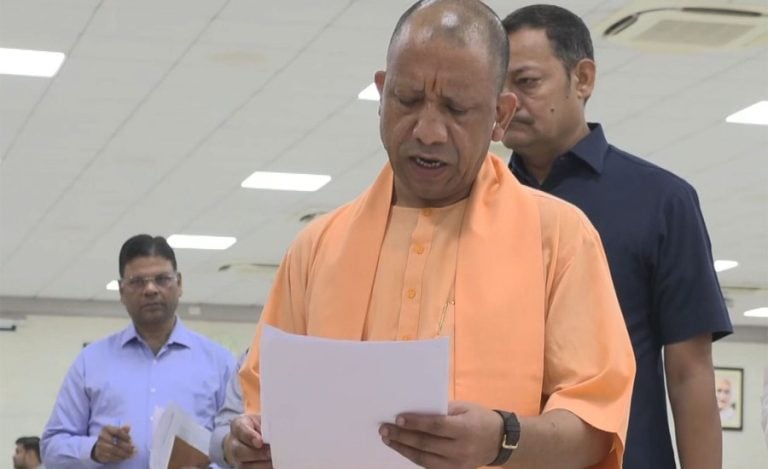
The event is being organised by the IIT Kanpur Alumni Association in collaboration with Invest UP and HCLTech, with Uttar Pradesh government support. Chief Minister Yogi Adityanath is scheduled to inaugurate the summit.
According to the announced programme, the summit is expected to feature:
- A roundtable involving GCC investors and developers.
- Eight panel discussions across two halls.
- Discussions on AI-led GCCs, product engineering and innovation.
- Sessions on startup partnerships and Centres of Excellence.
- Discussions on talent development, workforce reskilling and industry-academia collaboration.
- An exhibition covering GCCs, talent, startups and AI Centres of Excellence.
The programme is also expected to include 15 investment MoUs, five Letters of Comfort for prospective investors and MoU exchanges with 13 universities and institutions. These are planned outcomes and should not be treated as confirmed investments or operational projects before their completion is verified.
Investment Commitments to Be Measured Through Implementation
A central challenge for Uttar Pradesh will be converting investor interest and proposed partnerships into functioning businesses and measurable employment.
The state’s investment facilitation strategy involves coordinating with relevant government departments and development authorities to help companies assess locations, understand policy provisions, identify infrastructure requirements and resolve operational issues.
Progress can be assessed through concrete milestones, including site selection, commencement of operations, realised investment and verified employment.
The state’s target of more than 500 GCCs by 2031 will therefore depend on attracting new investors while helping existing centres expand into more specialised activities.
By linking GCCs with AI, startups, academic research and DeepTech, Uttar Pradesh is seeking to develop a technology ecosystem that supports both global business operations and innovation within the state.
Read Also: Yogi Adityanath to Launch 48 Development Projects Worth ₹411.77 Crore in Kanpur’s Bithoor