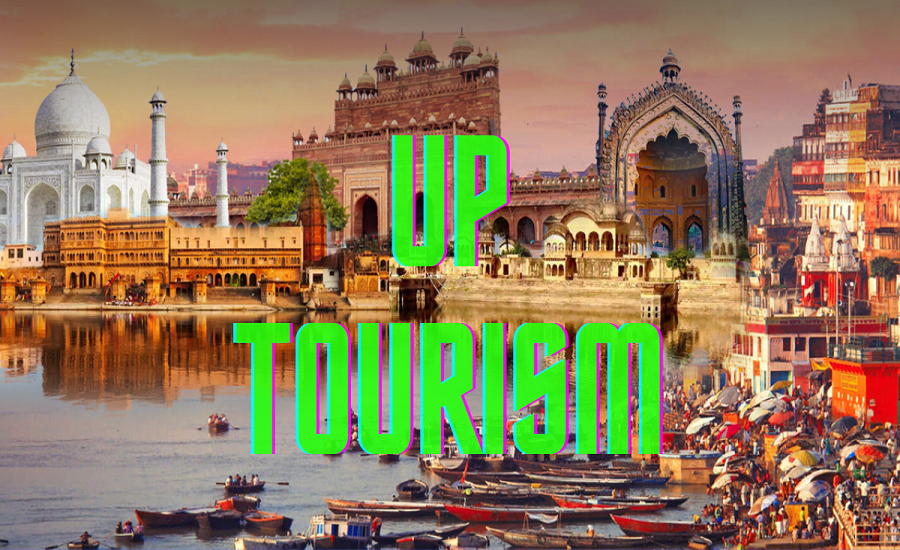
Lucknow: Uttar Pradesh has emerged as India’s leading state in domestic tourism, recording 646.8 million domestic tourist visits in 2026, according to figures highlighted by Indian Tech & Infra in a post on X.
The state has outpaced several major tourism destinations, with Tamil Nadu recording 306.8 million visits, Karnataka 304.6 million and Andhra Pradesh 290.3 million. Rajasthan stood fifth with 230.1 million visits.
Maharashtra, West Bengal, Gujarat, Madhya Pradesh and Himachal Pradesh completed the top 10 states in domestic tourist footfall.
Top States by Domestic Tourist Visits in 2026
- Uttar Pradesh: 646.8 million
- Tamil Nadu: 306.8 million
- Karnataka: 304.6 million
- Andhra Pradesh: 290.3 million
- Rajasthan: 230.1 million
- Maharashtra: Among the top 10
- West Bengal: Among the top 10
- Gujarat: Among the top 10
- Madhya Pradesh: Among the top 10
- Himachal Pradesh: Among the top 10
The figures underline the widening gap between Uttar Pradesh and the other leading states, with the state’s domestic tourist visits more than double those recorded by Tamil Nadu.
Read also: Major Infra Push: UP Clears 74-Km Expressway Linking Yamuna and Ganga Networks
Religious Tourism at the Heart of Uttar Pradesh’s Tourism Boom
A major factor behind Uttar Pradesh’s extraordinary tourism growth is its extensive network of religious and spiritual destinations.
Lucknow-based tour operator Sanjay Dixit attributed the surge largely to religious tourism, pointing to Ayodhya, Mathura-Vrindavan and Varanasi as major attractions for pilgrims and tourists from across India.
According to Dixit, the combination of religious significance, improved connectivity and better tourist infrastructure has made Uttar Pradesh increasingly attractive to domestic travellers.
The state’s tourism growth has particularly accelerated around Ayodhya and Varanasi, two of its most prominent religious destinations.
Ayodhya Records 7.20 Crore Visitors in First Half of 2026
Ayodhya has witnessed an unprecedented increase in pilgrim footfall following the opening of the Ram temple.
According to Uttar Pradesh Tourism Department figures cited in the information, approximately 7.20 crore, or 72 million, devotees visited Ayodhya between January and June 2026.
The numbers highlight the scale at which religious tourism is transforming the city’s economy. The continuous flow of pilgrims has generated demand for hotels, restaurants, transport services, shops, guides and other tourism-linked businesses.
The city’s growing prominence has also strengthened its position as one of India’s most important religious tourism destinations.
Varanasi Continues to Attract Millions
Varanasi has similarly emerged as a major pilgrimage and cultural tourism hub, particularly following the redevelopment of Kashi Vishwanath Dham.
The city recorded approximately 2.25 crore, or 22.5 million, tourist visits between January and March 2026, according to the figures provided.
Officials have also reported that more than one lakh devotees visit the Kashi Vishwanath temple every day.
The temple’s attraction has been complemented by the redevelopment of the ghats, Ganga boat rides and improved visitor facilities. The newly developed Namo Ghat is another emerging attraction.
An air show scheduled at Namo Ghat in October is expected to draw additional visitors and further enhance Varanasi’s profile as a major tourism destination.
Prayagraj, Mathura and Vindhyachal Add to Tourism Growth
The tourism boom extends beyond Ayodhya and Varanasi.
Prayagraj, Mathura, Vindhyachal and other religious and cultural centres have also witnessed increased tourist activity. Prayagraj, in particular, has continued to benefit from the increased attention following the Mahakumbh.
The growing popularity of these destinations is helping Uttar Pradesh diversify its tourism footprint beyond a handful of major cities.
The state is increasingly positioning itself around a combination of religious, historical, cultural, wildlife and urban tourism.
Better Connectivity and Infrastructure Boost Tourist Footfall
Officials attribute the increase in tourist arrivals to several factors, including improved law and order, better road, rail and air connectivity, upgraded civic infrastructure and large-scale tourism projects.
The Uttar Pradesh Tourism Department has initiated projects worth ₹1,283.33 crore, with a focus on beautification, connectivity and the development of tourist facilities.
Improved infrastructure around pilgrimage centres has been particularly important in handling the rapidly increasing number of visitors.
The development of roads, public amenities, accommodation facilities and visitor infrastructure is intended to make major destinations more accessible while improving the overall tourist experience.
₹37,688 Crore Investment Proposals Under Tourism Policy
The tourism boom has also attracted significant investor interest.
The Uttar Pradesh Tourism Policy has received investment proposals worth ₹37,688.58 crore, reflecting growing private-sector interest in the state’s tourism and hospitality potential.
The expansion of tourism is creating opportunities not only for hotels and resorts but also for restaurants, transportation companies, retail businesses, tour operators, handicrafts and other local enterprises.
The government is simultaneously attempting to promote Uttar Pradesh’s tourism destinations in international markets through participation in global events such as the Zurich Travel Mart and ITB Asia.
Tourism Growth Creating Employment Opportunities
The increase in tourist arrivals is having a wider economic impact across the state.
Rahul Mehta, president of the Tourism Welfare Association, Uttar Pradesh, said the rise in tourist numbers had benefited almost every sector connected with tourism.
The expansion is generating employment and business opportunities in hospitality, transportation, retail and other tourism-linked sectors.
Khalid Ansari, managing director of Coral Hotels and Resorts, also linked urban development with the growth of tourism and industry.
He highlighted Varanasi as an example of how tourism-led development is expanding employment opportunities in tourism, hospitality and real estate while strengthening the city’s international identity.
Tourism Development Extends Beyond Religious Destinations
Although religious tourism remains the strongest driver, Uttar Pradesh is attempting to develop a broader tourism ecosystem.
The state is looking to promote its historical cities, cultural heritage, wildlife destinations, spiritual centres and emerging urban attractions.
This approach could help Uttar Pradesh reduce its dependence on pilgrimage tourism while encouraging tourists to explore multiple destinations during a single trip.
The state’s diverse tourism assets include historic cities, religious sites, cultural landmarks, wildlife areas and traditional crafts, providing opportunities for longer tourist stays and greater local economic activity.
Centre’s Swadesh Darshan and PRASHAD Schemes Support Infrastructure
Central government initiatives have also contributed to tourism infrastructure development in Uttar Pradesh.
The Swadesh Darshan and PRASHAD schemes have focused on improving amenities and facilities at important tourist and pilgrimage destinations.
These programmes have complemented state-level infrastructure projects by supporting improvements at key tourism sites and helping develop facilities for visitors.
Youth Initiatives Aim to Expand Tourism Participation
Uttar Pradesh has also introduced initiatives to involve young people in the tourism sector.
The Chief Minister Tourism Fellowship Programme provides training and exposure to young professionals, while initiatives such as the Youth Travel Mart seek to encourage greater engagement with the state’s tourism, culture and heritage.
Such programmes are aimed at creating a pool of young professionals who can contribute to tourism promotion, research, destination management and other related activities.
Ayodhya and Varanasi Could Drive Long-Term Economic Transformation
For Uttar Pradesh, the significance of the tourism boom goes beyond the headline visitor numbers.
The rapid growth in religious tourism around Ayodhya and Varanasi is increasingly feeding into sectors such as hotels, restaurants, transportation, retail, real estate and local handicrafts.
The challenge for the state will now be to ensure that the growth in tourist numbers is matched by adequate infrastructure, effective crowd management, cleanliness and sustainable development.
If Uttar Pradesh can successfully manage the pressure created by rapidly increasing visitor numbers, the tourism surge in Ayodhya and Varanasi could become a major contributor to the state’s long-term economic transformation.
Read also: Eastern UP’s Youth Power Driving Development as Region Emerges as Economic Hub: CM Yogi Adityanath