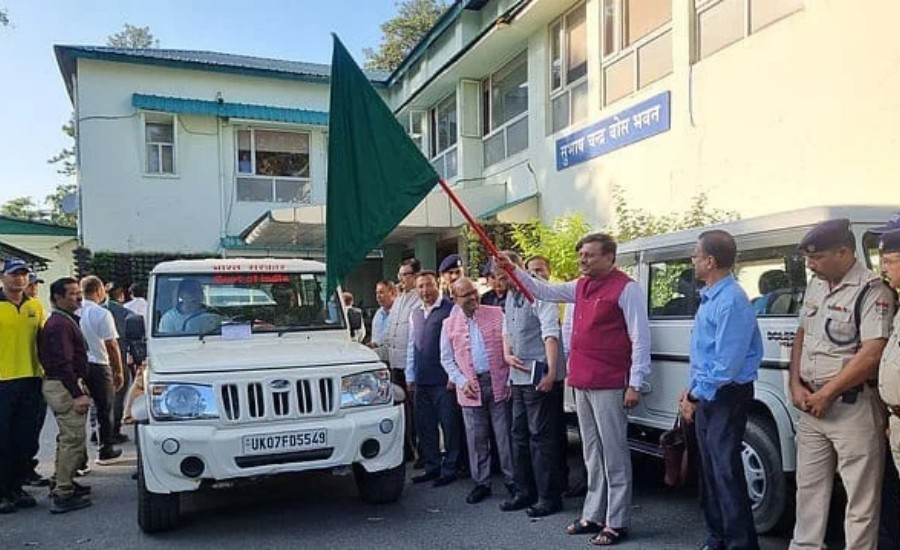
Dehradun: Uttarakhand has begun work on the state’s first glacial lake early warning system at Vasundhara Tal in Chamoli district, with a scientific team being deployed to install monitoring equipment in the high-altitude region.
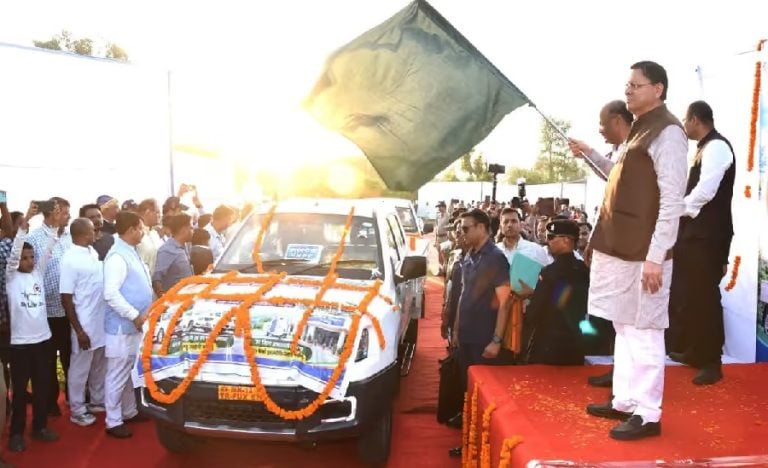
Chief Secretary Anand Bardhan, a 1992-batch IAS officer of the Uttarakhand cadre, flagged off the team from the state secretariat on September 29. The expedition is scheduled to continue until October 15 and is being coordinated by the Uttarakhand State Disaster Management Authority (USDMA).
The initiative is aimed at monitoring changes in and around the lake that could indicate conditions associated with a Glacial Lake Outburst Flood (GLOF). The system will combine sensors, real-time monitoring and satellite communication because of the lack of regular mobile connectivity at the remote site.
Sensors to Monitor Water, Weather and Snow Conditions
The monitoring system at Vasundhara Tal will include a water-level sensor to track fluctuations in the lake. An automatic weather station will record parameters including temperature, humidity, rainfall, wind speed and direction and atmospheric pressure.
Snow-depth sensors and eight subsurface temperature sensors will monitor changes in snow cover and temperatures at different depths. Other equipment will monitor water flow as well as ground movement and vibrations, according to details reported about the system. Data from the remote location will be transmitted through satellite communication to enable continuous monitoring.
The scientific team includes specialists from the Wadia Institute of Himalayan Geology, Dehradun, and the Central Building Research Institute (CBRI), Roorkee. Personnel from the SDRF, NDRF and ITBP are also supporting the expedition.
Uttarakhand Has 344 Identified Glacial Lakes
According to 2023 data from the National Remote Sensing Centre (NRSC), Uttarakhand has 344 identified glacial lakes, of which 13 have been classified as high-risk by the National Disaster Management Authority and technical institutions. Six of the high-risk lakes are in Pithoragarh, four in Chamoli, and one each in Bageshwar, Tehri Garhwal and Uttarkashi.
Authorities have also conducted bathymetric surveys of six glacial lakes to collect information on their depth and water-holding capacity. The surveyed lakes include Vasundhara Tal and Saraswati Tal in Chamoli, Kedartal in Uttarkashi and three lakes in Pithoragarh.
Vasundhara Tal has previously been subject to scientific monitoring and surveys. Government records describe it as a proglacial lake in the Dhauliganga Basin and note earlier work to assess its potential hazards.
System Could Form Basis for Wider Monitoring
The Vasundhara Tal installation is part of Uttarakhand’s broader effort to strengthen scientific monitoring of glacial lakes and GLOF risks. The state disaster-management authority has previously called for better coordination among departments, scientific institutions and technical agencies and for early-warning systems to be established where required.
Chief Secretary Anand Bardhan said the initiative would help improve understanding of GLOF risks, while state officials have indicated that similar monitoring systems could subsequently be developed for other vulnerable glacial lakes.
Read Also: Uttarakhand Chief Secretary Anand Bardhan Reviews Pending Cases, Directs Time-Bound Action