Nexus of Good
The Early Years Dividends
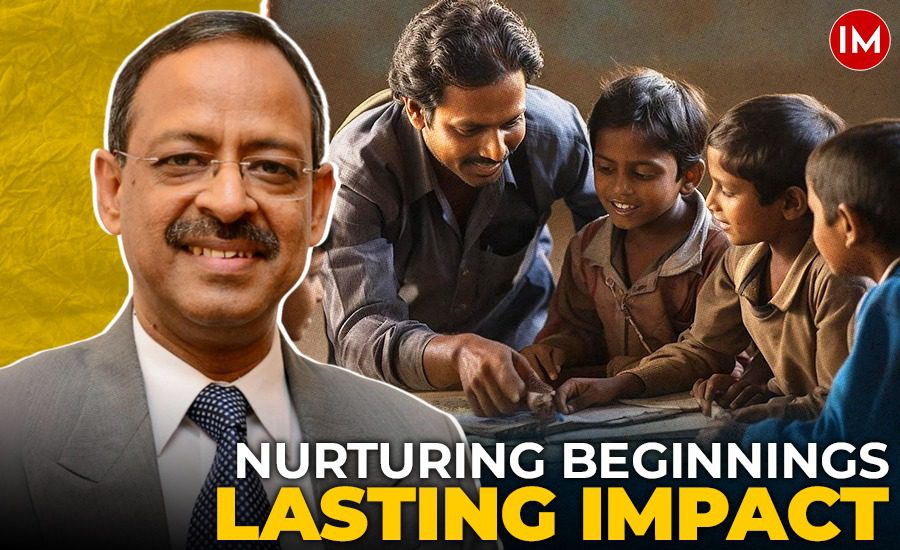
The first three years of life represent the most vital stage of human development. During this phase, a child’s brain forms over a million neural connections every second. Nearly 85% of brain growth occurs by this age. Nutrition, stimulation, positive environment and responsive care during this window shape most of the cognitive, psycho-motor, sensory and social capabilities for life. If these invisible foundations are neglected, the consequences ripple across the life course.
Nobel laureate James Heckman has shown that investments in early childhood yield 7–10 times higher returns than later interventions, benefiting health, education, and productivity. For every dollar spent, the return is 12 dollars. While much attention is paid to preschool and school education, the younger age group, under three, which is by far more important, has received less attention.
Early childhood lays the foundation of human potential. Long before school, learning and resilience begin at home through responsive parenting, and being attentive, present, and nurturing. Simple acts like comforting a baby or playing with a toddler foster trust and confidence, while neglect or toxic stress risks lasting developmental and health consequences. A major underlying reason for poor learning outcomes is a poor developmental foundation in the earliest years of life. Research shows convincingly that structured interventions in early childhood improve future cognitive outcomes. If we improve the beginnings, the ultimate gains are phenomenal.
Acknowledging the significance of early years, the government prioritises Early Childhood Development (ECD) through the Integrated Child Development Services (ICDS), one of the world’s largest programs, reaching over 10 crore children under six via nearly 14 lakh Anganwadi Centres (AWCs). ICDS delivers six core services—nutrition, health care, immunisation, referral, preschool education, and counselling. Initiatives like Saksham Anganwadi and Poshan 2.0 upgrade infrastructure, integrate services, and drive community mobilisation, while the Poshan Tracker enables real-time monitoring. The recently launched (2023) Poshan Bhi, Padhai Bhi initiative aims to strengthen the Early Childhood Care and Education (ECCE) interventions covering the 0-6 years of age.
Children aged 3–6 years benefit from structured preschool education and robust monitoring through AWCs and Bal Vatikas established under the National Education Policy 2020. However, the 0–3 age group, confined essentially to home, largely depends on visits by Anganwadi Workers (AWWs), who often prioritise Anganwadi-based activities over home contacts. Thus, average families often get sub-optimal guidance on critical elements of nurturing care—emotional responsiveness, early learning, playing with toys and safe exploration.
Several Indian states have introduced innovative approaches to strengthen ECD. Telangana has pioneered mobile Anganwadi services, bringing early learning and nutrition support directly to underserved communities, while also offering diploma courses to enhance the professional capacity of AWWs, thereby improving service delivery quality.
Maharashtra’s Aarambh program underscores the importance of early stimulation, integrating play-based learning and parental awareness campaigns to foster cognitive and socio-emotional growth in children under three. Kerala, known for its high literacy and social development indicators, has adopted QR-coded curricula to modernise pedagogy, alongside community crèches and call centres that provide parents with timely guidance on childcare and nutrition. Meghalaya’s ECD Mission stands out for its inclusive focus, addressing the needs of tribal and rural populations through responsive parenting and community-based models of care.
During COVID-19 (2020), Odisha identified that while nutrition services continued, children’s early learning and stimulation were disrupted. In response, it launched Ghare Ghare Arunima for ages 3–6 and the Kuni Calendar for under-threes, guiding families on care, nutrition, and stimulation. These evolved into Aama Kuni Pilaa, a comprehensive home-based, parent-led campaign with toy banks, cultural flipbooks, and trained Anganwadi Workers supporting play, songs, and stories. Complementary programs like Prarambha Sukhada Shaishaba and mascots such as Tiki Mausi enhance parental engagement and community awareness.
Together, these state-driven innovations illustrate a growing recognition that localised, context-specific strategies are critical to advancing India’s ECD/ECCE outcomes and reducing inter-generational cycles of disadvantage.
There is a need to strengthen interventions for children aged 0–6 years with special focus and effort for 0-3 years old. The key to promoting early childhood development, care and education is to engage, guide and empower families. Apart from mothers, fathers and grandparents have a critical role to play. Indeed, it takes the entire family to nurture a child. Activities should cover cognitive, psycho-social, motor and sensory domains. Home visiting by workers for imparting age-specific guidance on play-based activities, the use of local toys and demonstrations is essential. Personal contacts can be successfully reinforced by mobile phone messages, coaching and mini-videos. Every child needs to be tracked for the attainment of developmental milestones and provided with interventions if there is a delay. Infants who are low birth weight and have neonatal sickness require greater attention.
Expanded crèche facilities for children of working women are also essential to secure holistic early childhood development. Children should be reached for developmental stimulation not only at homes and Anganwadis, but also in creches and workplaces.
Community norms on child development and cognitive achievement need to be elevated to an aspirational level through a Jan Andolan comprising campaigns, events and involvement of women’s groups, youth, volunteers and community leaders.
For a Viksit Bharat, intelligent, educated, skilled and productive human resource is an essential pre-requisite, the foundation of which is laid in the earliest years.
Efforts in early childhood development, thus, enable securing long-term social and economic gains. When families receive knowledge, resources, and support, their children thrive, creating healthier and smarter citizens and thereby a stronger nation. Intensifying early childhood development and education efforts in Amrit Kaal is essential to building a competent and value-driven human capital for the nation. Children of today and tomorrow represent the human capital that would deliver the goals of 2047 and beyond.
As India celebrates 75 years of ICDS this Gandhi Jayanti, it is an opportunity to re-imagine, revamp and re-energise systematic efforts on early childhood development through this ambitious program.
The initiative in Odisha, under the inspired leadership of Anu Garg, Development Commissioner, is a wonderful example of Nexus of Good. The model can be scaled and replicated through a public-private partnership.