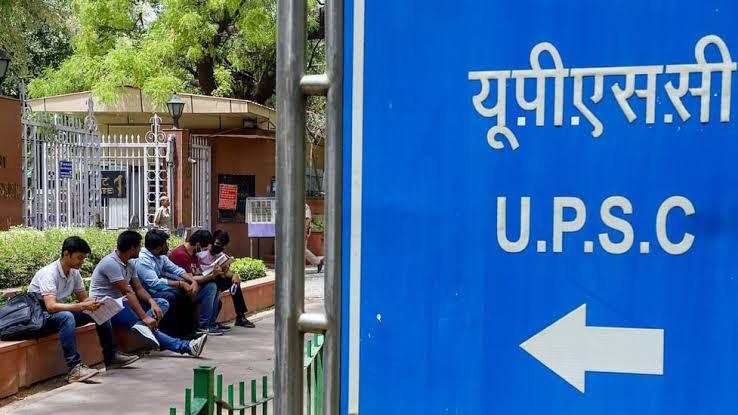
The Civil Service Exam template of three-phase selection – Prelims, Mains and Personality Test – has continued from 1979, even though the structure, syllabi, and relative weightage of each of the three components has changed from time to time. The examination draws nearly a million aspirants across the country, and given the logic of the exam, it is bound to leave the overwhelming majority of people frustrated, disempowered and heartbroken at the end of a long-drawn process.
Should India not give civil service aspirants the option to sit for an exam of the specific service they want to join after the Prelims?
FREQUENTLY CHANGING PATTERN OF CSE
In 1989, an essay paper was introduced in the Mains exam, and the marks for the Personality Test were enhanced. In 2001, the Civil Services Examination Review Committee, chaired by professor Y. K. Alagh, held that ‘the new millennium demanded excellence at every level of governance which required almost total re-shaping and re-structuring of the economic as well as the administrative apparatus of the government’. It suggested that while the ‘optional’ subject may be continued in the Prelims, the General Studies (GS) paper should be recast as ‘Civil Services Aptitude Test’ comprising questions on basic awareness, problem solving and ‘data analysis ability’. It also recommended the substitution of the optional papers of the Main examination with four compulsory papers – Sustainable Development and Social Justice, Science and Technology in Society, Democratic governance, Public Systems and Human Rights.
The next committee on Civil Service Reforms (the earlier one was called a review committee) was chaired by Purna Chandra Hota in 2004 who suggested that aptitude and leadership tests may be introduced for selection and that probationers may be allowed one month after commencement of training to exercise their option for Services. While the second recommendation was not accepted, the Civil Services Aptitude Test at the Prelims was introduced from 2011.
The new format had two papers of two-hour duration each with a weightage of 200 marks. The first paper, also called General Studies, was based on current events, history of India and Indian national movement, Indian and world geography, Indian polity, Panchayat Raj system and governance, economic and social development, environmental ecology, biodiversity, climate change and general science, art, and culture. The second was the Civil Services Aptitude Test, which assessed the candidate’s skills in comprehension, interpersonal behaviour, communication, logical reasoning, analytical ability, decision-making, problem-solving, basic numeracy, data interpretation, English language comprehension skills and mental ability.
However, after an uproar that this was not fair to those whose medium of instruction was not English, it became a ‘qualifying’ test, and while candidates had to secure 33 per cent marks, these were not to be included in determining the merit list.
In 2013, the number of optional subjects was reduced from two to one and the compulsory papers increased from two to four. The previous two GS papers got divided into three, and a new paper, ‘Ethics, Integrity and Aptitude’ was introduced. The marks for essay were raised from 200 to 250 and in the subsequent year, aspirants wrote two essays, instead of one.
TIME FOR SEPARATE EXAMS?
As things stand today, the Civil Services Mains written examination consists of nine papers, two qualifying and seven ‘ranking’ in nature. The range of questions vary from just one mark to 60 marks, 20-word to 600-word answers. Candidates who pass the qualifying papers are ranked according to the marks, and a selected number of candidates are called for the personality test by the UPSC.
In 2012, the Parliamentary Committee on Home Affairs did suggest a separate examination for the Indian Police Service (IPS) to attract candidates with the right ‘attitude and aptitude’ so that the quality of service is not compromised. The views of UPSC, Sardar Vallabhbhai Patel National Police Academy, and state governments was sought. As only six state governments favoured the idea, the proposal was dropped. While the Ministry of Home Affairs did hold a limited competitive exam for filling vacancies in the IPS from members of state police and Central Armed Police Forces in 2012, the Central Administrative Tribune (CAT) directed the UPSC not to declare the results. The government did not press the case and in fact, opposed the Limited Competitive Examination (LCE) when the matter came up in the Supreme Court.
SERVICE-SPECIFIC PAPERS CAN BE INTRODUCED
However, while it is true that from the perspective of the aspirants it is better for them to take a common exam, is it fair to any Service to induct officers who never wanted to join it in the first place? Would it not make sense if the Prelims and the compulsory papers for the Mains were common to all services, but service-specific papers introduced for the IAS, IPS, IFS and Revenue Services with focus on public policy and governance, criminal law and internal security issues, international affairs, and tax policy respectively? There are certainly pros and cons if this suggestion were implemented, but is it not high time to discuss the issue threadbare?
Meanwhile, the UPSC has announced that it will also recruit 150 officers for the Indian Railway Management Services or IRMS (constituted by the merger of the IRTS, IRPS and IRAS), thereby increasing the number of vacancies from 861 to 1,011. So, while is good news for the Civil Service Exam aspirants this year, whether or not it is a step in the positive direction in the long run is still a question mark.
(This column is by Dr Sanjeev Chopra, Distinguished Fellow, USI, New Delhi, Fellow of the Royal Asiatic Society of GB & I, London, HRA, LMFSAI, Harvard University, Historian, Columnist, and Festival Director, Valley of Words: International Literature & Arts Festival, Dehradun www.valleyofwords.org)