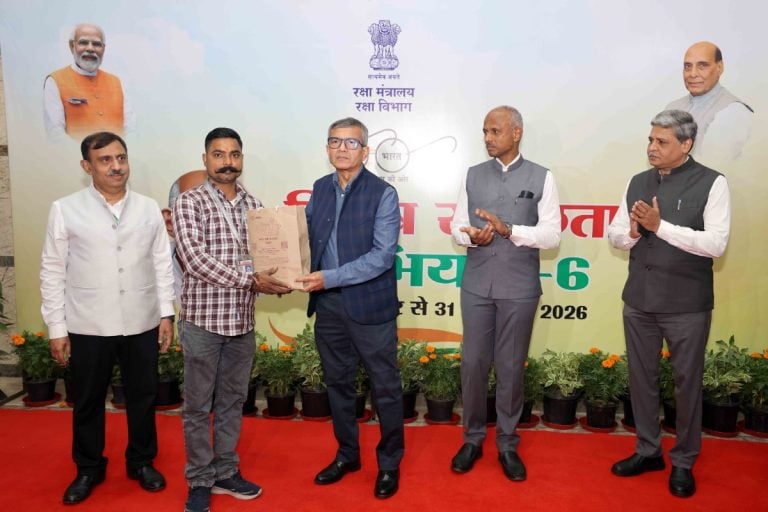
New Delhi: The Ministry of Environment, Forest and Climate Change (MoEFCC) has commenced the Implementation Phase of Special Campaign 6, focusing on cleanliness, reducing pending matters and scientific management of e-waste across its offices and field establishments.
The campaign will run from October 2 to October 31, 2026, covering the Ministry’s subordinate offices, autonomous organisations, regional offices and other field and outstation offices. Special attention is being given to establishments that have direct public interaction or provide public services.
This year’s campaign places particular emphasis on the effective collection, segregation and disposal of e-waste, along with efforts to improve records and space management and remove redundant items from government offices.
E-Waste Management Gets Special Focus
Under Special Campaign 6, the MoEFCC has circulated detailed campaign guidelines and a Standard Operating Procedure (SOP) for the scientific disposal of e-waste to its organisations and offices.
The e-waste identified during the campaign will be processed according to applicable rules and the SOP finalised for the campaign.
The identified categories include information technology and telecommunication equipment, consumer electrical and electronic products, photovoltaic panels, electrical tools, laboratory equipment and medical devices.
The Ministry has identified 1,425 IT and telecommunication equipment items for action. Other identified categories include 1,058 consumer electrical, electronic and photovoltaic items, 333 large and small electrical and electronic equipment, 42 electrical and electronic tools, 13 toys, leisure and sports equipment, three medical devices, 23 laboratory instruments and 374 items under other categories.
The exercise is intended to ensure that obsolete electronic equipment is handled through a more systematic and environmentally responsible process instead of remaining unused in government offices.
Read also: Tiger Reserves Face New Management Test: MEE-TR 2026 Adds Solid Waste as Key Criterion
Over 26,000 Files Identified for Review
Reducing pendency is another major component of the campaign.
During the preparatory phase, the Ministry identified 12,234 physical files and 14,164 e-files for review. The exercise will help offices identify records that require action, retention or further processing and improve the management of government records.
The campaign also covers pending references and public-facing matters. The MoEFCC has set targets for reviewing 37 references from Members of Parliament, 16 Parliamentary Assurances, four State Government references, 445 public grievances, 96 public grievance appeals and two PMO references.
No target has been identified under Inter-Ministerial/Cabinet references.
These activities are aimed at helping offices reduce accumulated pending work while improving the handling of records and references.
132 Sites Marked for Cleanliness Campaign
Cleanliness remains another central component of Special Campaign 6.
The Ministry has identified 132 campaign sites for cleanliness-related activities. The campaign also includes space management and the disposal of redundant items and furniture.
The focus is not limited to one-time cleaning. The broader objective is to make cleanliness and better workplace management part of regular office functioning.
This approach is in line with the campaign’s objective of institutionalising Swachhata, rather than treating cleanliness as a short-term exercise.
Record and Space Management Included
Special Campaign 6 also covers the review of government records and better utilisation of office space.
As part of the preparatory phase, organisations identified physical and electronic files that require review. Redundant materials and furniture will also be considered for disposal where applicable.
Better record management can help government offices locate important documents more efficiently while reducing the accumulation of outdated or unnecessary material.
Similarly, space management can help offices make better use of available infrastructure and create more organised working environments.
Nodal Officers to Track Progress
The implementation phase has started across the MoEFCC’s subordinate offices, autonomous organisations and regional offices.
Nodal officers have been designated to coordinate campaign activities, monitor progress and ensure timely reporting against the identified targets.
The Ministry will track the campaign through the Special Campaign for Disposal of Pending Matters (SCDPM) Portal of the Department of Administrative Reforms and Public Grievances (DARPG).
The portal will be updated regularly during the implementation phase, allowing progress against campaign targets to be monitored.
Focus on Scientific Disposal of Electronic Waste
The e-waste component is particularly relevant as government offices regularly use computers, communication equipment, electronic devices and other electrical infrastructure.
By identifying obsolete equipment in advance and following a standardised disposal procedure, the campaign seeks to bring greater discipline to the handling of electronic waste.
The approach also links office housekeeping with environmental responsibility. Instead of treating discarded electronic equipment simply as unwanted material, the campaign requires identified e-waste to be processed under applicable rules and prescribed procedures.
Campaign Runs Till October 31
Special Campaign 6 will continue until October 31, 2026, with the MoEFCC monitoring implementation across its offices and organisations.
The combination of cleanliness drives, file reviews, grievance disposal, record management, space utilisation and scientific e-waste handling gives the campaign a wider administrative focus.
For citizens, the exercise can contribute to more organised public offices, faster handling of pending references and grievances, and more systematic management of government records. Its environmental component also places responsible electronic waste disposal within the routine functioning of government establishments.
The campaign reflects a broader effort to improve efficiency and workplace management while ensuring that environmental responsibilities remain part of everyday government administration.
Read Also: Forests Meet Technology: India-Japan Project Gets ₹537 Crore Push for Smarter Forest Management