New Delhi: India has launched a new phase of its cooperation with Japan to strengthen forest management, with a ₹537.10 crore project focusing on frontline forest personnel, scientific research, modern technology and region-specific training.
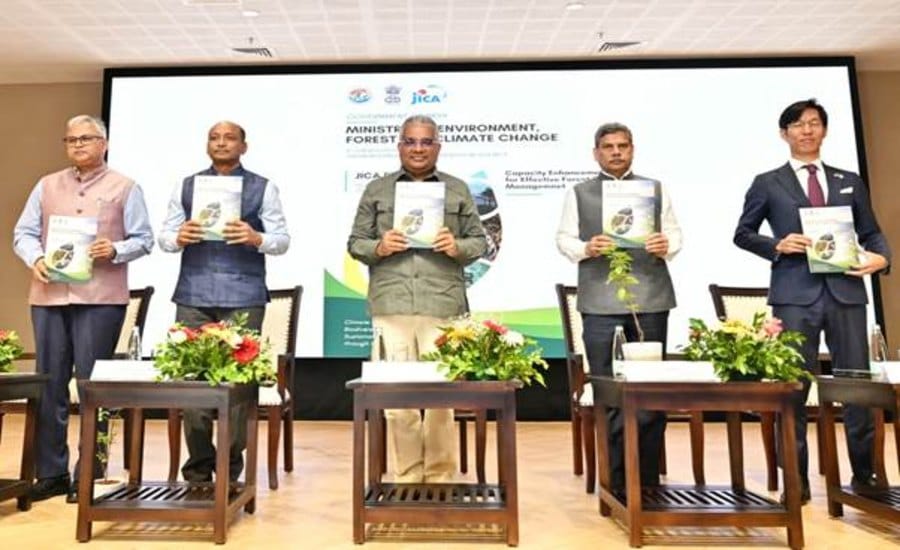
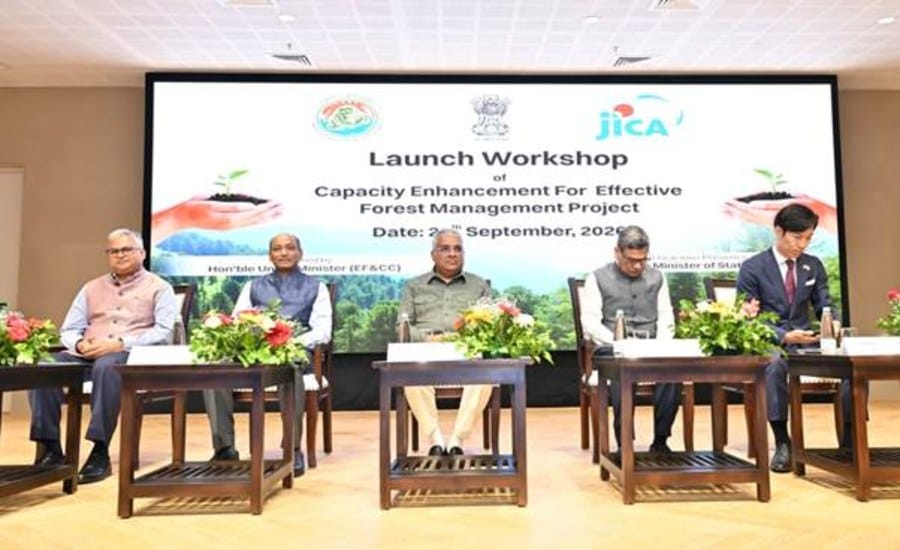
Union Environment, Forest and Climate Change Minister Bhupender Yadav launched a workshop on the Capacity Enhancement for Effective Forest Management Project in New Delhi on September 25. The workshop was organised by the Ministry of Environment, Forest and Climate Change (MoEFCC) in collaboration with the Japan International Cooperation Agency (JICA).
The project will run from 2025-26 to 2031-32 and will involve all States, with priority given to new participating States while also supporting States covered under the earlier related initiative.
₹537 Crore Project to Strengthen Forest Management
The project has a total outlay of ₹537.10 crore. Of this, ₹440.42 crore will come from JICA, while the Government of India will contribute ₹96.68 crore.
The initiative aims to improve the capabilities of frontline forest personnel as forest and wildlife management becomes more complex due to changing environmental conditions, climate concerns and increasing responsibilities at the field level.
The project also seeks to strengthen research and development so that research findings can be converted into practical training and improved forest management practices.
Focus on Region-Specific Forest Training
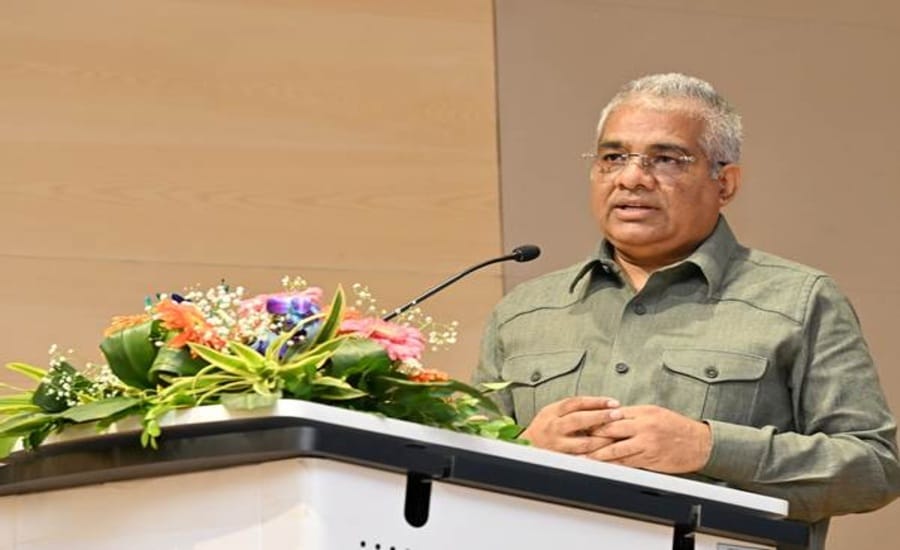
At the workshop, Bhupender Yadav stressed that capacity-building programmes should reflect the specific needs of different regions.
Instead of following a uniform training model, the project will develop region-specific capacity-building modules that incorporate local knowledge, field challenges and practical requirements.
The Minister also called for training that goes beyond classroom learning. According to the Ministry, the project will focus on applying modern technologies, scientific approaches and field-level best practices to address real challenges faced by forest personnel.
This approach is particularly relevant for areas facing different forest management issues, including forest fires, biodiversity pressures and climate-related challenges.
Read Also: A New Roar in Madhya Pradesh: CCB-2 Joins Gandhi Sagar’s Cheetah Family
Forest Fire Management and Biodiversity in Focus
Forest fire management has been identified as one of the important areas where the project can strengthen technical and field-level capabilities.
Yadav highlighted the need to improve the ability of forest personnel to respond to challenges related to forest fires, biodiversity conservation and climate action.
The project will also integrate the experience and knowledge of local communities into forest management. The objective is to combine traditional knowledge with scientific methods and emerging technologies rather than treating them as separate approaches.
Research, Pilot Projects and Stronger Training Institutions
The project has several interconnected components aimed at improving how forest management knowledge reaches the field.
These include research and development for practical technological solutions, pilot projects to test field-level applications, strengthening of training institutions and sharing of best practices with SAARC countries and other developing nations.
The research component is expected to help translate scientific findings into training programmes and practical solutions for forest departments.
JICA’s own project documentation also identifies research, pilot projects, training-system development and institutional strengthening as core components of the initiative.
Digital Transformation and Livelihood Generation
The second phase of the project will also focus on wood transformation and livelihood generation, digital transformation for improved forest management and collaborative academic research.
JICA Senior Representative Eiji Wakamatsu said the initiative is intended to bring Indian and Japanese research institutions together to work on solutions to global challenges in forest management, climate change and capacity building.
The partnership also aims to contribute to India’s engagement with countries of the Global South by sharing knowledge and approaches developed through the project.
Nearly Three Decades of India-Japan Forestry Cooperation
The latest initiative builds on decades of cooperation between India and Japan in the forestry sector.
According to JICA, its forestry partnership with India has supported afforestation, reforestation and forest regeneration, along with community-oriented initiatives. The agency said its forestry cooperation has benefited more than 7 lakh people.
JICA had signed an ODA loan agreement for the current forest management project in March 2025. The agreement was aimed at strengthening the capacity of Indian forest administrators through research, pilot projects and improved training systems related to forest and biodiversity conservation and climate change.
States, Research Institutions to Work Together
The New Delhi workshop brought together senior officials from MoEFCC, JICA representatives, State and Union Territory Forest Departments, Indian research institutions and central forestry training institutes.
The technical session included presentations on the objectives and scope of the project, perspectives from JICA representatives and an interactive discussion involving States, research institutions and training institutes.
A project brochure outlining the objectives and areas of cooperation was also released during the event.
From Training Rooms to Action on the Ground
The project places emphasis on converting training and research into practical outcomes for forest management.
For frontline forest personnel, this means greater exposure to field-based practices, technological tools and region-specific approaches. For institutions, the initiative provides a framework to connect research, training and field implementation.
The wider objective is to strengthen sustainable forest management while improving India’s capacity to respond to climate-related challenges, biodiversity conservation needs and changing forest management requirements.
By bringing government agencies, research institutions and Japanese expertise together, the seven-year initiative seeks to create a stronger link between local knowledge, scientific research and emerging technology in India’s forests.