New Delhi: The Supreme Court has sought a comprehensive account of state laws and executive policies governing the appointment of Directors General of Police (DGPs), after concerns emerged that some states may have framed rules contrary to the court-mandated selection guidelines.
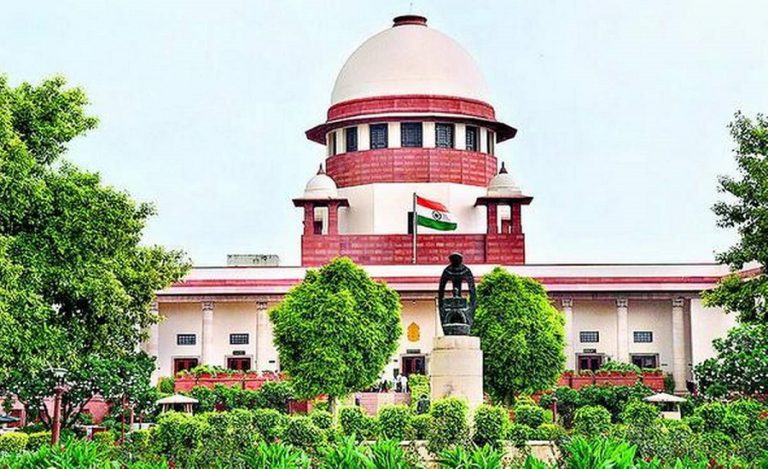
A bench headed by Chief Justice of India Surya Kant, and comprising Justices Joymalya Bagchi and V. Mohana, on Tuesday directed the Union government to submit details of states whose legislative or executive provisions do not comply with the directions issued in the 2006 Prakash Singh judgment.
The direction came during the hearing of a case challenging the rules under which Jharkhand appointed its current DGP, Tadasha Mishra. The court observed that its decision on the Jharkhand provisions could have implications for other states with similar arrangements.
The bench directed the Centre to place a report on record identifying such state-level provisions. It also asked amicus curiae and senior advocate Raju Ramachandran to prepare a comprehensive note on laws and rules that may run contrary to the Supreme Court’s directions.
The matter has been listed for further hearing on November 25, 2026.
Why the Supreme Court Is Examining Jharkhand’s DGP Appointment Rules
The proceedings centre on the Selection and Appointment of Director General and Inspector General of Police, Jharkhand (Head of Police Force) Rules, 2025.
The Union government has challenged the provisions under which Tadasha Mishra was appointed Jharkhand’s DGP on December 30, 2025, just a day before her scheduled retirement.
Mishra is a 1994-batch IPS officer of the Jharkhand cadre. Her appointment was made under the state’s amended rules, which the Centre has argued are inconsistent with the Supreme Court’s directions on eligibility for appointment as a state police chief.
On October 8, the Supreme Court had questioned the validity of the Jharkhand provisions and asked the state to consider revisiting them. It also issued notice to Mishra, giving her an opportunity to respond.
The bench had observed that if the relevant rules were ultimately struck down, her appointment could also be liable to be set aside.
The Centre’s application challenges the legality of the rules as well as the appointment made under them.
Six-Month Residual Service Requirement at the Centre of the Dispute
The dispute concerns the eligibility condition that an officer must have at least six months of service remaining before retirement to be considered for appointment as DGP.
The requirement was clarified by the Supreme Court in its March 13, 2019 order in the Prakash Singh proceedings. The court said that the Union Public Service Commission (UPSC) should prepare the panel of eligible officers only from those who have a minimum residual tenure of six months.
The clarification was intended to prevent appointments being made immediately before an officer’s retirement, while ensuring that the selection process was based on merit.
It is important to distinguish this condition from the separate requirement that an appointed DGP should ordinarily have a minimum tenure of two years. The six-month rule concerns eligibility at the selection stage, while the two-year provision concerns the tenure after appointment.
Uttar Pradesh, Punjab and Bihar Also Mentioned During Hearing
During Tuesday’s proceedings, senior advocate Raju Ramachandran informed the court that similar provisions could exist in other states.
He specifically referred to:
- Uttar Pradesh: Ramachandran said he had come across a state law providing an exemption to the six-month residual service requirement.
- Punjab: The state has enacted legislation dealing with the selection and appointment of its DGP.
- Bihar: The state has also framed laws concerning the appointment of its police chief.
Ramachandran said identifying such provisions would allow the court to examine the issue comprehensively rather than deal with similar disputes separately.
However, the mention of these states does not mean that the Supreme Court has already ruled their respective laws invalid. Their provisions are to be examined in light of the court’s earlier directions.
Centre Says Similar Violations Should Also Be Examined
Solicitor General Tushar Mehta, appearing for the Union government, urged the court to first decide the dispute concerning Jharkhand.
He referred to the court’s October 8 proceedings, during which Jharkhand had been asked whether it wished to revisit its 2025 rules.
Jharkhand was represented by senior advocate Kapil Sibal, who told the bench that he had spoken to the state’s Chief Secretary and that an affidavit would be filed before the next hearing.
Sibal also pointed to the existence of similar provisions in Uttar Pradesh and questioned whether the Centre intended to challenge those rules as well.
Mehta responded that he did not represent Uttar Pradesh, adding that the Centre’s challenge in the present proceedings concerned the Jharkhand matter. He also maintained that any other state provisions found to be contrary to the Supreme Court’s directions could be brought to its notice.
What Did the Prakash Singh Judgment Say About DGP Selection?
The Supreme Court’s landmark 2006 judgment in Prakash Singh and Others vs Union of India laid down a series of directions for police reforms across the country.
Among other measures, it sought to make the selection of state police chiefs more transparent and merit-based and to provide stability in the leadership of state police forces.
The key provisions relating to DGP appointments include:
- UPSC empanelment: The state government is to select its DGP from among the three senior-most officers empanelled by the UPSC.
- Merit-based selection: The selection is to consider an officer’s length of service, very good service record and range of experience.
- Minimum tenure: An appointed DGP should ordinarily receive a minimum tenure of two years, irrespective of the officer’s date of superannuation.
- Six-month residual service: A subsequent Supreme Court clarification requires an officer to have at least six months of service remaining before retirement to be considered for empanelment.
The directions were intended to reduce arbitrary appointments and transfers and strengthen professionalism and continuity in police leadership.
What Happens Next?
The Union government will now have to submit the requested report identifying state laws and executive policies that may be inconsistent with the Prakash Singh directions.
Amicus curiae Raju Ramachandran has also been asked to place a comprehensive note before the court, covering provisions similar to those under challenge in Jharkhand.
The next hearing is scheduled for November 25. The proceedings could have implications for DGP selection procedures across states, depending on the provisions identified and the court’s eventual findings.
Read Also: Jharkhand: Supreme Court to Hear Centre’s Contempt Plea Over Tadasha Mishra’s DGP Appointment