In western Odisha’s Balangir district, migration has long been a way of life. Every year, thousands of labourers leave their homes in search of work in cities such as Ahmedabad, Pune, Surat, Mumbai, and Bengaluru, as well as in southern states like Tamil Nadu and Kerala. For many, it is a necessary journey driven by survival and hope.
But beneath this pattern of migration lies a harsh and often hidden reality – one where desperation is exploited. Women and children, in particular, become easy targets for traffickers who lure them with false promises of high wages, safe working conditions, and better futures. What begins as a journey for livelihood can quickly turn into a nightmare of confinement, abuse, and forced labour.
Recognizing this growing threat, a determined effort has emerged from within the district’s police leadership – an effort not just to react to crime, but to dismantle the very networks that enable it.
A Mission Begins: Leadership with Purpose
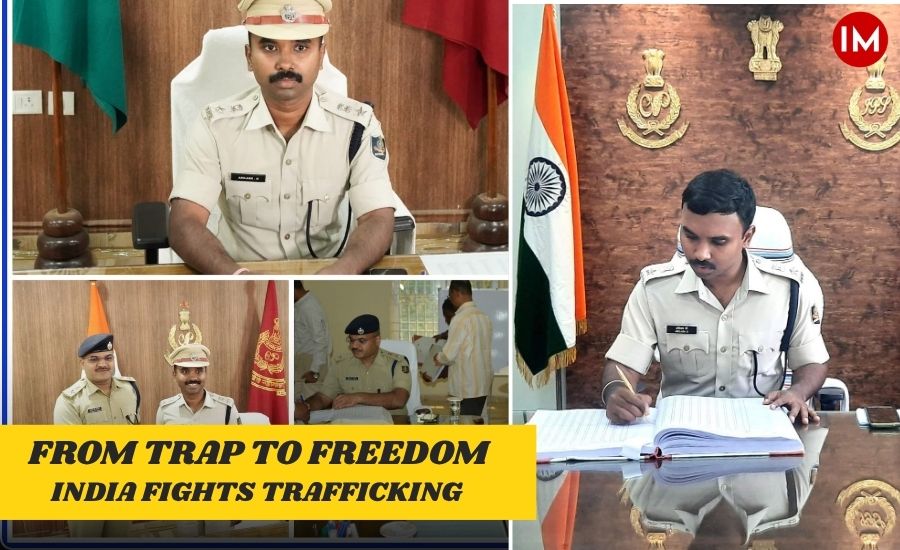
When IPS officer Abilash G, a 2018-batch officer of the Odisha cadre, took charge as Superintendent of Police (SP) of Balangir in March 2025, he identified human trafficking as one of the district’s most urgent challenges.
From the outset, his approach was clear – this would not be a routine law enforcement task. It would be a focused mission to break organized trafficking networks, protect vulnerable communities, and ensure migration remains safe rather than exploitative.
Under his leadership, the Balangir Police began intensifying surveillance, strengthening intelligence networks, and preparing for both preventive and enforcement-driven action.
“Migration should be a pathway to livelihood, not a gateway to exploitation,” he said, setting the tone for what would become one of Balangir’s most determined anti-trafficking drives.
The Breakthrough Operation That Shocked the District
A major turning point came in October 2025, when the district witnessed one of its most significant anti-trafficking operations.
Acting on a tip-off, Kantabanji police carried out a late-night raid on a house in Ward No. 8 of Balangir. What they discovered was deeply disturbing – 55 migrant workers, including 41 adults and 14 children, confined within the premises.
Investigations revealed that these individuals were being prepared for trafficking to other states. The plan was to send them to brick kilns and construction sites, where they would likely face exploitation under harsh and unregulated conditions.
The operation, led by the police, resulted in the immediate rescue of all victims. Authorities identified a key suspect, Brajesh Behera, and launched a manhunt to track down those involved in the trafficking network.
In the aftermath, surveillance across the district was significantly intensified. Toll gates and transport hubs were alerted to monitor suspicious movements, ensuring that traffickers could not easily move victims across state lines.
Rescue, Relief, and Rehabilitation
The operation did not end with the rescue.
Ensuring the safety and dignity of the victims became the immediate priority. The rescued individuals were provided with food, shelter, and medical care. Authorities worked closely with social welfare departments to initiate rehabilitation processes, especially for women and children.
The rescued children received counseling and protection, helping them recover from trauma and reintegrate into safer environments.
The incident sent shockwaves across the region. Local residents praised the swift action of the police, while community leaders demanded strict punishment for those responsible. Activists also called for stronger monitoring of migrant labour movement to prevent such cases in the future.
For the Balangir Police, however, this was not the end – it was just the beginning of a larger crackdown.
Cracking Down on Trafficking Networks
Following the October operation, the district police, under Abilash G’s leadership, intensified efforts to dismantle trafficking networks at their roots.
The results have been significant.
“Balangir Police have registered more than 200 trafficking-related cases, many under Section 137 of the Bharatiya Nyaya Sanhita related to kidnapping and abduction,” Mr Abilash shared.
These cases represent not just numbers, but a systematic effort to break organized chains of exploitation that operate across districts and states.
Police teams have conducted rescue operations across multiple states, bringing back women and children who had been trapped under false promises of employment.
Beyond Enforcement: Preventing Exploitation Before It Begins
While strict law enforcement remains a key pillar, IPS Abilash’s strategy goes much further – focusing equally on prevention.
Understanding that trafficking often begins at the village level, the district police have launched awareness campaigns across rural areas, especially before the migration season begins.
These campaigns educate families about:
- The risks of dealing with unknown agents and middlemen
- Common tactics used by traffickers
- The importance of verifying job offers
Labourers are also being encouraged to:
- Register with the Labour Department
- Obtain official labour cards
- Inform their local police stations before leaving for work
This structured approach ensures that migration becomes documented and traceable, reducing opportunities for exploitation.
As Abilash explains: “If migration is streamlined and documented, middlemen and traffickers lose the space to exploit vulnerable families, especially those facing language barriers in new states.”
A Model of Coordinated Action
The anti-trafficking efforts in Balangir stand out for their multi-layered approach:
- Over 200 trafficking-related cases registered to disrupt organized networks
- Rescue operations across states bringing victims back safely
- Village-level awareness campaigns to prevent exploitation at the source
- Labour registration initiatives ensuring safe and documented migration
- Coordination with welfare departments for rehabilitation and support
This combination of strict enforcement, preventive awareness, and inter-departmental coordination is steadily transforming how the district tackles trafficking.
Ensuring Migration Remains a Path of Hope
Balangir’s story is still unfolding, but one thing is clear – the fight against human trafficking here is no longer reactive. It is strategic, sustained, and deeply rooted in both law enforcement and community engagement.
Under the leadership of IPS Abilash G, the district is working toward a future where migration remains what it was always meant to be – a pathway to opportunity, not exploitation.
By breaking trafficking networks and empowering vulnerable communities with awareness and support, Balangir is setting an example of how determined leadership and coordinated action can turn the tide against one of society’s most pressing challenges.