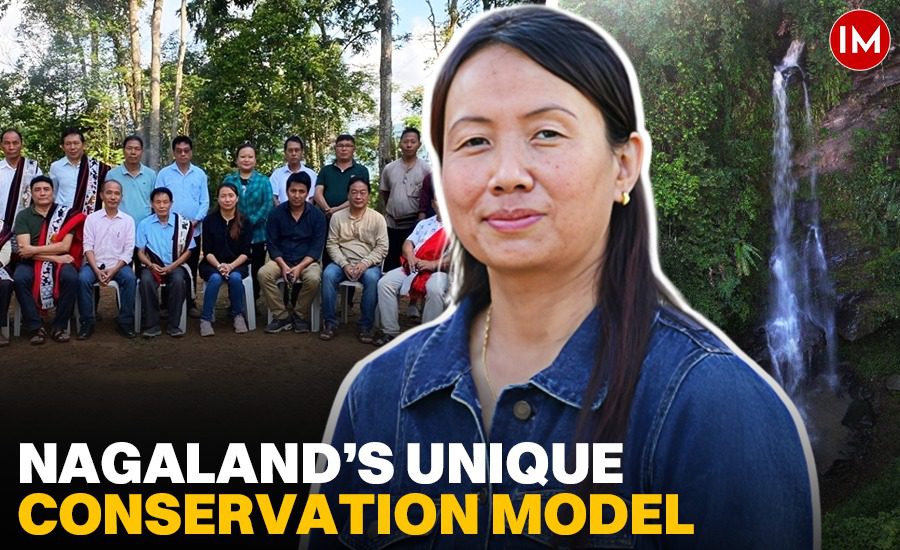
In the hills of Mokokchung, Nagaland, forests are not distant green patches… they are identity, memory, and survival. Long before formal conservation laws, the Ao Naga communities had already built their own systems of protection. Sacred groves stood untouched for generations, quietly preserving biodiversity without enforcement, paperwork, or patrols.
When Dr. Sentitula, a 2011-batch Indian Forest Service officer of the Nagaland cadre, took charge as Divisional Forest Officer of Mokokchung, she didn’t arrive with a plan to change this system. Instead, she chose to understand it.
A veterinary doctor by training, with a BV Sc & AH from Guwahati and an MV Sc in animal genetics and plant breeding from Karnal, her academic grounding in science met something deeper on the ground: lived ecological wisdom.
“Forest and community cannot be separated, and the knowledge of conservation is rooted from the community,” she shared in an exclusive conversation with Indian Masterminds.
That idea didn’t become her strategy; it became her starting point.
THE MOKOKCHUNG MODEL: STRENGTHENING, NOT REPLACING
In Nagaland, over 80 per cent of forests are owned and managed by communities. Any conservation effort that ignores village institutions risks collapsing before it begins.
Dr. Sentitula recognised this early. Instead of imposing external models, she built what is now known as the Mokokchung Model of Community Conservation, a framework that works with traditions rather than against them.
One of the most critical decisions was around Jhum cultivation. Practiced by more than 60 percent of Nagaland’s population, Jhum covers over half the state’s land and provides nearly two-thirds of its food.
Replacing it was never an option.
Improving it was.
FROM JHUM FALLOW TO LIVING FOREST
Under the Nagar Van Yojana, launched in 2020, a bold transformation began. Fifty hectares of degraded Jhum fallow land were converted into a community-managed green space.
What was once fire-prone land slowly began to breathe again.
Thousands of saplings were planted. Forest trails were carved. Water conservation structures took shape. But the real shift wasn’t just ecological; it was social.
Villages didn’t just participate; they led.
“This is one of the highest conservation efforts where a Jhum land was converted into a Community Conservation area with total commitment by the community,” Dr. Sentitula explains.
WHEN TECHNOLOGY MEETS TRADITION
Innovation in Mokokchung didn’t come from disruption; it came from convergence.
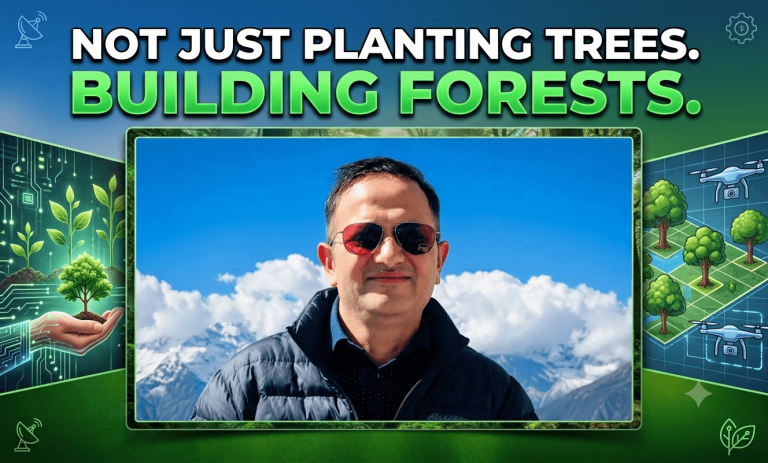
For the first time, community-managed forests were mapped using GPS and drones. Trails, water bodies, and conservation structures were geotagged, creating a baseline database that had never existed before.
At the same time, indigenous practices like stone bunding for soil conservation were studied, documented, and integrated into scientific planning.
Global exposure added another layer. Insights from Japan International Cooperation Agency (JICA) projects and KfW Development Bank frameworks helped refine restoration strategies and understand conservation economics.
Yet, even with modern tools, the core remained unchanged: local knowledge led the way.
WALKING THE LAND, NOT JUST TALKING ABOUT IT
Convincing communities did not begin with meetings in halls.
It began on the ground.
Dr. Sentitula and her team walked through clan forests, water sources, and cultural landmarks alongside villagers. Participatory mapping replaced formal presentations. Conversations replaced instructions.
The process rekindled something powerful: ownership.
People weren’t being asked to conserve. They were being reminded that they already were.
TURNING ORAL TRADITIONS INTO LIVING RECORDS
One of the biggest challenges wasn’t resistance; it was the absence of documentation.
Generations of ecological knowledge existed only in stories. Boundaries were remembered, not recorded. Conservation practices were followed, not written.
To bridge this gap, elders were interviewed. Oral histories were documented. Village boundaries were reconstructed through participatory mapping. Traditional agreements were formalized into official records.
This wasn’t just documentation; it was preservation of memory.
HANDLING DOUBT, BUILDING TRUST
Scepticism did emerge, especially among younger members of the community.
The response wasn’t confrontation.
Instead, village elders were brought into the process. Their narratives were recorded, validated publicly, and shared within community forums. This created a bridge between generations, linking conservation to identity.
Slowly, doubt turned into participation.
LIVELIHOODS THAT GROW WITH FORESTS
The impact of the initiative extends beyond ecology.
Socially, communities have stepped into leadership roles in forest protection. There is pride in ownership, a visible shift in how conservation is perceived.
Economically, the model offers steady income opportunities. Self-Help Groups are generating profits through value-added forest products, creating a balance between livelihood and conservation.
“Constant source of income and at the same time balancing Forest Conservation and Livelihood,” Dr. Sentitula notes.
A LANDSCAPE REIMAGINED
Today, the transformation is visible.
What was once degraded land is now a regenerating forest. Multiple villages are actively engaged. Hundreds of community members participate in protection efforts. Saplings are not just planted—they survive.
But numbers alone don’t define success.
“The real metric is total commitment by the community efforts,” she emphasizes.
A MODEL THAT CAN TRAVEL, BUT NOT BE COPIED
Can this approach work elsewhere?
“Yes, but not as a blueprint,” Dr. Sentitula says. “It is a framework.”
Its strength lies in adaptation: understanding local cultures, building trust, and supporting communities rather than replacing them.
THE LIVING LAB VISION
Looking ahead, Mokokchung is set to become more than a conservation success; it aims to be a learning space.
“We envision building the Mokokchung Community Conservation Living Lab where science learns from tradition, not just studies it,” she says.
The vision includes:
- Research on carbon sequestration in regenerated Jhum fallows
- Biodiversity recovery studies
- Validation of traditional ecological knowledge
- A training hub for forest officers across the Northeast
It is a space where researchers, academicians, and practitioners can engage directly with community-led conservation.
AN OLD IDEA, SEEN CLEARLY AGAIN
Mokokchung doesn’t present a new theory.
It quietly reminds us of something older.
When forests are treated only as state assets, protection depends on enforcement. But when forests are part of identity, protection becomes instinctive.
Across Mokokchung, that instinct is visible, in the hands planting saplings, in the elders sharing stories, and in the communities choosing to protect what has always been theirs.
CLOSING NOTE
As Dr. Sentitula reflects through her work:
“Traditional practices and community involvement are essential for effective conservation and livelihood promotion… Jhum cultivation and forest conservation go hand in hand, mutually supporting each other.”
And in Mokokchung, that balance is no longer an idea; it is a living, growing reality.