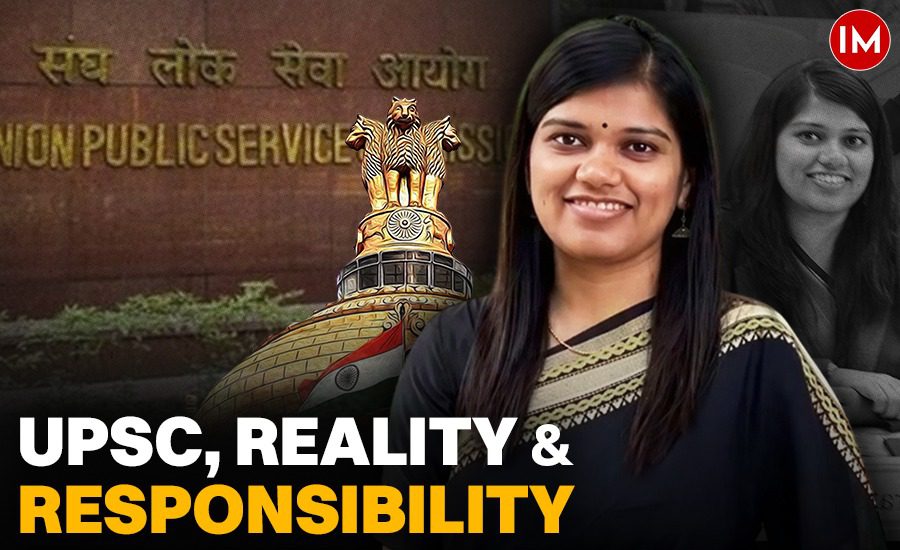
In districts like Sheohar, change rarely makes headlines. It unfolds quietly—in a sanctioned house, a corrected record, or a long-pending payment finally released. At the centre of many such changes is Pratibha Rani, an officer who believes that governance is not about authority, but about making systems deliver—consistently and fairly.
Her journey from a corporate professional to a district administrator is not just inspiring—it is deeply instructive, especially for UPSC aspirants trying to understand what it really takes to succeed.
FROM CORPORATE LIFE TO CIVIL SERVICES
Pratibha Rani began her career as an engineer and worked with Samsung in Delhi-Noida. Life was stable, structured, and predictable. But her weekend engagements with NGOs, particularly in skill development, exposed her to a different India—one where opportunity was limited not by talent, but by access.
“I felt that if I really wanted to contribute, I had to be inside the system,” she recalls.
This realization became the turning point. She decided to prepare for UPSC—not out of fascination, but out of purpose.
UPSC JOURNEY: FAILURE, STRATEGY AND COMEBACK
Her UPSC journey was far from easy. She could not clear prelims in her first two attempts. The second attempt was particularly painful—she missed the cutoff by just 0.67 marks.
But instead of being discouraged, she used failure as feedback.
“After my second attempt, I realised that preparation cannot be rigid. It has to evolve,” she says.
HER KEY STRATEGY SHIFTS:
1. BALANCING LIMITED SOURCES WITH WIDE COVERAGE
While many toppers advise limiting sources, Pratibha adopted a balanced approach.
“Limiting sources is important, but so is exposure. If you read only one newspaper, you might miss perspectives,” she explains.
She ensured conceptual clarity from core sources but supplemented them with diverse inputs, especially for current affairs.
2. PRACTICE AS THE GAME-CHANGER
She emphasizes that UPSC is as much about application as it is about knowledge.
- Regular mock tests for prelims
- Consistent answer writing for mains
- Practicing articulation for interview
“Practice brings clarity. It tells you where you stand,” she says.
3. LEARNING FROM MISTAKES, NOT REPEATING THEM
After each attempt, she analysed her weaknesses honestly—be it gaps in revision, lack of test practice, or missing out on certain topics.
4. VARIETY IN PREPARATION
She believes monotony can limit performance.
“There should be variety in preparation. It helps you connect different topics and think better,” she notes.
This approach ultimately helped her crack UPSC CSE 2018.
THE REALITY CHECK: LIFE AFTER SELECTION
Like many aspirants, Pratibha too had certain perceptions about civil services. But field experience quickly changed that.
“Civil services is not about doing what you want. It is about ensuring that the system runs,” she says.
Her postings in Purnia, Jamui, and Bhagalpur exposed her to challenges like:
- Shortage of trained staff
- Gaps in digitisation
- Implementation inefficiencies
- Limited administrative autonomy
Yet, these challenges also became opportunities to improve governance at the micro level.
TRANSFORMING BHAGALPUR: IMPACT ON GROUND
As Deputy Development Commissioner in Bhagalpur, her work translated into measurable improvements:
- 18,000 houses completed under PMAY in 10 months
- 858 landless families provided land
- 54% improvement in job card verification
- ₹1 crore pending wages cleared
- PMAY ranking improved significantly (state and national levels)
- MGNREGA ranking jumped from 31st to 4th
“We focus on those who are left out. Inclusion is the real test of governance,” she says.
Her approach combines data-driven monitoring with ground-level engagement.
BREAKING MYTHS ABOUT CIVIL SERVICES
Pratibha is candid about the gap between perception and reality.
“People think it is a powerful job where you can do anything. But in reality, you work within policies,”she explains.
Officers are implementers, not policymakers. This often limits their ability to introduce independent changes. However, she believes that improving execution can itself create significant impact.
WOMEN IN ADMINISTRATION: CHANGING THE NARRATIVE
Coming from Ranchi, Pratibha grew up in an academically strong family. Her father is a lawyer, and her mother is a government officer.
She represents a new wave of women officers who are redefining leadership.
“Girls are not less capable. They just need the right opportunities,” she says.
Her journey stands as a testament to that belief.
A MESSAGE TO ASPIRANTS
Her advice is clear and grounded:
“Do not prepare for civil services just because of its image. Understand the reality first,” she says.
She encourages aspirants to:
- Explore different career options
- Align preparation with genuine interest
- Stay adaptable in strategy
- Focus on consistent practice
A JOURNEY ROOTED IN PURPOSE
Now serving as the first woman District Magistrate of Sheohar, Pratibha Rani continues to work with the same clarity—improving systems, strengthening delivery, and ensuring that governance reaches those who need it most.
Her story is not just about clearing UPSC.
It is about understanding India, working within constraints, and still finding ways to make a difference—quietly, but effectively.