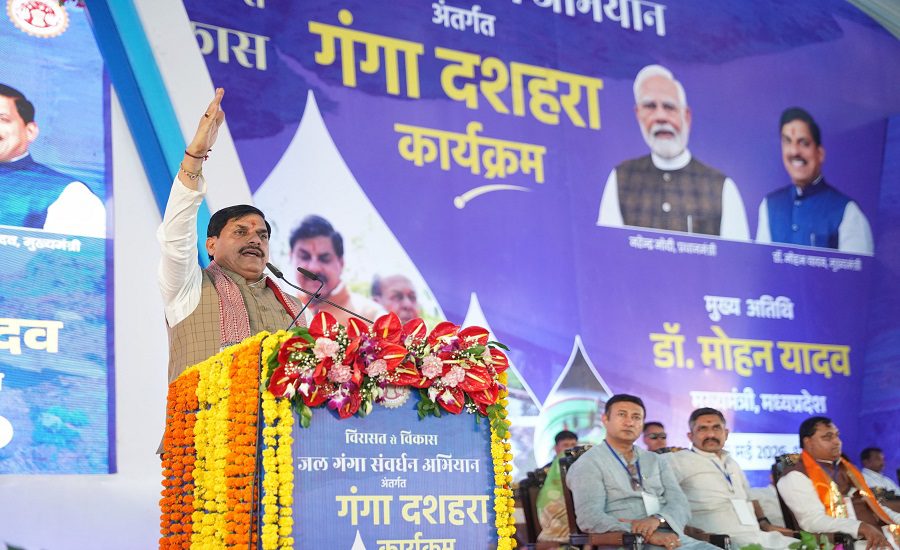
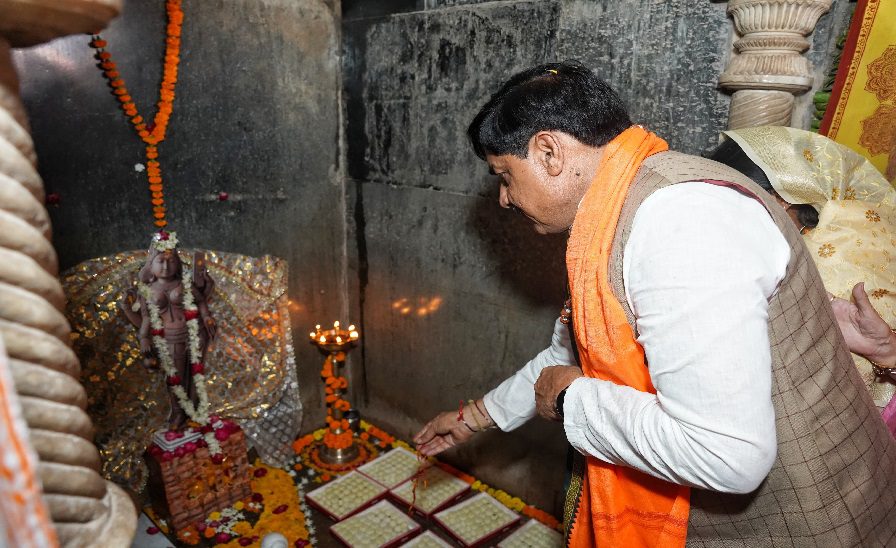
Dhar/Bhopal: In a significant political and cultural event, Madhya Pradesh Chief Minister Dr. Mohan Yadav performed a traditional worship ceremony of Maa Vagdevi at the historic Bhojshala complex in Dhar. The ritual is being described by the government as the first formal worship at the site in over 750 years.
Following the ceremony, the Chief Minister announced a series of major development initiatives aimed at transforming Dhar into a key cultural, educational, and industrial hub of the state.
Historic Worship at Bhojshala After 750 Years
During his visit, CM Dr. Yadav entered the Bhojshala premises and offered prayers to Maa Vagdevi (Goddess Saraswati) following full Vedic rituals. He also performed a formal aarti, calling the day spiritually significant as it coincided with Ganga Dussehra.
The state government highlighted the event as a historic moment, claiming that such a structured worship at the site had not taken place for centuries.
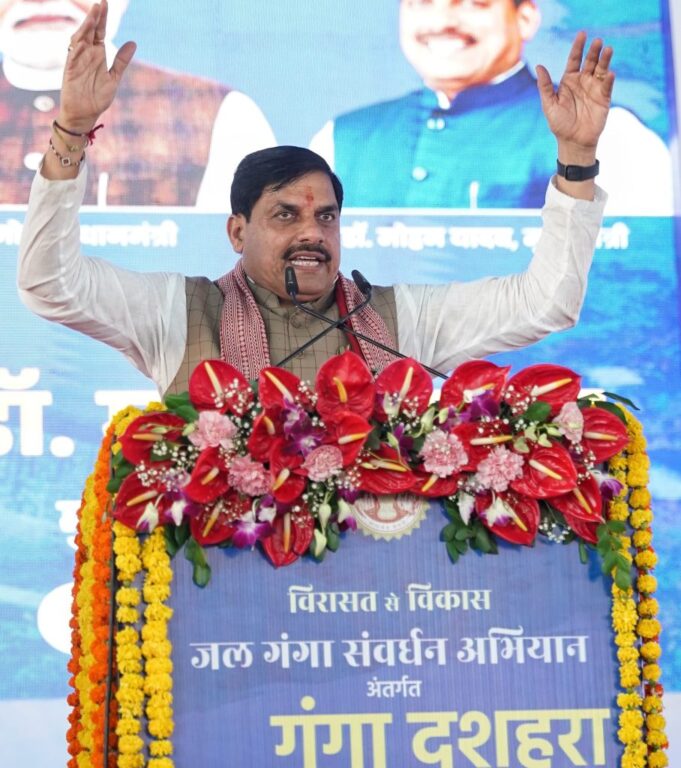
Announcement of Saraswati Lok and Raja Bhoj Research Institute
In a major policy announcement, the Chief Minister declared the establishment of two key institutions in Dhar:
- Maa Saraswati Lok, envisioned as a cultural, literary, and tourism centre
- Raja Bhoj Research Institute, aimed at promoting historical and academic research related to King Bhoj and regional heritage
He stated that Dhar would now enter a “new era of development” and would be developed according to public aspirations.
Bhojshala Linked to Heritage and Historical Pride
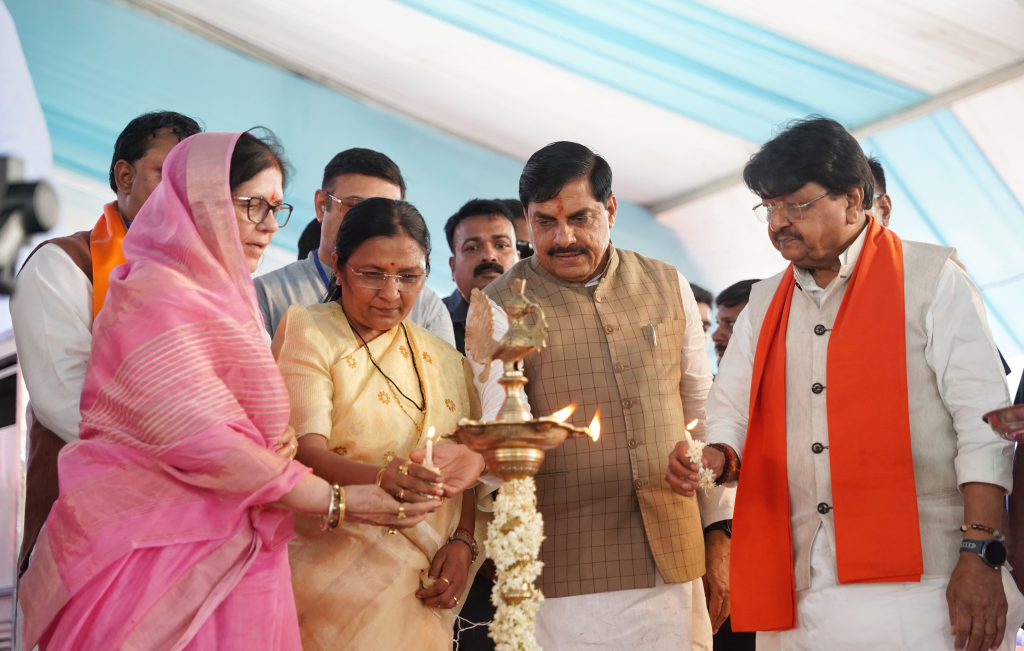
Addressing the gathering, CM Yadav described Dhar as the land of legendary rulers including Raja Bhoj, Samrat Vikramaditya, and Emperor Harshavardhan. He emphasized Raja Bhoj’s contributions to architecture, literature, and water conservation systems, highlighting his legacy in building large water bodies and promoting scholarly traditions.
The Chief Minister also reiterated the importance of preserving cultural heritage while moving towards modern development.
Development Projects Worth Crores Launched
Alongside cultural announcements, CM Yadav laid the foundation stones and inaugurated development works worth crores of rupees in Dhar district.
Key highlights include:
- Projects worth ₹88.04 crore for infrastructure development
- Multiple initiatives under water conservation programs
- Restoration of traditional water bodies including wells, ponds, and stepwells
- Expansion of irrigation infrastructure and groundwater recharge systems
He also noted that over 55,000 farm ponds and more than 105 Amrit Sarovars have been developed across the state under water conservation efforts.
Focus on Water Conservation and Rural Development
The Chief Minister emphasized Madhya Pradesh’s leadership in water conservation under the Jal Ganga Sanvardhan campaign. According to official figures:
- Over 2.82 lakh projects planned under the campaign
- Approximately 2,500 crore worth of ongoing works
- More than 8 lakh “Jal Doots” (water ambassadors) engaged
- Restoration of 64 ancient stepwells and 64 historic ponds in Dhar
He said these initiatives aim to strengthen irrigation, recharge groundwater, and preserve traditional water resources.
Dhar Positioned as Industrial Growth Hub
CM Yadav also highlighted Dhar’s growing industrial importance, stating that it is emerging as one of Madhya Pradesh’s strongest industrial districts.
He pointed to the PM MITRA Park project, where cotton produced by tribal farmers will be processed into textiles and exported directly from the region.
Remarks on Prime Minister Narendra Modi
Referring to national leadership, the Chief Minister praised Prime Minister Narendra Modi, stating that India is witnessing governance driven by heritage and development together. He cited implementation of major judicial decisions, including the Ram Temple verdict, as an example of strong administrative leadership under the Prime Minister.
Vision for Dhar’s Future Development
Concluding his address, CM Yadav said Dhar is set to undergo a major transformation with a focus on tourism, education, heritage preservation, and industrial growth. He assured that the state government’s vision is to develop the district in line with its historical importance and public aspirations.