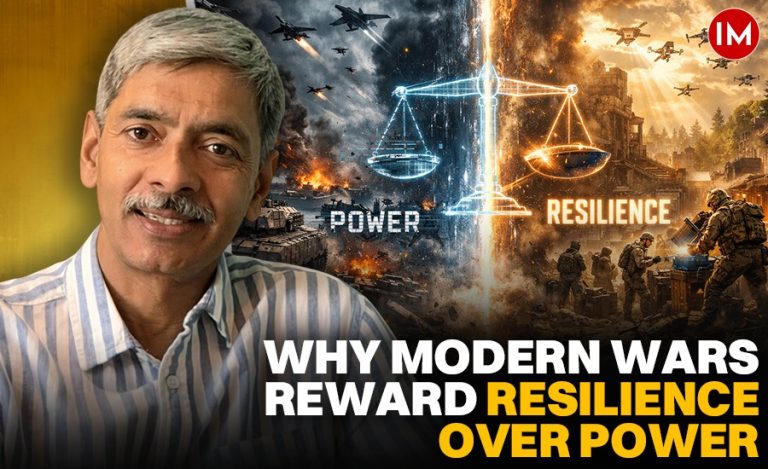
Not every civil servant begins with a lifelong dream of joining the IAS. For Saurabh Katiyar (2016 batch, Maharashtra cadre), the journey was less about early certainty and more about exploration.
An IIT Kanpur graduate with both B.Tech and M.Tech degrees, Mr. Katiyar had multiple career paths open to him – from management studies at IIM to pursuing a PhD abroad. Like many high achievers, he chose to step into the corporate world first, joining Qualcomm in Bengaluru.
But within months, the clarity he was looking for began to emerge.
“Public service is something that gives me satisfaction. My interest lies there. Furthermore, civil services offer so much diversity — you can work in any field, which I don’t think is possible elsewhere,” Mr Katiyar shared in an exclusive video interview with Indian Masterminds.
Watch the full video interview here:
That realisation led him to the UPSC Civil Services Examination—not just once, but twice. Despite already clearing it, he reappeared to improve his outcome, a decision that reflects both ambition and clarity.
LEARNING BEYOND LANGUAGE
Coming from Uttar Pradesh, Mr Katiyar’s posting in Maharashtra meant adapting to an entirely different linguistic and cultural environment.
The transition wasn’t seamless — especially in an administrative system where Marathi plays a central role. But instead of resisting the change, he leaned into it.
“The real learning happens in the field — by talking to people and working with them.”
He points out that while the initial months were challenging, the overlap between Hindi and Marathi made the process easier. More importantly, people appreciated the effort.
Over time, what began as an adjustment turned into comfort — and eventually, belonging.
POWER WITHOUT DISTANCE
The role of a district collector often carries an image of authority and distance. But Mr Katiyar consciously resists that transformation.
Despite handling a high-pressure administrative role in Mumbai Suburban — one of the country’s most complex urban districts — he describes himself as unchanged.
“I still feel I am as grounded as I was before — in school or college.”
He maintains close ties with his school and college friends, even travelling with them regularly. It’s a deliberate choice—to stay connected to a life beyond designation.
Unlike smaller districts, where the collector’s office is the central authority, Mumbai operates through a network of specialised agencies — BMC, MMRDA, and MHADA.
Here, the collector’s role is more defined and focused.
“The role here is more of coordination and handling specific land-related matters.”
Instead of direct control, the job demands collaboration — especially in areas like land acquisition, inter-departmental coordination, and regulatory issues.
It’s governance in a more complex, layered environment.
THE ‘MODERN SETU’ INITIATIVE
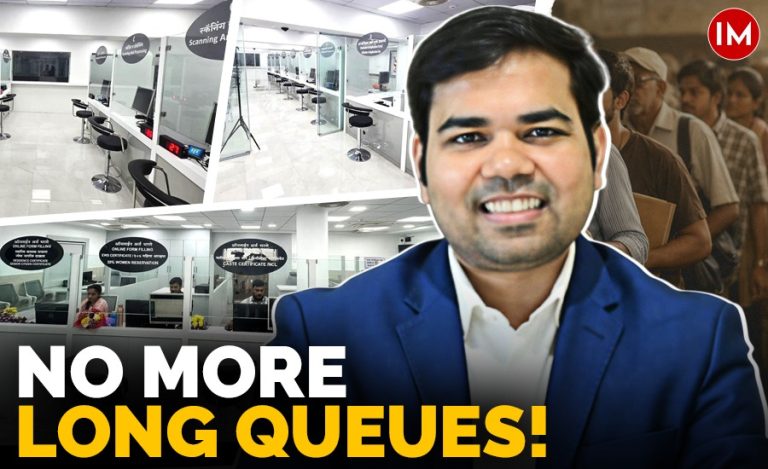
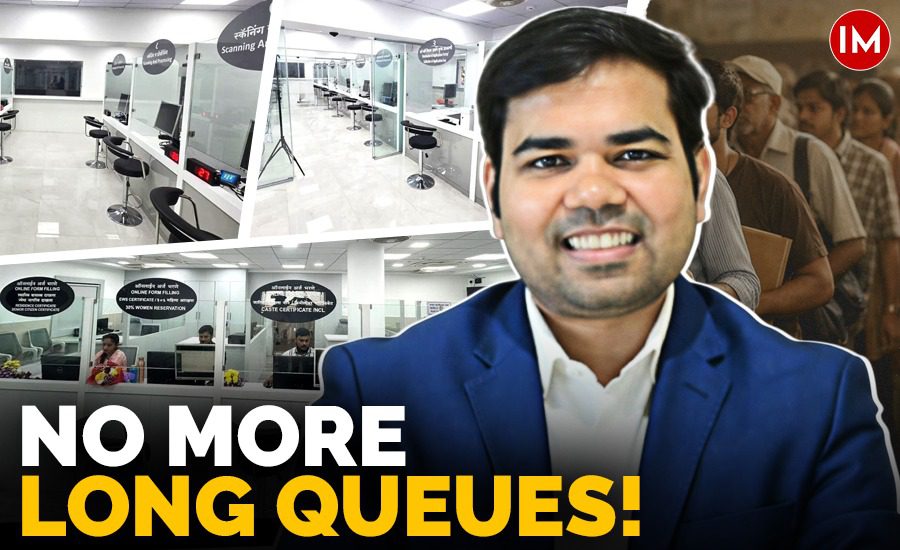
One of Mr Katiyar’s most impactful interventions has been the transformation of citizen service centres through the Modern Setu initiative.
Traditionally, Setu centres have been associated with long queues, unclear processes, and a reliance on middlemen. Katiyar saw the situation not just as an administrative gap but as a trust deficit.
“Why should people feel disappointed when they come to a government office?”
The solution wasn’t just digitisation; it was redesign.
What Changed?
1. Infrastructure Upgrade
- Comfortable seating
- Token and display systems
- Air-conditioned waiting areas
- Drinking water facilities
2. Process Reform
- Faster application processing
- Reduced waiting time
- Backend efficiency improvements
- Document delivery via WhatsApp
“Whoever comes to our office should feel welcomed… their work should be done smoothly.”
The impact has been tangible. People are now more confident approaching offices directly, reducing reliance on agents.
THE SMALL THING THAT MAKES A BIG DIFFERENCE
While systems and infrastructure matter, Mr. Katiyar believes the simplest reform is often the most powerful: communication.
“If we talk to people nicely… even if their issue cannot be solved immediately, they feel satisfied.”
He has emphasised these principles across his team: listen carefully, speak politely, and explain clearly.
In a system often criticised for its opacity, this shift in approach has helped build trust without requiring major structural changes.
ENCROACHMENT IN MUMBAI
Land in Mumbai is scarce — and that makes encroachment one of the most sensitive administrative challenges.
Mr Katiyar acknowledges both the scale and the pressure associated with it.
“Whatever little land is available also gets encroached… protecting it is a major challenge.”
During his tenure, the administration undertook significant drives to clear encroachments, particularly those that cannot be regularised.
These operations require coordination with multiple agencies, including municipal authorities and the police, and they often involve difficult decisions.
BALANCING SCALE AND IMPACT IN AN URBAN SETTING
In rural or tribal areas, administrative work often translates into visible, immediate impact. Urban governance, especially in a city like Mumbai, operates differently.
Here, even small improvements affect large populations.
From issuing documents efficiently to improving service delivery systems, the scale multiplies the impact.
“If people get timely documents without any hassle, it makes a big difference on a large scale.”
IAS officer Saurabh Katiyar’s journey is not defined by dramatic turning points but by informed choices and steady execution.
He has moved from a promising corporate career to refining governance systems in Mumbai, and his approach remains consistent: he identifies gaps, simplifies processes, and focuses on people’s experiences.
In a city where complexity is the norm, that clarity of approach stands out.