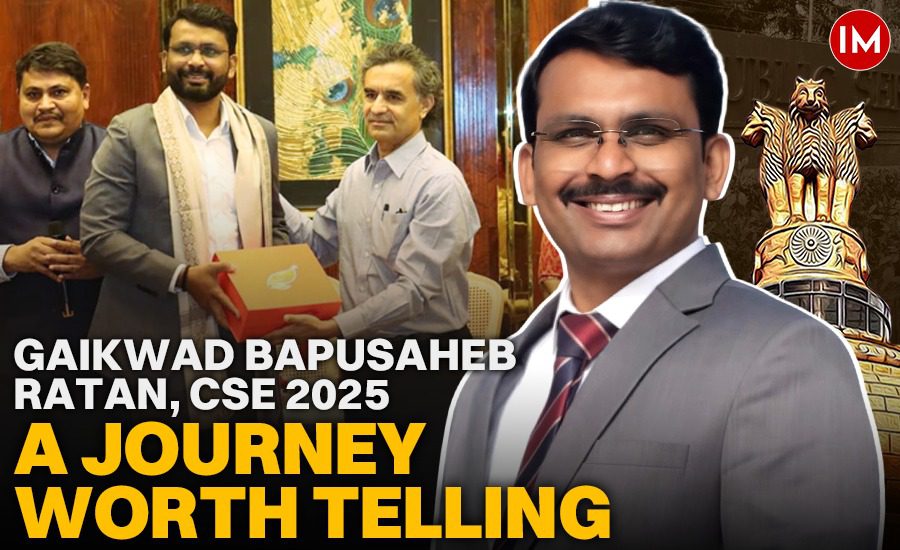
In the small village of Chas in Ahilyanagar district of Maharashtra, Gaikwad Bapusaheb Ratan’s life began far from the corridors of power he now aspires to enter. Born into a modest family, his early years were shaped by limited resources but strong values.
His schooling was entirely in Marathi medium, from a Zilla Parishad primary school to Shri Nrusinha Vidyalaya Chas in his village. There were no signs then that this young boy would one day crack one of India’s toughest examinations.
But life had other plans.
When he was in Class 10, his father suffered a heart attack followed by paralysis. The family was forced to move to the city in 2004. What followed was not just a shift in location but a complete change in life.
He shared more details about his life and UPSC journey in an exclusive conversation with Indian Masterminds.
A FAMILY THAT WORKED TOGETHER TO SURVIVE
With his father unable to work as a truck driver, the burden fell on the entire family. His mother continued working as a maid. Bapusaheb began working. His brother, Anirudhha, joined in, too.
Between 2006 and 2009, the entire family lived and worked as watchmen at a construction site.
It was here, amid half-built structures and uncertain days, that his dream quietly took shape.
By day, he pursued a diploma in mechanical engineering from a government polytechnic. By evening, he delivered tiffins to classmates to earn extra income. Nights were spent at the construction site, helping his father.
Life was not divided into “study time” and “work time”. Everything existed together.
A JOB, STABILITY, AND A TURNING POINT
After completing his diploma in 2009, he secured a job with L&T and worked there for five years. For the first time, there was some financial stability.
But in 2014, a turning point arrived.
His younger brother, Anil, completed his graduation and B.Ed. and was selected as a teacher in Kendriya Vidyalaya. The family saw a window of opportunity.
“We discussed and decided to give ourselves one opportunity to complete our education and aim for civil services,” Bapusaheb recalls.
He resigned from his job. It was a bold decision, one that meant stepping away from security into uncertainty.
BUILDING EDUCATION FROM SCRATCH
Without a formal college background, Bapusaheb had to rebuild his academic foundation. He completed his graduation from Yashwantrao Chavan Maharashtra Open University and later pursued a master’s in Political Science from IGNOU.
There were no classrooms, no campus life, only self-study, discipline, and a clear goal.
At the same time, he continued working and stayed connected with NGOs. Supporting his family remained non-negotiable. Preparation was not isolated from responsibility; it coexisted with it.
DELHI, SETBACKS, AND LEARNING THE HARD WAY
With support from friends, he moved to Delhi and stayed at Hamdard Study Circle. A Maharashtra government scholarship helped him sustain himself there.
But the journey was far from smooth.
He faced repeated setbacks and couldn’t clear the prelims in several attempts. Each failure demanded not just better preparation, but stronger emotional endurance.
Yet, something shifted during this phase.
THE INFLUENCE OF GIVING BACK
Alongside preparation, Bapusaheb worked as an academic counselor, teaching students, including those from Dibang.
It was here that he encountered a powerful idea that stayed with him:
“I learned about Nishkarm Karma, doing your duty without expecting anything in return,” he told Indian Masterminds.
Teaching others began shaping his own mindset. Positivity was no longer a concept; it became a practice. His association with NGOs like Nath Ashram and Budh Ashram further deepened this outlook.
THE FINAL ATTEMPT THAT CHANGED EVERYTHING
This was his last attempt.
He had already faced an interview once but couldn’t make it through. This time, things were different.
The interview, lasting around 30–35 minutes, felt less like an interrogation and more like a conversation. Questions ranged from his work as an academic counsellor to his interest in tree planting and water conservation.
He was asked about the “Waterman of India”, issues in Indore, CSR, higher education challenges, and even his trekking experiences.
One moment stood out: a light exchange about organising a wedding at Maharashtra’s highest peak, Kalsubai.
“There was laughter. It felt natural. It didn’t feel like pressure,” he shares.
When he walked out, he knew something had clicked.
“I had a big smile on my face. I felt it went well.”
His intuition was right. He scored 195 out of 275 in the interview, among the highest. Soon after, the result followed: AIR 561.
THE PEOPLE BEHIND THE JOURNEY
Bapusaheb is quick to shift the spotlight away from himself.
His mentor, IPS Mahesh Bhagwat, played a significant role, guiding him, encouraging him, and even calling him personally after his interview.
But beyond formal mentorship, it was the quiet acts of kindness that built his journey.
A friend who brought him tiffin when he couldn’t afford it.
Another who paid his college fees while working at a petrol pump.
A friend who offered him work in Pune after he left his job, and later mentored him.
“I dedicate my success to these people,” he says. “If you do good work, it comes back to you.”
A VISION FOR POLICING THAT CONNECTS
Now stepping into the world of policing, Bapusaheb carries a clear vision.
“The first responsibility is law and order, but policing should also be people-friendly and accessible,” he shared with Indian Masterminds.
Inspired by initiatives like Police Mitra, he wants to build stronger trust between the police and the public, through empathy, listening, and responsiveness.
He also hopes to work in education and health, especially women’s education.
“I would like to take initiatives like police stations adopting schools and contributing to community development,” he adds.
LESSONS FROM THE JOURNEY
For aspirants, his advice is grounded in lived experience:
“This exam is tough, not because of studies but because it tests your patience.”
He emphasises managing time, finances, and relationships alongside preparation and learning from others’ mistakes.
“Do a proper analysis of your strengths and weaknesses before committing to this journey,” he says.
JUST THE BEGINNING
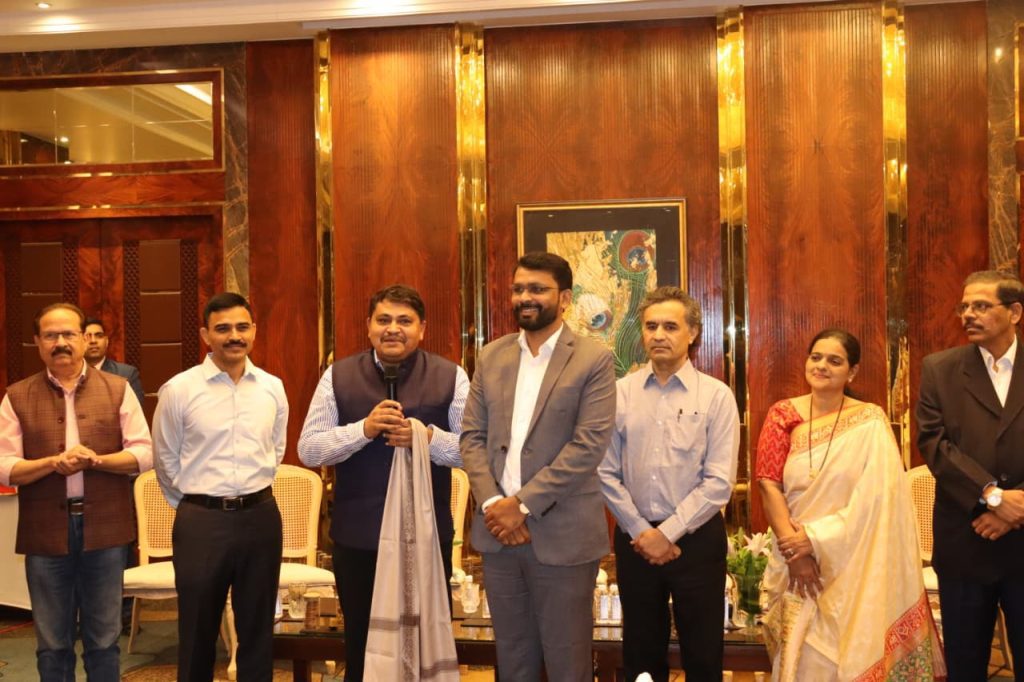
Recently, during a meeting with IPS Mahesh Bhagwat, Bapusaheb was reminded of the core of public service: empathetic listening, solving real problems, and staying rooted in the Constitution.
He carries those words with him as he steps into a new chapter.
“This is just the beginning. There’s much more to do,” he says.
From a construction site watchman’s son to a future IPS officer, his journey is not defined by a single result, but by every step that led him here.