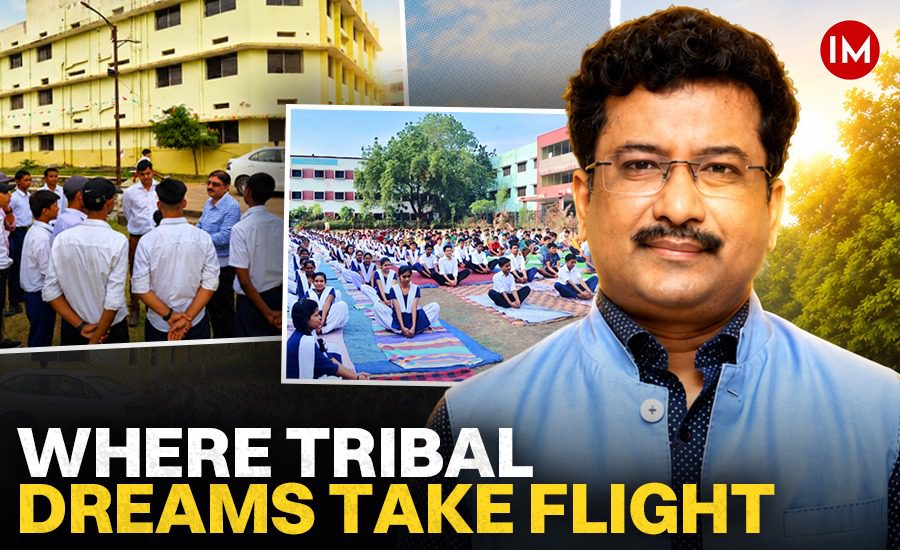
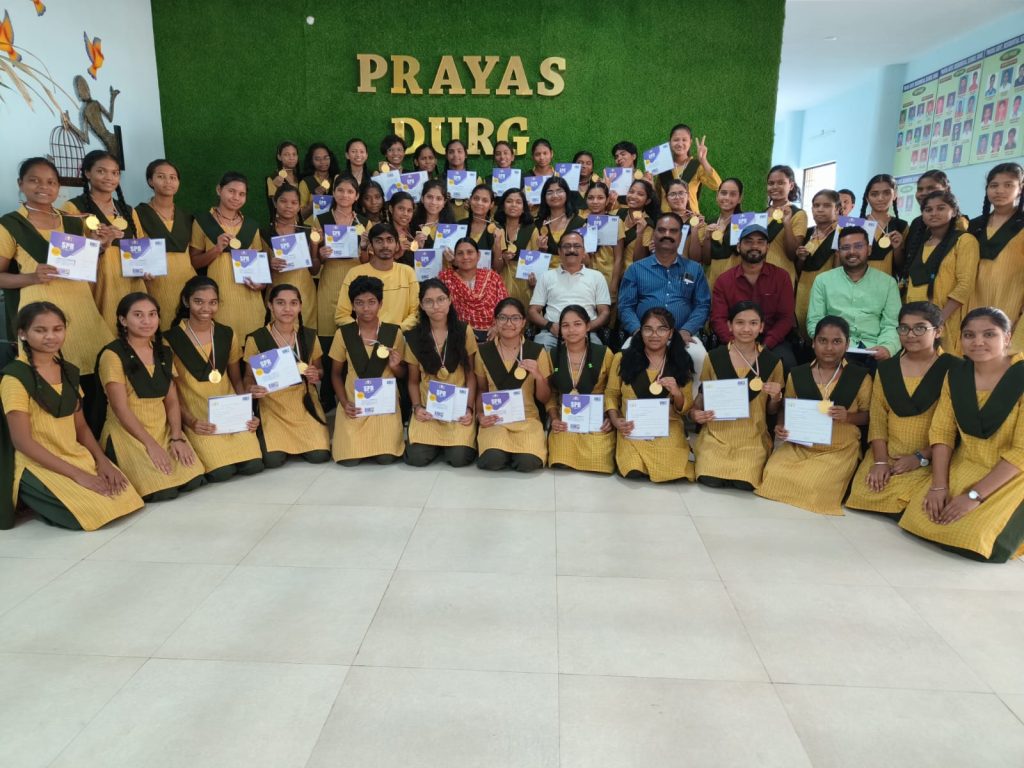
In the dense forest belts and remote tribal districts of Chhattisgarh, where access to quality education once felt distant for thousands of children, a silent transformation has been unfolding for over a decade. Inside residential campuses called Prayas, students from villages that rarely appeared on India’s academic map are now entering IITs, NITs, engineering colleges, medical institutions and national-level professional courses.
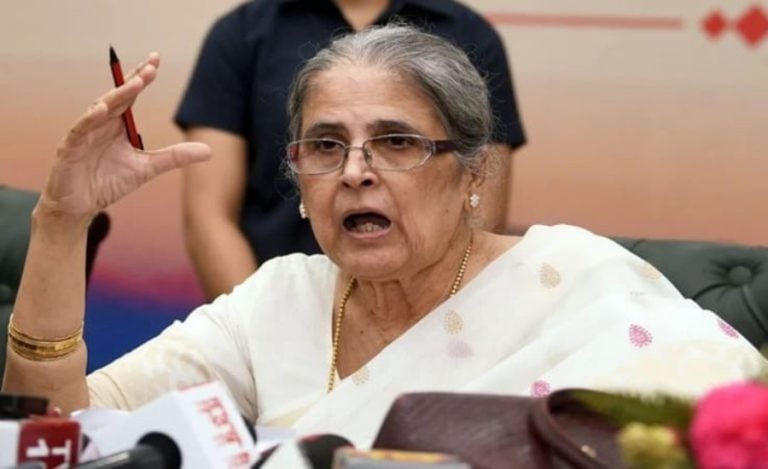
At the centre of this transformation is Sonmoni Borah, a 1999-batch IAS officer of the Chhattisgarh cadre and Principal Secretary, Government of Chhattisgarh, Department of Scheduled Tribes, Scheduled Castes, Other Backward Classes and Minority Development, who sees education not merely as schooling, but as social mobility on a massive scale.
For Borah, the idea behind Prayas emerged from a stark reality visible across tribal India: talent existed everywhere, but opportunity did not.
“Prayas was conceptualized from a simple but powerful conviction — talent is universal, but opportunity is not,” he shared in an exclusive conversation with Indian Masterminds.
That conviction became the foundation of one of Chhattisgarh’s most ambitious educational interventions.
Also read: When Forgotten Rebels Took Centre Stage
A STATE’S ATTEMPT TO BREAK GEOGRAPHY-BASED INEQUALITY
The Prayas Residential School initiative was launched under the Mukhyamantri Baal Bhavishya Suraksha Yojna. The first school was established in Raipur, with a clear mission to ensure that children from Scheduled Areas, remote tribal regions and socially disadvantaged backgrounds could access the same level of academic preparation available in India’s top urban institutions.
The model was designed differently from conventional government schooling.
Prayas combined residential education with competitive examination coaching, while also building an ecosystem around students — mentoring, nutrition, digital learning, conceptual clarity, emotional support, life skills and exposure to aspirational career pathways.
Today, the network has expanded significantly across Chhattisgarh:
- 13 Scheduled Tribe Prayas Residential Schools
- 2 Scheduled Caste Residential Schools
- 2 Other Backward Class Residential Schools
- 17 schools in total
- 7,120 approved student seats
Students from both Scheduled and non-Scheduled Areas are eligible through entrance examinations, and education is provided from Classes 9 to 12, alongside preparation for:
- IIT-JEE
- NEET
- CA
- CS/CMA
- CLAT
- NTSE
- Engineering entrance examinations
For many students, this is their first sustained exposure to structured academic competition.
But Borah insists Prayas was never meant to become just another coaching ecosystem.
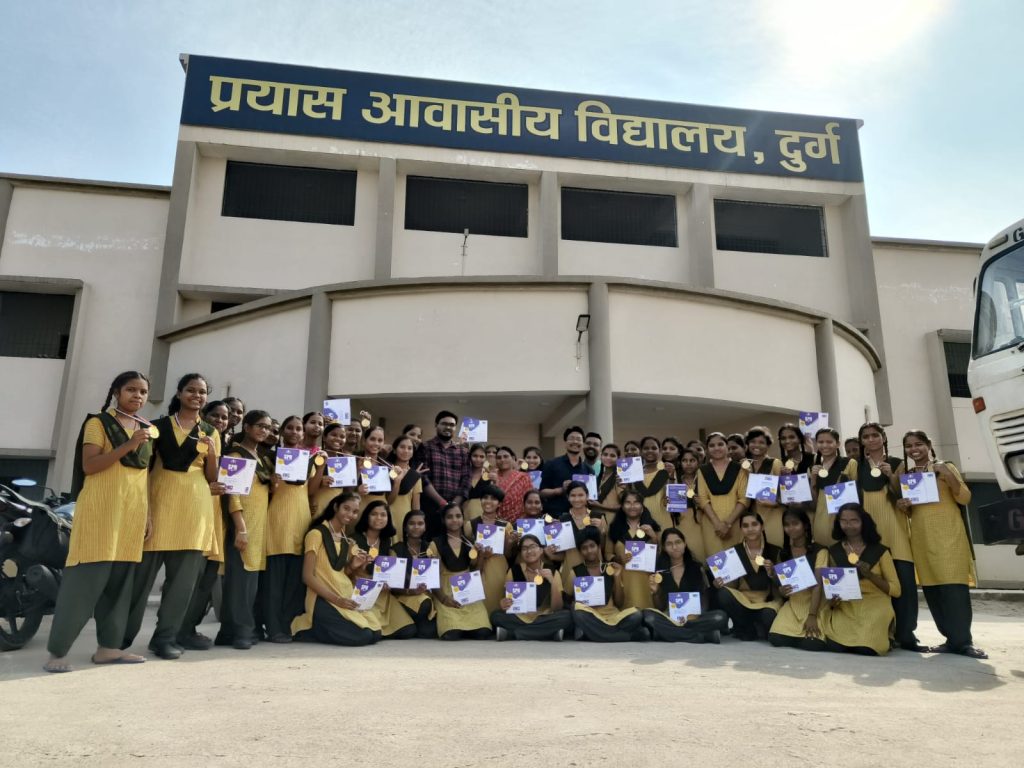
“WE DO NOT REDUCE EDUCATION TO EXAM PREPARATION”
Across India, exam-focused learning often dominates conversations around educational success. Prayas consciously attempts to move in another direction.
Borah repeatedly emphasizes that the initiative is built around conceptual understanding rather than rote preparation.
“Sustainable excellence emerges from conceptual clarity, not coaching dependency,” he explains. “We consciously avoid reducing education to exam preparation; instead, we seek to build capable learners who can succeed in examinations as well as in life.”
This philosophy shapes the school environment.
Continuous assessments, mentoring systems, remedial classes, analytical learning methods and integrated academic support are designed to strengthen long-term learning rather than short-term score maximization.
The outcomes, however, have been striking.
This year alone, 13 students from Prayas entered the CGBSE Top 10 rankings.
The broader record is even more significant:
- 136 students selected in IITs/IIITs
- 363 students selected in NITs
- 1,011 students admitted to engineering institutions
- 82 students selected for MBBS programmes
Yet Borah measures success differently.
“The true success of Prayas is not only the number of selections into IITs, NITs and medical institutions. Its deeper success lies in transforming first-generation learners into confident achievers and creating a powerful intergenerational impact within tribal communities,” he told Indian Masterminds.
In many villages, one student’s success changes how an entire community looks at education.
THE CHALLENGE OF TEACHING IN REMOTE INDIA
One of the biggest structural weaknesses in Indian school education remains teacher quality, especially in rural and geographically isolated regions.
For a residential academic model like Prayas, the challenge becomes even more demanding. Schools located far from urban centres require not only subject experts, but educators capable of mentoring first-generation learners navigating unfamiliar academic environments.
Borah sees teachers as the core of the programme.
“Quality education cannot exceed the quality of its teachers,” he says.
To strengthen the system, the state has built a multi-layered approach:
- Careful faculty selection
- Continuous teacher training
- Academic mentoring systems
- Performance reviews
- Exposure to digital teaching tools
- Hybrid learning models
- Expert virtual sessions
The goal is simple: remoteness should never translate into weaker education.
This is particularly important for students who enter Prayas after years of studying in resource-constrained schools.
Many arrive academically capable but lacking confidence, exposure and institutional guidance. Teachers, therefore, become mentors, counsellors and navigators simultaneously.
WHY MENTORSHIP MATTERS MORE FOR FIRST-GENERATION LEARNERS
Inside Prayas campuses, mentorship is treated not as an additional activity, but as an essential educational intervention.
For first-generation learners, the journey into higher education often involves invisible barriers such as uncertainty about careers, lack of institutional familiarity, language anxiety and absence of role models.
Borah believes mentorship often becomes the turning point.
“Many students possess talent but lack institutional navigation, confidence and exposure. In many cases, a mentor’s belief in a student becomes the turning point in that student’s journey.”
To address this, the state has created systems around:
- Career counselling
- Admission guidance
- Scholarship support
- Alumni mentoring
- Professional course orientation
- Emotional and academic handholding
Former Prayas students increasingly mentor younger batches, creating a cycle of peer inspiration within tribal communities themselves.
The impact extends beyond academics.
Families that once viewed higher education as unattainable are beginning to imagine professional careers for their children.
BRINGING AI, SMART LEARNING AND DIGITAL ACCESS TO MARGINALISED STUDENTS
As education rapidly shifts toward digital and AI-enabled systems, the risk of widening inequality has become a growing national concern.
Prayas is attempting to address that gap early.
Chhattisgarh has gradually integrated:
- Smart classrooms
- Digital learning platforms
- Online mentoring
- Virtual expert sessions
- Data-driven assessments
- AI-enabled personalised learning tools
The objective is not simply to provide devices or internet access but to ensure that tribal students participate meaningfully in the emerging knowledge economy.
Borah describes technology as “a powerful equaliser.”
The larger vision is to ensure students from marginalised communities are not left behind in an AI-driven future.
This digital push also aligns closely with the goals of the National Education Policy (NEP) 2020.
A STATE-LEVEL MODEL ALIGNED WITH NEP 2020
The principles behind Prayas closely mirror the larger goals of NEP 2020 — equity, inclusion, holistic development, competency-based learning and future readiness.
But what makes Prayas distinct is how these national priorities have been adapted to Chhattisgarh’s specific realities.
The programme addresses challenges unique to tribal and remote districts while maintaining a strong academic focus.
According to Borah, the initiative reflects an attempt to ensure that “talent is not limited by geography or economic background.”
The model combines:
- Equity-driven access
- Holistic residential learning
- Academic excellence
- Competitive preparedness
- Digital inclusion
- Long-term career development
In many ways, Prayas has become more than a schooling programme. It is now a state-led social mobility framework.
BEYOND RESULTS, TOWARD SOCIAL CHANGE
The most powerful impact of Prayas may not be visible in examination statistics alone. It lies in the cultural shift unfolding quietly across tribal communities.
In villages where higher education once appeared inaccessible, students are now preparing for IITs, medicine, law, finance and technology careers.
Parents who never entered formal higher education are watching their children navigate national institutions with confidence. Young students now grow up seeing seniors from their own communities entering professional careers.
That changes aspirations permanently.
And perhaps that is why Sonmoni Borah continues to describe Prayas not merely as an educational programme, but as an opportunity structure designed to alter the trajectory of entire communities.
Because when education reaches the margins with quality, mentorship and belief, the results travel far beyond classrooms.
Also read: Paving the Path for Migrants