High up in a little Ladakhi village, a young boy named Otsal spies three fluffy kittens and their stern-looking mother in the family storeroom. “Amalele, amalele,” he says to himself in confusion, because these wild animals are not exactly familiar cats—they are, his elder brother Lobzang later informs him, “taksram”, “riblik”, or the “otter of the hills”. And the cats intervene to define themselves too: “Pallas’ cats. That’s us… We agree; that’s a rather strange name to have, one with an apostrophe (’) as if we belong to someone named Pallas.” Because actually they are named after the Prussian zoologist Peter Simon Pallas, whose last name is also associated with the great black-headed gull (Ichthyaetus ichthyaetus). The scientific name of the taksram is “Otocobulus manul”: “Otocobulus” means ‘ugly-eared’. Don’t you humans know that it’s rude to comment on looks?”
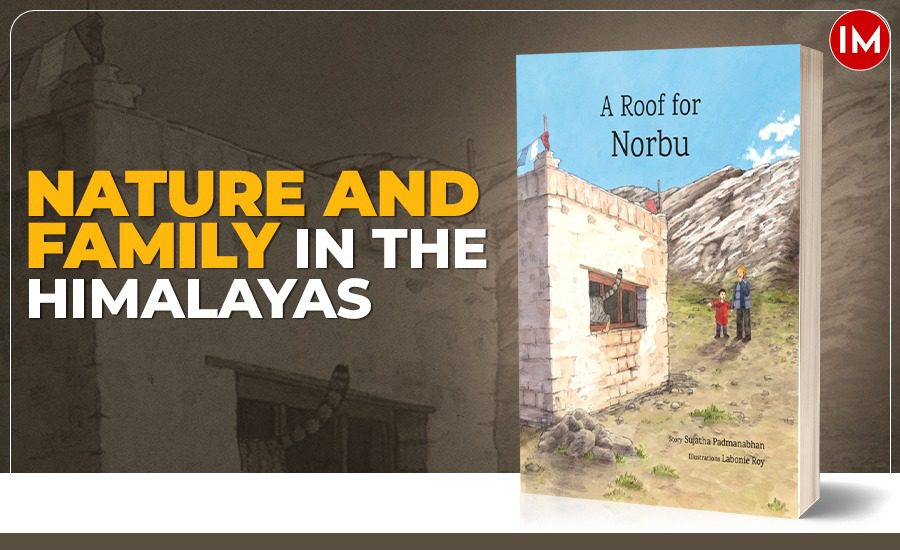
This is from A Roof for Norbu, a charming picture book by Sujatha Padmanabhan, published by the Snow Leopard Conservancy – India Trust with overall guidance from Tsewang Namgail. The story’s perspectives interchange between young Otsal – peering at these elusive creatures through Lobzang’s spotting scope – and the cats themselves – bristling at being compared to ordinary billas or being seen as “grumpy” because of their somewhat surprised expressions. After all, humans can and do make much worse faces.
Lobzang works as a wildlife guide and transmits his knowledge and love of animals to Otsal. Although their mother initially fusses about how both her sons are only interested in nature rather than steady conventional jobs, she eventually comes around to the cats, too. This is despite the fact that the home made by the Taksram family is in the storeroom and thus blocks off the human family’s access to household ration essentials. It is an inconvenience, but when the children tell her about the effort with which the mother-cat finds food for her babies, Ama-ley recalls her own difficulties with Aba-ley in raising their boys. They are all parents alike, making sacrifices for their children. It is also an honour, adds Otsal, that these rare cats have chosen our home to have kittens in. Ama-le, moved, recalls that her father had once seen a Pallas’ cat and called it Norbu – the precious one. She decides that their visitor will be given the same name.
As a family, they go to visit the Taksram quartet and see them from afar trying to keep pace with butterflies. “We chase not only butterflies but also grasshoppers! It’s fun… Other creatures have fun with us, too. We don’t know why, but desert wheatears that come here in summer love to play with our ears.”
As a family, they defend the cats from well-meaning but intrusive wildlife photographers in search of these fluffy felines. The cats agree that the loud sounds of clicking cameras can be frightening in the same way as the approach of predators like the Tibetan Wolf. Motorcycles are scary, too. “Then there are those huge machines that eat up our land. Are they so hungry all the time? The rocky slopes where we have our dens and the marshes we depend on get destroyed for roads and buildings.”
Labonie Singh’s beautiful pastel illustrations of the hill-otters and humans turn here to an image of a yellow excavator partly submerged in dust as it lifts a rubble of rocks from a grey mountainside. This shift in tone captures the doubts which surround “development” in vulnerable areas. There is a necessary cost to all human progress as it shifts away from animal rhythms. “Sustainability” as a word and concept needs to be re-examined in this context. This book is not didactic, and its message is conveyed in deceptive simplicity, but it succeeds in planting a seed of critical thought in its readers.
Three special young humans whom the book takes care to credit signal hope in our fragile times. Padma Ishey and Kesang Dorjey from Hanle, who are committed nature guides, may have inspired the two sibling protagonists of this book. Padma Angmo from Leh is a researcher with SLC-IT and must certainly have also shaped the various bits of information about Pallas’ cats.
The book is packed with facts about the Taksram, like their hunting styles, typical diet, general behaviours, and appearance markers. A short glossary at the end tells us that “Amalele” is an expression of surprise similar to “Oh Gosh”. Priced at INR 200, A Roof for Norbu is also relatively affordable for young readers. Since it is licensed under Creative Commons, the material can also be repurposed for non-commercial use (as long as due credit is provided) with more freedom than is typically offered. It is very welcome news that at least a couple of prominent children’s publishers in India follow similar non-profit models and are committed to the mission of providing books to students at minimal costs. Accessibility in Indian languages is the next frontier.
Otsal and the Taksram family never make contact in the way that humans have become accustomed to with animals – as domestic pets or zoo specimens – and they never allow tourists to venture too close to them either. There is a similar connection between the two boys with their parents and the three kittens with their mother, but the two families never meet. Theirs is not a relationship of proximate affection. It is also not reciprocal in the way we have come to expect. Yet it is profound, perhaps precisely because of these deviations from the “normal”.
In the various debates about rewilding which take place often today, this story offers a simple truth: from childlike curiosity and acceptance can emerge some potent solutions towards interspecies cohabitation. Literature for children and young adults can encourage not only the natural empathy which is inherent to young humans but also facilitate new ways of seeing the world around them from a less anthropocentric lens. Both Sujatha Padamanabhan and Labonie Roy have worked on other wonderful books about animals, too: Bumboo – The Donkey Who Would Not Budge and How the Myna Ate the Sun. Here’s hoping for more from their stable!