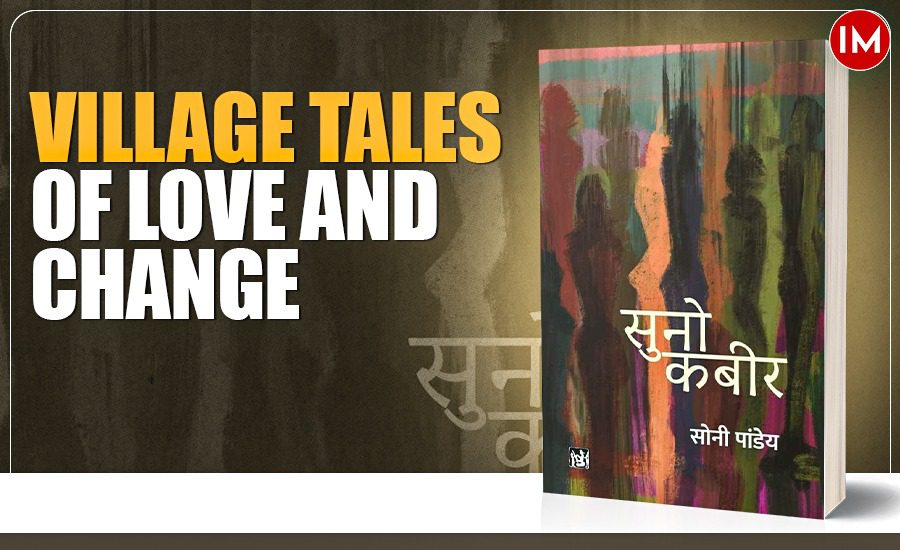
Soni Pandey’s Suno Kabir took me back on a memory lane to 2004, when I was an election observer for the Azamgarh constituency in the general elections that year. I knew three things about Azamgarh at that time: Allan Octavio Hume of the ICS and the founding father of the Congress had included this district in his survey report on agriculture and revenue. Kaifi Azmi, the famous lyricist, belonged to this city. And that this was also the birthplace of Rahul Sankritayan.
One of the first things I did was to visit the Shibli National College Library (established 1883) to seek out books on and about the three of them. In the peak summer of May and June, when the election volunteers with posters and autorickshaws with loudspeakers took a break between 11 am to 4 pm, so did the Election Observers. This gave me a well-deserved opportunity to catch up on my readings. In the evenings, I would often end up visiting village chaupals for an interaction with the people, predominantly male, and some reflection of communal discord was visible (and audible), although these elections were based more on caste identity.
Suno Kabir is set in one such village of Ibrahimpur in the district of Azamgarh. This is a village with an almost equal mix of Hindus and Muslims, who have routine, ordinary squabbles about matters related to head, heart, land and markets. Like Kabir’s Hamlet, the main occupation is that of weaving, and both men and women are actively engaged in this production process. Although patriarchy reigns supreme, two dominant women of the village – Imarti Devi and Mehrunissa – also have a running battle between themselves. The former had created a ruckus when the latter wanted to run away with the autorickshaw driver, Prem Shankar. Well, the net result was that Mehrunissa was hastily married off to her cousin. But she becomes an important figure in the village after taking control over her husband’s weaving enterprise, thereby giving him time to occupy political space as the Sarpanch of the village, presiding over all the festivals, rallies and sarkari programmes.
The main protagonist is the social and cultural activist Usman Master, who takes the lead in organising every festival in the village, from the Ram Lila to Eid and all the visiting Nautanki troupes. He has returned to the village after a doomed love affair with a Hindu girl and failure to find a role in Bollywood. Back home, he is employed at the government-sponsored Madrassa, which assures him his regular salary even as he takes long furloughs for his theatre work.
The Babri Masjid demolition leaves a permanent scar on the village. People are no longer trusting of each other. Usman Master begins to lose his mind and succumbs to his injuries after an accident. After his death, his journalist friend Manohar discovers a set of diaries with evocative ghazals and nazams, which he, along with his friend Monika, publishes under the auspices of the Kaifi Azmi Society. These are brought out not in the name of Usman Master, but as the eponymous ‘Suno Kabir’.
This brings us to the intertwined stories of Manohar and Monika. Manohar is an investigative bureau chief with a national channel who reports on the great divide between India and Bharat, with the former appropriating natural resources like the river bodies of the latter. Manohar has shifted his base to Ibrahimpur, where he does stories about those whose lives are at the bottom of the pyramid. He helps Feku Nachania– an artist whose USP of playing out the feminine characters in Ram Lila and Nautankis has been erased as women become willing and anxious to perform these parts – by publishing his poems along with his photograph and thereby making him a local celebrity in his own right. Feku’s lady love, Manorama, who had left him as she could not bear the taunts calling him a half-man, not only reconciles with him, but also begins to hold him in high esteem for the years he had spent as a responsible father with a steady income from a stationery shop.
Soni Pandey has put her heart and soul into building the character of Monika Rastogi. She holds a PhD, walks out of a bitter marriage and settles in Ibrahimpur as a government school teacher. This gives her the authority and moral compass to empower girls and women about their rights, duties and responsibilities. Riding her scooty in half-pants and a T-shirt, she gives Ibrahimpur its first tryst with women taking control over their own lives and bodies. Her scooty makes it normal for girls to ride bicycles to their school and to the nearby markets. Thanks to her interventions, girls become aware that domestic violence has to be reported to the police, that the new toilets under the Swachh Bharat campaign are meant for their use rather than storage of grain, and that mental agony has to be treated as a disease instead of being brushed under the carpet.
Reading the book leaves one with mixed feelings, for while incomes are rising as the hinterland gets connected to the urban, the community spirit has broken. Social discourse between Hindus and Muslims is now marked with tension, if not outright hostility. Trust and informal exchange have given way to monetisation, but there is hope at the end of the tunnel.
Usman donates all his life’s earnings to the Kaifi Azmi trust to carry forward his agenda: support for children who wish to pursue their education, and to the advancement of theatre and folk festivals in Ibrahimpur. This is still neither the ideal village on which Mahatma Gandhi modelled his Hind Swaraj, nor is it a den of absolute wretchedness as Dr Ambedkar argued: it was somewhere in between, in the throes of uncomfortable transition. Set, as it is, in the immediate aftermath of Covid, it tells of what this one Indian village is like. Over the next decade or so, when many more women will join the workforce and men will move out – not just to neighbouring Benares, or the metropolis of Mumbai, but also Dubai and Singapore and Canada – Soni Pandey may like to write a very welcome sequel.