Oliver Wendell Holmes Jr.
“The life of the law has not been logic; it has been experience.”.
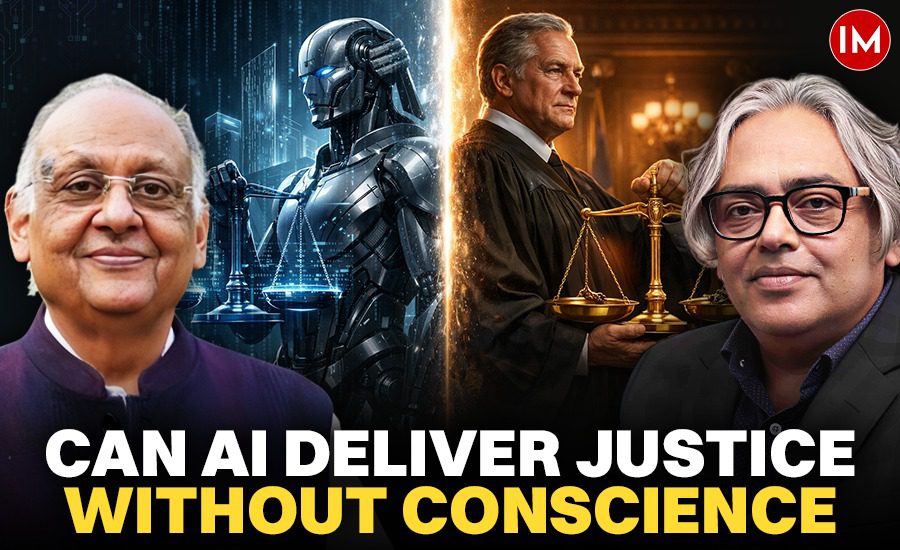
We stand at a peculiar crossroad in the history of human civilization. For the first time, we have birthed an entity that speaks the language of the law better than most lawyers, yet understands the meaning of “mercy” less than a newborn child; a potential fault line in the age of AI and law. At the heart of this transformation lies a profound shift—subtle, but decisive. It is what we may call the Great Decoupling: the separation of intelligence from consciousness. In our rush to automate the “clogged pipes” of our judicial system, we should not inadvertently confuse the map for the territory; mistake the logical processing of rules for the sacred act of adjudication.
For the first time, we have systems that can process legal information better than most lawyers—yet without any awareness of what their decisions mean. They can analyze, predict, and recommend. But they do not understand, feel, or take responsibility.This leads us to a fundamental question: Can intelligence alone deliver justice?
The Ghost in the Code
AI systems today can read thousands of judgments in seconds, identify patterns across jurisdictions, and generate legally sound arguments. In that sense, they “speak” the language of law with remarkable fluency. Yet something essential is missing. They do not understand the weight of a decision. A sentence is not just an output. It is a life altered, a family affected, a future redirected. A human judge, at least in principle, carries this awareness. The decision does not end in the courtroom—it lingers in the conscience.
Also Read : Gudelli Srujana: How a Mazdoor’s Daughter Turned Setbacks Into Strategy in UPSC Journey | Exclusive
An AI system carries no such burden. This is the “Ghost in the Code”—not a haunting spirit, but the absence of a moral anchor and wisdom. AI remains fundamentally blind to the “weight” of the sentence it suggests; it produces answers, but does not experience their consequences.
Geometry of Rules vs Fluidity of Fairness
Law has always possessed a dual nature. On one hand, it is a formal system of rules—a geometry of “if-then” statements that AI navigates with terrifying efficiency. This is what we call Legal Logic. On the other hand, law is an aspirational pursuit of Justice, an elusive, culturally-embedded, and deeply human sentiment that often requires us to break the very rules we have written to save the soul of the system.
AI is a creature of the first dimension. It excels at Stare Decisis (precedent) because it is, by definition, a rearview mirror. It looks at a million past shadows to predict the next one. However, justice often requires a “Leap of Faith” or a “Deviation of Grace”—moments where a judge looks at a defendant and sees not a data point, but a narrative of systemic failure, personal tragedy, or sudden epiphany. A machine can optimise for consistency, but it cannot optimise for Vivek (discernment). It can find the “correct” answer, but it cannot know if it is the “right” one. AI is built for geometry.
Justice often lives in fluidity.
Moral Accountability: Beyond Pattern Recognition
The legitimacy of a judge rests on a hidden pillar: Moral Accountability. When judges pronounce a life sentence, they carry the weight of that decision home. It sits in the silence of their chambers; it marks their conscience. This “suffering” of the decider is a vital safeguard against tyranny.
An AI “Agent,” however advanced, feels no weight. It does not lose sleep over a wrongful conviction. It does not tremble at the gravity of stripping a father of his parental rights. When we outsource the reasoning of a sentence to a black-box algorithm, we are essentially removing the “skin in the game” that has defined human justice for millennia. We risk creating a “Bureaucracy of Math,” where the defendant is not judged by a peer, but processed by a statistical average. This is not the evolution of law; it is its sterilisation.
Consider the nuance of a domestic dispute or a complex corporate whistleblowing case. An AI can perform massive-scale pattern recognition, identifying that “89% of similar cases resulted in X.” But justice lives in the 11%—the outliers. For example, imagine a case of a minor theft committed by a first-time offender. Logic (and the AI) suggests a standard fine or short-term detention based on sentencing guidelines. However, a human judge, exercising Vivek, notices a tremor in the defendant’s voice, a specific desperation in the context of a local economic collapse, or perhaps a spark of transformative remorse that no data point can capture. The judge decides on a suspended sentence with community mentorship—a move that “defies” the statistical logic but “fulfills” the social contract. The AI sees a deviation from the norm; the human sees a path to redemption. The machine detects the signal, but the human understands the music.
Automation: Dangers of “Technical Correctness”
We must be wary of the “Alibi of Automation.” There is a seductive comfort in saying, “The system recommended this.” It allows the human actors—lawyers, prosecutors, and even judges—to dilute their own moral responsibility. If the AI suggests a high bail amount based on a “risk score,” and the human judge simply clicks “Accept,” who has truly decided?
If the underlying data is skewed by decades of biased policing—as we often see in marginalized socio-economic pockets—the AI will simply polish that bias until it looks like “objective truth.” It turns prejudice into a “technical requirement.” The ghost in the code is often just the ghost of our own past failures, dressed up in the shiny armor of “Efficiency.”
The Dilemma: Choice Between Imperfect Systems
While the “Weight” of a sentence is a powerful human metaphor, critics argue that human “Vivek” is often just a polite term for “Unpredictable Inconsistency” or “Unconscious Bias.” We must confront the uncomfortable truth that human judgment is not perfect. It can be inconsistent, biased, even arbitrary. Two similar cases may receive different outcomes; judge’s mood, fatigue, and background can influence decisions. AI, on the other hand, offers something valuable: consistency, predictability, insulation from human impulses. AI sentence might actually be more just. It can, therefore, be argued that a cold, logical algorithm—if properly audited for bias—could provide a “Floor of Fairness” that human systems have historically failed to maintain. The question then becomes: Is a flawed human heart still better than a perfect silicon script? The real comparison is not between perfection and imperfection, but between two imperfect systems. Is a flawed human conscience preferable to a perfect but weightless algorithm?
The issue, therefore, is not whether AI should be used in law. It clearly should. The real question is: Where should intelligence end and judgment begin? When does assistance become substitution? When does efficiency begin to erode justice? How do we ensure that responsibility remains human? These are not technical questions. They are ethical and institutional design questions.
The Future: AI as the Lamp, Not the Navigator
Our task is to ensure that AI remains a “Tool for Distributive Justice”—handling the linguistic translations, the document scrutiny, and the jurisdictional research—while the “Judicial Act” remains a human sanctuary. We must use machine intelligence to illuminate the facts, but never to weigh the soul. AI can serve as a powerful lamp: illuminating facts, revealing patterns, improving access, reducing delay; but it must not become the navigator.
The final act of judgment—the weighing of values, the interpretation of context, the acceptance of responsibility—must remain human. Not because humans are always right, but because only humans can own the outcome and be held accountable. The reimagination of our judicial ecosystem must be centered on this principle: AI can provide the Information, but only a human can provide the Affirmation of justice.
The way forward is to Reimagine, Redesign, Recreate the legal ecosystem. Reimagine: Law must be seen not merely as rules, but as a process of ethical deliberation; Redesign: AI must assist intelligence, while human judgment remains central and non-delegable; Recreate: Institutions must ensure transparency, accountability, and continuous ethical oversight in AI-assisted decisions.
Between the flawed human heart and the flawless machine, the survival of justice may depend on which one we choose to trust more—and how wisely we choose it.
The future of justice will not be secured merely by being rooted in present paradigms and relying on smarter machines, but by wiser humans who choose to visualize and shape the future together and guide how those machines are used.
The article is by Mr. Anurag Goel and Prof. Indrajit Dube. Mr. Anurag Goel is a Career Civil Servant (IAS 1972) turned Futurist & Governance Architect. Prof Dr. Indrajit Dube is a pre-eminent legal scholar at IIT Kharagpur’s RGSOIPL and Former Vice-Chancellor of National Law University, Meghalaya.)
Note from the Authors: ‘Justice is a shared journey. While this piece presents one perspective, we warmly welcome yours. Write to us at – [email protected].
Reads Also: Wisdom–AI: The Missing Layer in the Age of AGI