The recently introduced Jan Vishwas (Amendment of Provisions) Bill, 2026 seeks to recalibrate India’s regulatory framework by decriminalising minor offences and replacing custodial sanctions with monetary penalties and administrative adjudication. Covering over thousand provisions across various laws such as New Delhi Municipal Council Act (1994) and Motor Vehicles Act (1988), it signals a shift towards a trust-based, compliance-oriented State.
At constitutional level, the reform is an attempt to align enforcement with the principles of rule of law and proportionality. However, this transition unfolds amid persistent gaps in civic infrastructure, making compliance uneven, placing the proposed rise in civic fines within a tension between regulatory ambition and on-ground realities.
From Tokenism to Deterrence
India’s municipal penalty framework has long suffered from obsolescence. A ₹50 fine, frozen in time for decades, had ceased to perform even a minimal deterrent function, reducing the law to a symbolic artefact, present in statute, but largely irrelevant in practice.
Such symbolic legality corrodes governance. It incentivises selective enforcement, erodes compliance cultures, and ultimately diminishes the credibility of legal institutions. The upward revision of penalties, therefore, is not merely administrative housekeeping; it is essential to restoring the normative force of law.
The Jan Vishwas framework advances this objective by institutionalising graded penalties, periodic revisions, and the systematic removal of redundant imprisonment provisions, thereby aligning sanctions with contemporary economic realities.
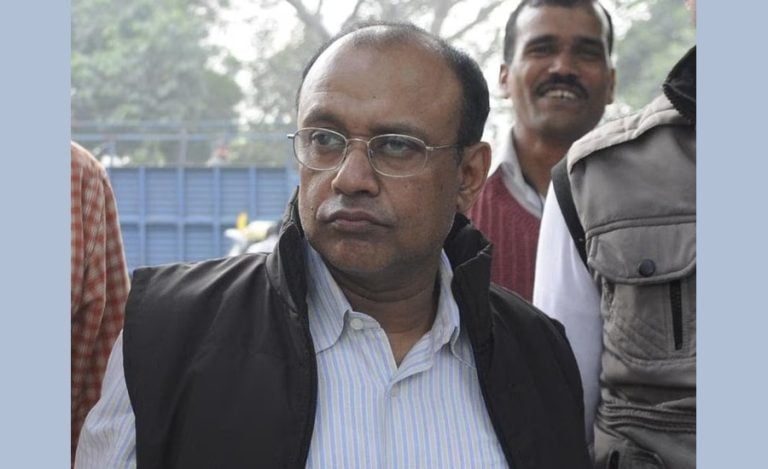
This transition reflects what Virag Gupta, author and distinguished Advocate practicing before the Supreme Court of India, characterises as a structural correction- an overdue departure from colonial-era overcriminalisation towards a rationalised regulatory regime where criminal law is reserved for serious wrongdoing. While talking to Indian Masterminds, he cautions that statutory rationalisation alone cannot secure constitutional legitimacy; without strengthening judicial capacity, digital systems, and enforcement infrastructure, the promise of timely and effective justice risks remaining illusory.
The Global turn to Decriminalisation
Comparative jurisdictions have increasingly recognised the disproportionate reliance on criminal law for regulating low-level infractions. In Singapore, minor civic violations are resolved through composition fines, bypassing courts and reducing both judicial congestion and the social costs of criminalisation.
Similarly, debates in the United States and other western jurisdictions around “overcriminalisation” have foregrounded the expansive reach of penal law into domains better suited for civil regulation.
India’s current trajectory, evident in both the Jan Vishwas Bill and municipal fine revisions, resonates with this global reorientation: reserving criminal sanctions for serious harm while governing routine conduct through proportionate, civil penalties.
Reform: Promise, Expansion and Contradiction
A more nuanced understanding of the present reform necessitates situating the Jan Vishwas (Amendment of Provisions) Bill, 2026 alongside its immediate predecessor.
While the earlier iteration introduced foundational concepts such as graded penalties and administrative adjudication, the 2026 version represents a more expansive and systematised framework, embedding institutional mechanisms such as adjudicating officers, compounding provisions, and appellate structures.
Yet, this legislative progression also foregrounds a deeper dissonance. Even as statutory frameworks evolve, the lived experience of regulation remains marked by administrative inconsistency and residual overcriminalisation. The continued invocation of criminal law in routine contexts, from FIRs concerning digital expression to expansive public order policing, illustrates that overcriminalisation is as much a function of enforcement culture as it is of statutory design.
The COVID-19 pandemic offered a stark illustration: widespread prosecutions under Section 188 of the IPC for minor violations, many of which were subsequently withdrawn, underscored the gap between legal intent and administrative practice.
This disconnect raises concerns under the doctrine of due process, which requires that legal procedures be fair, reasonable, and non-arbitrary, not merely in design, but in their actual application.
The Question of Fairness
Decriminalisation, while normatively appealing, raises a foundational question: can monetary penalties operate as an equitable instrument of regulation across socio-economic strata?
A ₹500 fine may function as a minor inconvenience for some, yet impose a significant burden on others. In urban environments where access to basic civic infrastructure- such as sanitation or parking- remains uneven, compliance is often shaped by structural limitations rather than individual choice.
Although the Jan Vishwas framework introduces graded penalties, its predominantly uniform approach does not fully internalise these socio-economic asymmetries. Comparative models, including income-linked fines in certain European jurisdictions, attempt to address this imbalance.
From a constitutional standpoint, this implicates the principle of substantive equality, which demands that laws account for differential impacts rather than merely treating all individuals identically. Deterrence, to be legitimate, must therefore also be equitable.
Efficiency vs Accountability
The transition from criminal prosecution to administrative adjudication represents a significant reconfiguration of enforcement architecture. On-the-spot penalties and decentralised adjudication promise efficiency, reduced judicial burden, and expedited resolution.
However, this administrative turn also entails a concentration of discretionary power at the enforcement level. While the Bill envisages procedural safeguards, their efficacy will depend on implementation fidelity.
It is within this context, Ms. Charu Mathur, Advocate-on-Record with the Supreme Court of India, told Indian Masterminds, that while the reform is directionally sound, especially in its attempt to dismantle colonial penal legacies, the current framework risks insufficiently accounting for ground realities. Penalties, she argues, must be proportionate and enforceable, not merely normatively desirable, and should incorporate opportunities for voluntary compliance and rectification.
The expert further highlights systemic constraints: the persistence of redundant statutory provisions, the overburdening of appellate forums, like the overburdened electricity tribunal, and unresolved bottlenecks such as the persisting cheque bounce litigation despite the proliferation of digital payment systems. Absent such structural rationalisation, the expansion of adjudicatory mechanisms may undermine, rather than strengthen, administrative efficiency. She also underscores the disjunction between enforcement and infrastructure, where escalating penalties are not matched by commensurate public provisioning, thereby raising concerns of arbitrariness under the rule of law.
A System Still Overburdened
The imperative for reform is indisputable. Present criminal justice system remains encumbered by a substantial backlog, with minor offences constituting a significant proportion of pending cases.
By diverting such matters into civil and administrative domains, the Jan Vishwas Bill seeks to rationalise judicial workload and recalibrate institutional priorities. Yet, overcriminalisation persists not merely as a legislative artefact, but as an embedded administrative practice.
Without addressing this behavioral dimension of enforcement, statutory reform alone may yield only partial gains- falling short of the constitutional promise of fair and efficient justice delivery.
Conclusion: Beyond Incremental Reform
The transformative potential of the Jan Vishwas Bill rests on three interdependent conditions.
First, infrastructure must precede enforcement; regulatory compliance cannot be divorced from State capacity.
Second, decriminalisation must be applied consistently; selective liberalisation risks undermining normative coherence and equality before law.
Third, administrative efficiency must be balanced with procedural safeguards to ensure adherence to due process and prevent arbitrariness.
The shift away from criminalisation marks an important evolution in India’s legal philosophy, yet its constitutional legitimacy will ultimately hinge on its ability to harmonize proportionality, fairness, and accountability.