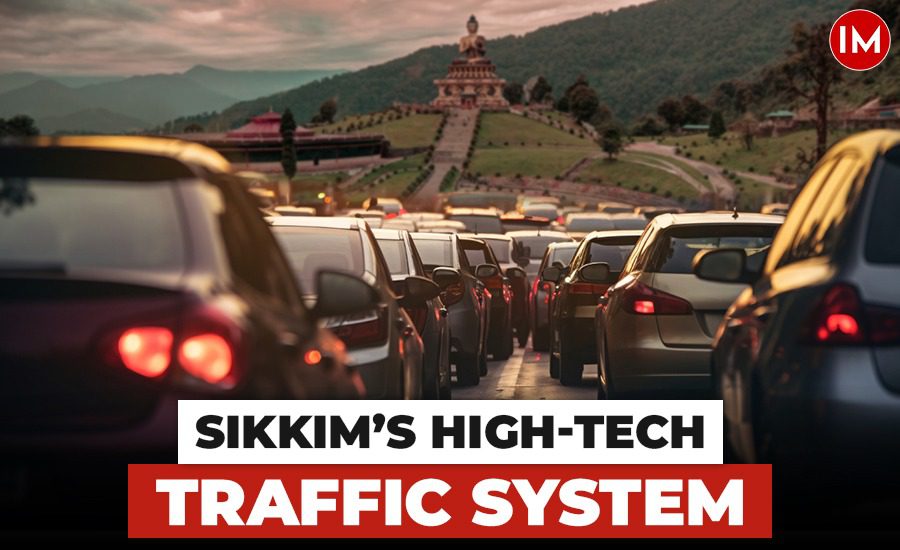
Traffic congestion and violations are pressing issues in India, with cities across the country grappling with gridlocks, poor enforcement of traffic rules, and rising road accidents. As urban populations grow, managing the ever-increasing number of vehicles has become a significant challenge for governments. Traditional traffic management systems, which rely heavily on manual intervention, often fail to meet the demands of modern urban mobility. In response to these challenges, the state of Sikkim has taken a groundbreaking step by implementing an AI-driven Traffic Management System to optimize traffic flow, reduce violations, and enhance road safety.
The initiative, led by Raj Yadav, a 2009 batch officer and the current Transport Secretary of Sikkim, is set to transform how traffic is managed in the state. This system not only controls traffic signals based on real-time density but also automates the detection of violations and raises challans instantly. In a state like Sikkim, where road infrastructure and safety are critical due to its hilly terrain, the deployment of AI for traffic management is a game changer.
Leveraging AI to Optimize Traffic Flow
One of the standout features of the AI-driven system is its ability to optimize traffic signals according to traffic density at different junctions. “The AI system constantly monitors the flow of vehicles and adjusts signal timings to ensure smoother traffic movement,” IAS Raj Yadav told Indian Masterminds. This dynamic approach helps reduce congestion, especially during peak hours and minimizes the need for traffic police at junctions. By relying on real-time data, the system is far more efficient than traditional methods, ensuring a better flow of vehicles and less time spent in traffic jams.
This advancement also helps address a common issue in many Indian cities—inefficient traffic signal management that leads to long wait times even at lightly trafficked intersections. The new system makes the traffic flow more responsive and reduces the dependency on manual signal adjustments, often slow and inconsistent.
Automation in Law Enforcement
In addition to traffic flow optimization, the AI system has introduced automated enforcement of traffic rules. It uses cameras and sensors to detect violations such as speeding, signal jumping, and illegal parking. Once a violation is identified, the system raises an electronic challan and sends it to the vehicle owner. “This automated detection and enforcement have led to a significant increase in compliance with traffic laws,” Mr. Yadav notes.
Since its implementation, the system has reduced traffic violations by over 60%, creating a more disciplined road culture. The fear of being caught on camera and the certainty of receiving a challan has made drivers more cautious, reducing dangerous driving behaviors.
Overcoming Implementation Challenges
Transitioning from manual systems to AI-driven traffic management was not without its challenges. “One of the biggest hurdles was moving officials away from the traditional manual challan process to the automated system,” Mr. Yadav recalls. To ensure a smooth transition, multiple training sessions were held with the help of technology vendors to familiarize traffic personnel with the new system. Over time, these efforts helped officials adapt to the AI-driven approach, leading to more effective enforcement and better use of technology.
Ensuring Document Accuracy and Compliance
Another crucial feature of the system is the real-time verification of vehicle documents. The AI system reads vehicle number plates and cross-checks document validity through the VAHAN database, a national vehicle registry. Initially, there were issues with data mismatches between the VAHAN database and physical documents, but the transport department quickly addressed these by tightening coordination with document certification partners such as Pollution Under Control (PUC) centers. “We ensured that all certification partners were uploading updated information, reducing the chances of errors,” says Mr. Yadav.
In case of discrepancies, a grievance redressal process was put in place, allowing drivers to resolve issues related to document validity quickly and efficiently. This has not only enhanced the system’s accuracy but also ensured that vehicle owners renew their documents on time.
Improving Road Safety and Traffic Flow
The AI system’s impact on road safety has been substantial. With fewer violations and better traffic flow, accidents and traffic-related incidents have decreased across Sikkim. “By capturing nearly all violations in real-time, the AI system has made roads safer and ensured that drivers adhere to the rules,” says Mr. Yadav. This, combined with improved traffic signal management, has helped reduce congestion, particularly in busy urban areas.
The ability to monitor real-time traffic data also provides the transport department with valuable insights for future planning. With detailed analytics on vehicle types, numbers, and traffic patterns, authorities can make informed decisions to improve road infrastructure and optimize traffic further.
Impact on Vehicle Owners
For drivers, the new system has meant greater accountability and the need to stay on top of vehicle document renewals. With the AI system cross-verifying documents instantly, drivers are more likely to renew their vehicle documents in advance to avoid penalties. This proactive approach to compliance has streamlined the overall process, reducing the burden on both vehicle owners and the transport department.
Public Response and Future Plans
Public response to the system has been mixed. “While many welcomed the transparency and effectiveness of the system, a small portion of the population, especially those who were used to evading traffic rules, found it difficult to adjust,” says the officer. However, as the system has proven its benefits, especially in terms of smoother traffic flow and increased road safety, acceptance is gradually growing.
Looking ahead, Sikkim plans to expand its AI capabilities to further improve traffic management. The state government is also exploring the possibility of integrating the system with other smart city initiatives, further solidifying its commitment to using technology for better governance.