
In Uttar Pradesh, Lakhimpur Kheri and Pilibhit are known to be hotspots when it comes to human deaths caused by tiger attack. Lakhimpur Kheri’s forests that form a large part of Dudhwa Tiger Reserve, and Pilibhit Tiger Reserve and surrounding areas, are tiger territories where the big cats are always on the prowl. Over the years, many deaths have been reported caused by tiger attack. However, tiger attack related deaths are on the decline now because of effective preventive measures being implemented by the forest departments of both the districts.
But, the occasional death still occurs. As recent as 18 July, one such death was reported from Lakhimpur Kheri. In Pilibhit, one similar death was reported on 28 June. The question is, why are tigers attacking and killing, although humans are not natural prey for them?
To find out, Indian Masterminds spoke to DFO Lakhimpur Kheri South, Mr. Sanjaya Kumar Biswal (IFS 2012) and DFO Pilibhit Tiger Reserve, Mr. Naveen Khandelwal (IFS 2016).
LAKHIMPUR KHERI: DEATH IN SUGARCANE FIELD
There have been five deaths of humans caused by tiger attacks in the last two years in Lakhimpur Kheri South. And, all five deaths occurred inside sugarcane fields. The dense fields adjoin the forests and tigers frequently move between them. “Tigers cannot distinguish between the forest and the sugarcane fields. They think the fields are part of the forest, so they enter them,” DFO Biswal explained.
The tigers also like the fields as they are an easy hunting ground for preys like cattle and Nilgai which come to graze there. Mr. Biswal said, “They come to kill these animals for food. The few instances where tigers have killed humans are accidental. They were certainly not killed for food as they left the bodies intact, not eating any part of it. So, we cannot call them man-eaters.” As for whether these deaths were provoked or unprovoked, he declined to comment as it has been not established and in most of the cases there were no eye-witnesses. He narrated a recent case as an example.
TIGER ‘U’ KILLS 20 YEAR OLD
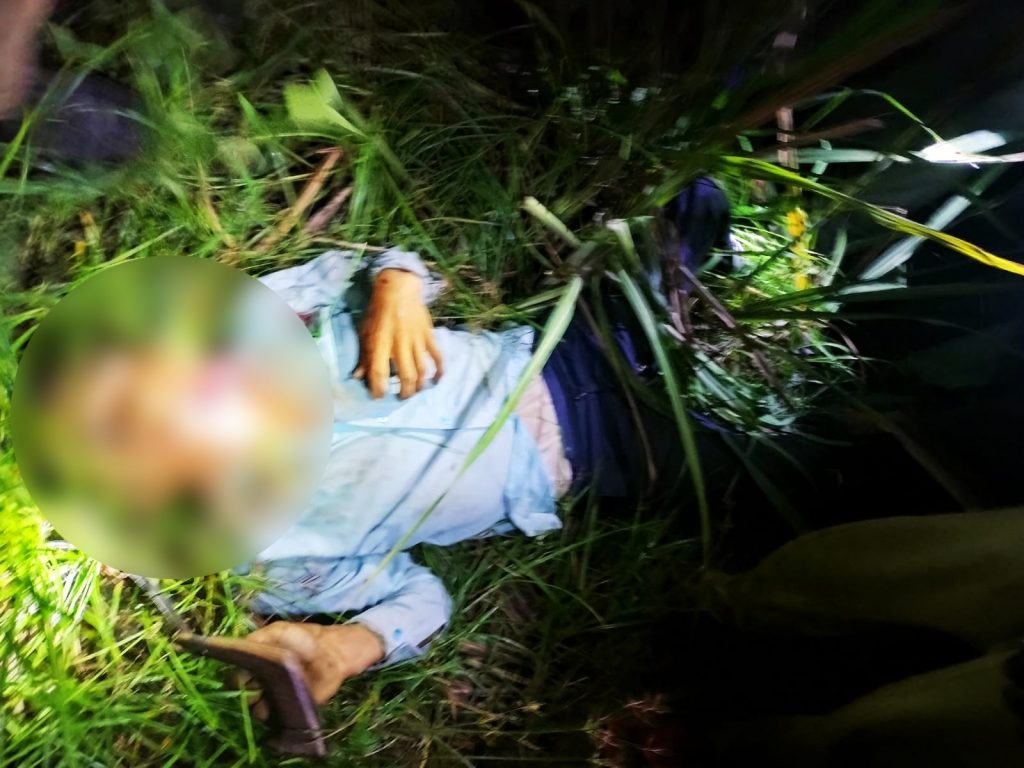
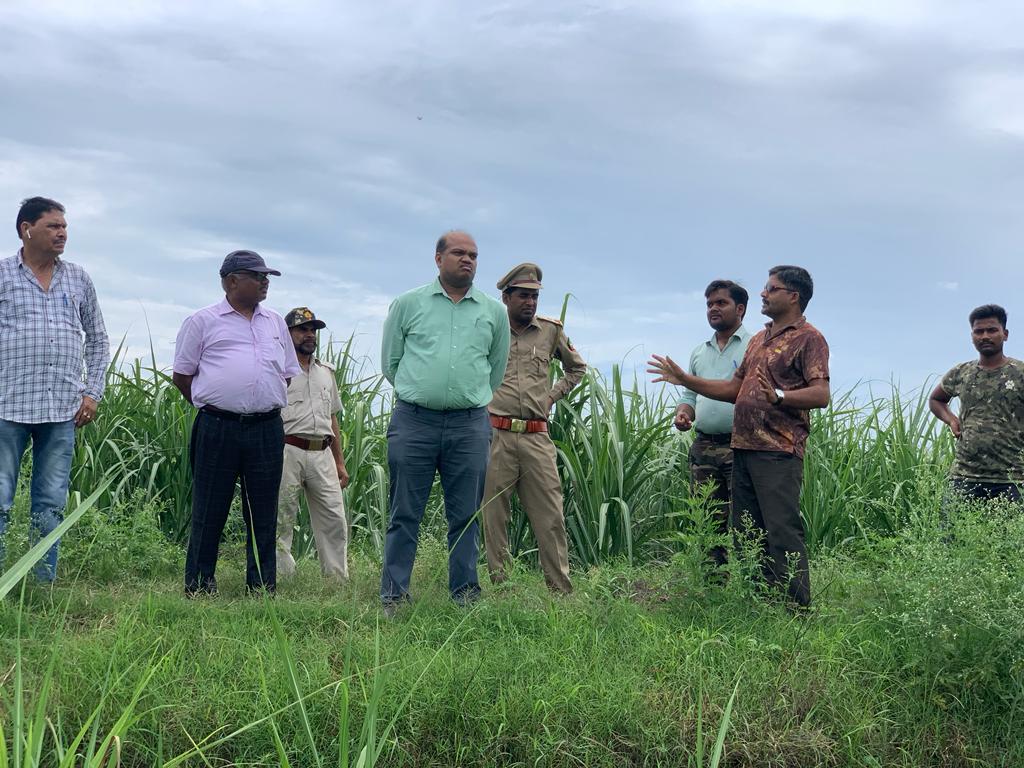
Last week, on 18 July, 20-year-old Rohit Kumar had gone inside a sugarcane field near his home in Udaipur village after dusk, with four of his friends, to cut grass. Around 7 pm, his friends went to wash themselves in a nearby river, leaving Rohit alone. When they returned, Rohit was nowhere to be found. Fearing the worst, they called up the forest department, which immediately rushed a team comprising of STF (Special Task Force) and forest rangers to the spot. The team along with the boys went inside the field on foot carrying flame torches and making noises to scare the tiger if it was lurking somewhere near. They finally found Rohit’s body around 9 pm. Except for a bite mark on the neck, there were no other wounds on the body.
They carried his body back to the village and called the police as the villagers got agitated. The situation was finally brought under control around 12 am. “I visited the bereaved family in the morning. The deceased had married just a month ago and was the only son of his parents. I consoled them and promised to provide all help,” Mr. Biswal said.
The family will get 4 lakhs from the UP government that has included all animal attack deaths under natural disaster. And, 1 lakh will be given by the forest department.
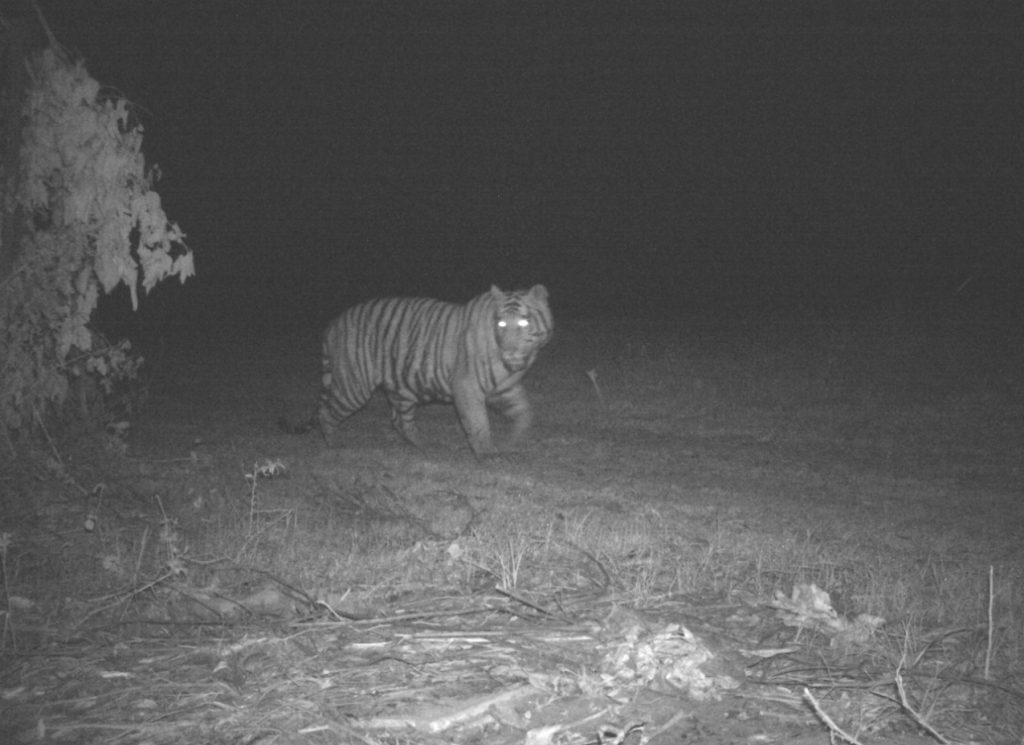
In the entire district, the number of tigers is more than 100, while in South Kheri, it is between 15-20. Mr. Biswal said, “We identified the tiger who killed the boy. We had named him U, after Udaipur village. The villagers knew that he was in the sugarcane field for the past few days prior to the attack.”
Yet the boys still went inside. And that too in the evening, which has been prohibited by the forest department. Although forest guards patrol round the clock, it gets difficult to keep track at all times as the forest there is fragmented, not contiguous. So, to tackle this, camera traps were extended till the sugarcane fields. Once a tiger is detected going into a field, its movements are closely monitored for 15 days. Usually it stays for that long a period before it goes back into the deep forest.
Other than placing camera traps at strategic spots, volunteers and NGOs are being used to sensitise the villagers about staying safe by following few easy steps like not venturing inside the sugarcane fields in the morning and evening as tigers hunt during these times. Mr. Biswal said, “We have identified 25 high risk villages and have given our numbers to them to call immediately if a tiger is sighted or there has been an attack.”
PILIBHIT: EARLY MORNING ATTACK
Similar is the case in Pilibhit, too. The last tiger-attack death occurred on 28 June this year in a sugarcane field. The victim was 45-year-old Lalta Prasad of Raniganj village. “It was an accidental encounter in early morning in a sugarcane field near the jungle,” said DFO Naveen Khandelwal, adding that “tiger conflict around Pilibhit Tiger Reserve area is under control, though very few accidental incidents of human and cattle casualties are still there. There are cases of tiger straying, but damage due to straying has been reduced to almost nil.”
He attributed the reason for such accidental encounters causing death to the high rise in tiger and other carnivores population because of conservation efforts. There are around 65+ tigers in the reserve at present. He also pointed out to the shape of the Pilibhit Tiger Reserve. “Because of the horse-shoe shape of PTR, the tigers tend to stray out, and the sugarcane crops around the reserve act as extended habitats for them,” he said. To check this, fencing has been done around the tiger reserve, with 65 km already completed and 25 km planned for this year.
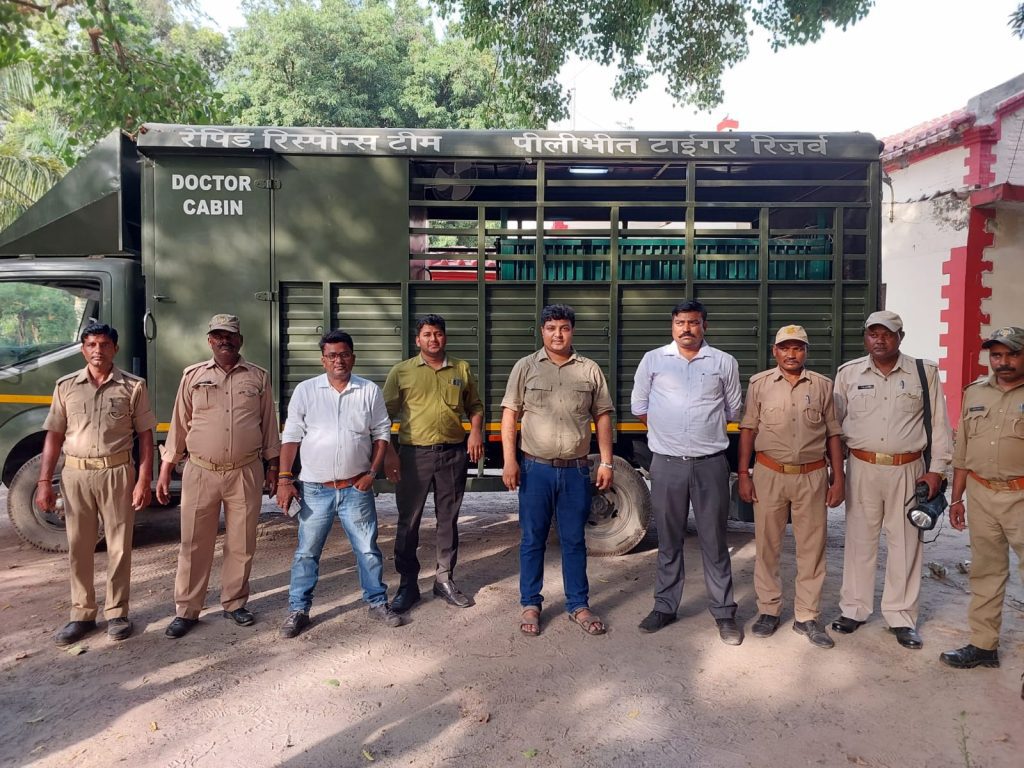
Another initiative that is proving to be highly efficient is the formation of youth volunteer force known as ‘Bagh Mitra’ which have been activated in sensitive villages to create mass awareness. Further, the deployment of Rapid Response Teams in modern gear, vets on call, the use of drones, night vision cameras, camera traps, Anider, and e-surveillance, are all helping in mitigating man-tiger conflicts in the area.
NTCA GUIDELINES FOR DECLARING TIGER AS MAN EATER
National Tiger Conservation Authority (NTCA) has laid down guidelines for declaring big cats as man eaters. They are: 1. Committee to decide; final call by CWLW through an order in writing. 2. Obtain/establish the ID of the aberrant animal causing loss of human life, besides collecting pieces of hair/scats of the carnivore (if available) for DNA profiling 3. Following are noteworthy for taking a decision – frequency of attacks, consumption of the carcass, and debility of the animal.