
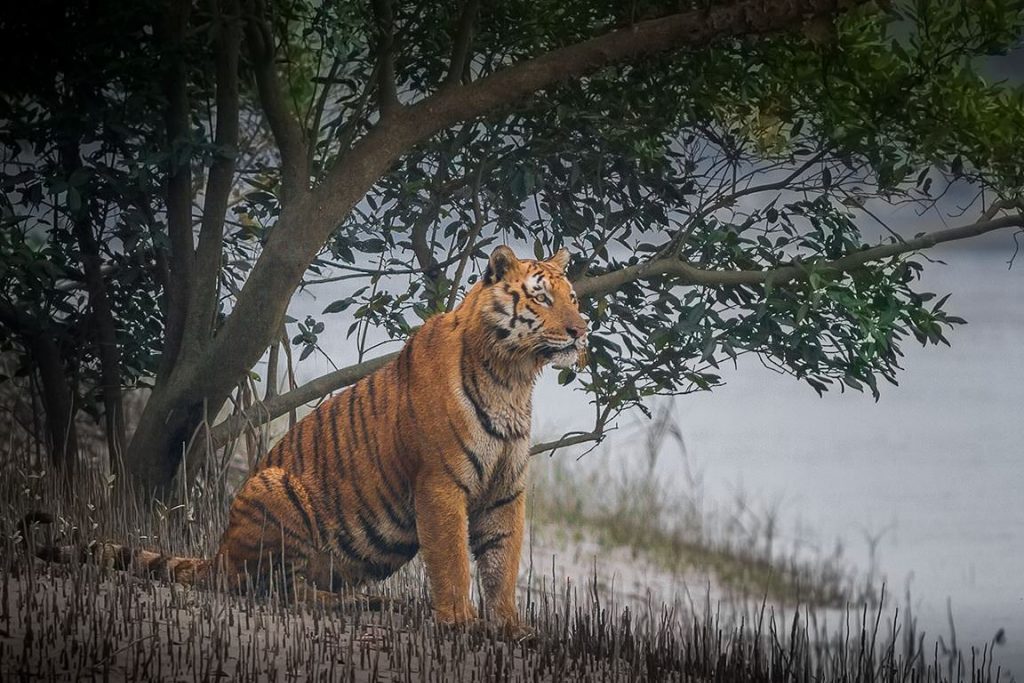
The Sunderbans is the only mangrove habitat in the world for panthera tigris tigris, commonly referred to as the mainland Asian Tiger. The majestic Bengal tiger here, with its unique characteristics that marks it out as different from the other populations in this group, roam and swim free in this swampy area, inviting both curiosity and fear, as there have been cases when they have attacked humans, also. However, the Sunderbans Tiger Reserve officials refute the ‘man eater stories’ floating around in the internet that have even made it to print media headlines.
Instead, they prefer to call the Sunderbans tigers “opportunistic hunters” who go after “easy prey”. Leaving an isolated life in an area filled with mangrove swamps, these tigers have adapted themselves to their habitat with morphological changes as well as changes in their eating habits.
Indian Masterminds spoke to Deputy Field Director of Sunderbans Tiger Reserve, Mr. Jones Justin, an IFS officer of 2018 batch, to find out more about the famous Sunderbans tigers, that have found their way into many tiger stories and folk tales.

ADAPTATION TO MARSHY HABITAT
The Sunderbans mangrove forest is one of the largest of its kind with 140,000 ha, and lies on the delta of the Ganga, Brahmaputra and Meghna rivers on the Bay of Bengal. The tigers here have adapted themselves to the saline water and are expert swimmers. They also eat smaller marine animals like fish, crabs and snakes, which is unusual.
“Tigers usually hunt down a prey which is bigger than its body size because the success rate of their hunting chances is 1 in 20. Hence, it hunts an animal that will be sufficient food for 1-2 weeks,” Mr. Justin said.
OPPORTUNISTIC HUNTERS
But, in the case of the Sunderbans tigers, they have adapted themselves to the terrain well and hunt small animals. Since, big animals are hard to hunt in the marshy area, the tiger looks for easy prey in small animals. And, if a human being also strays into their habitat, he meets the same fate.
Explaining this, Mr. Justin said, “Tigers are opportunistic hunters. They hunt down easy prey. But, in most of the cases when humans were killed, the tiger just ate a little part to get rid of its hunger and left the body behind. We could retrieve the bodies. They were all fishermen who had gone deep inside the swamp for fishing. The tigers did not go inside the villages to kill humans. They killed only when humans walked into their lair.”
STEPS TO REDUCE CONFLICTS
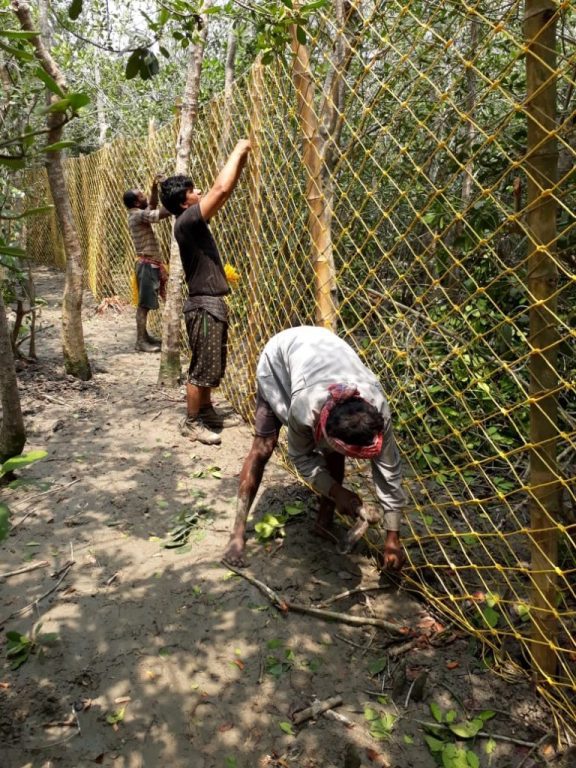
There have been cases two decades back of revenge killing of tigers by villagers because their people were attacked by the big cats in the forest. These killings happened when the occasional tiger strayed into a village looking for easy prey like goat, dogs, etc. “Hence, we have built nylon net fencing of 10-12 metre height around the villages to prevent tigers from going inside. This is temporary fencing that creates a psychological barrier for tigers to cross. About 106 kms of such fencing is being maintained, and as a result, from an average of 20-25 cases of tiger straying into villages every year, it has come down to zero in the last 6-7 years,” Mr. Justin said.
Another aspect is infrastructural, like building of 4-5 kms of road, installing water treatment plants because freshwater is scarce, and building of jetties and community halls. The department has also invested in education by adopting schools and engaging JFC (Joint Forest Committees) to raise awareness.
Other than this, to stop the fishermen communities from going inside the tiger reserve for fishing, alternative livelihood means have been created. “We have provided initial investments to them for goatery, duckery, fishery, pisciculture and apiculture. Apiculture or bee farming is especially flourishing. Earlier, people used to go inside the forest to collect honey. However, now, maximum honey is collected from honey boxes made available by us that can be kept within one’s premises,” the officer said.
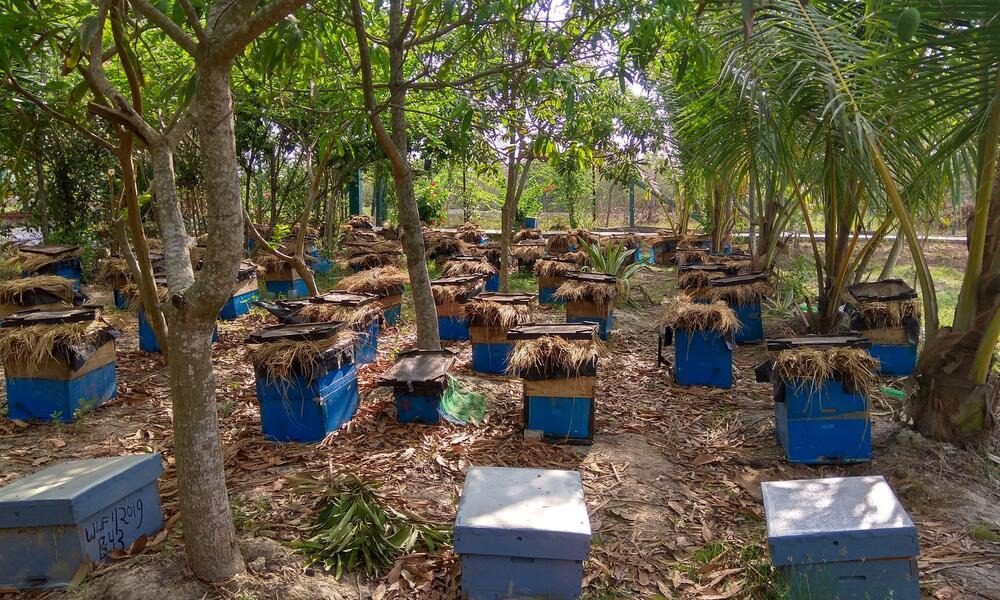
This honey is being commercially sold as Sunderban Honey and has carved out a name for itself in the honey market. The end result is that villagers have stopped going inside the forest for honey collection which in turn has stopped tiger attacks. At the same time, the villagers are earning well from the box-based honey business. Tourism is also turning out to be a profitable livelihood with the forest department engaging in capacity building like making of souvenirs and paper plates, etc., to cater to the needs of the industry. This has moved people away from their traditional livelihoods inside the forest that put them at high risk to tiger attacks.
REJECTS MISCONCEPTION
However, Mr. Justin outrightly rejected that there are tigers in Sunderbans that are man eaters. “Let me put the record straight. Contrary to popular belief, we have not identified a single tiger that is a man eater. Tigers anywhere are opportunistic hunters and look for easy prey, and if humans are that easy to prey upon, then they go after them.”
He further pointed out that in a terrestrial eco system like Tadoba, Ranthambore and the Western Ghats, tigers are shy when it comes to humans and, hence, do not prey on them. “However, Sunderbans being swampy, it is difficult for tigers to hunt. We have to see the Sunderbans tiger in this context. If a human goes inside the forest and if the tiger views him as an easy prey, it will hunt. It is not because the tiger is a man eater,” he added.

The isolated Sunderbans tigers have been adapting themselves for the past 700 years or so. Their gene pool is different and they have undergone morphological changes too, to adapt to their eco system. They have only attacked fishermen who strayed into their swampy territory. In 2022-23, four cases of such legal deaths were reported. No tiger has attacked humans after straying into villages. Mr. Justin confirmed it, saying, “On an average, 20-25 tigers used to stray into villages till 2012, but not a single case of tiger attacking human in any village has been reported in the past 25 years.”