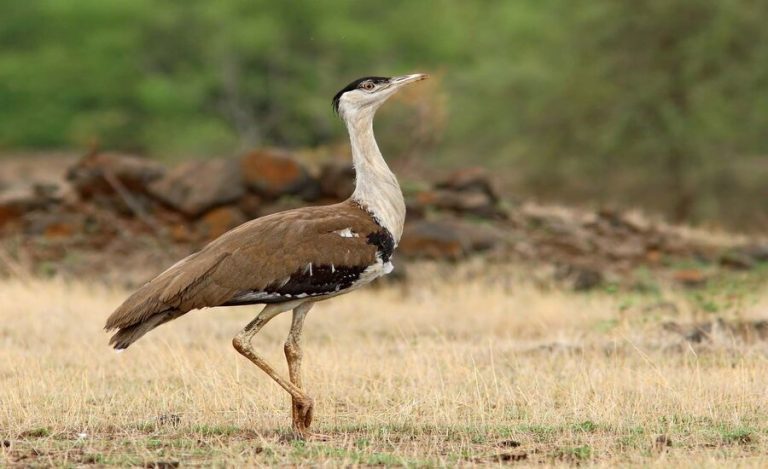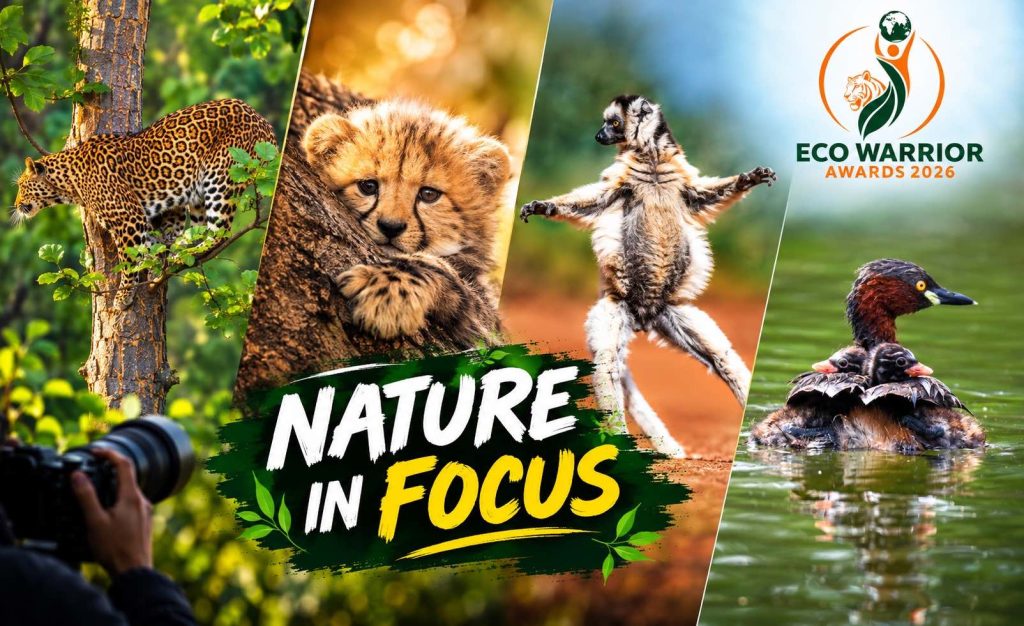
The fourth Eco Warrior Awards was not only a celebration of those who protect India’s forests and wildlife on the ground. On the sidelines of the awards ceremony, the event also opened a fascinating visual window into the natural world through a special photography exhibition featuring breathtaking wildlife images captured by civil servants, predominantly officers of the Indian Forest Service.
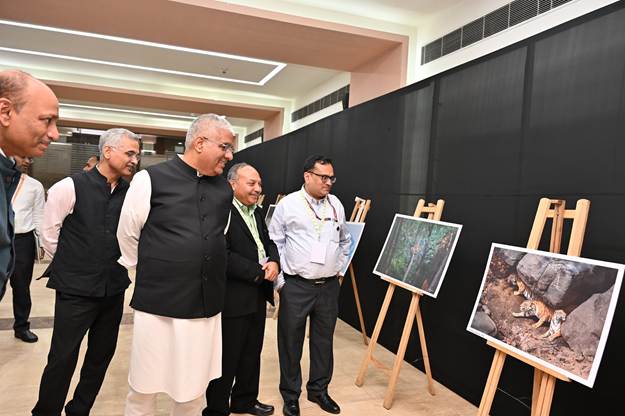
Inaugurated by Hon’ble Union Minister for Environment, Forest and Climate Change Bhupender Yadav, the exhibition brought together photographs that reflected very different encounters with wildlife – from the forests of India to the frozen wilderness of Antarctica and the exotic landscapes of Madagascar. For the officers behind the cameras, photography appeared to be more than a hobby. It was another way of observing nature, documenting its extraordinary diversity and sharing its less frequently seen moments with a wider audience.
The exhibition acquired a special significance because many of the photographers were themselves closely associated with wildlife and forest conservation. Their professional lives have taken them into landscapes where encounters with animals are not staged or predictable. The camera, in such situations, becomes an extension of the field experience – requiring patience, observation and an instinct for the extraordinary moment.
The Minister took particular interest in several photographs displayed at the exhibition. Among those that attracted his attention were works by Dr Gobind Sagar Bhardwaj, Director of the Wildlife Institute of India, and Sanjay Shukla, former Director of the Central Zoo Authority.
One photograph by Shukla, taken in Madagascar, particularly intrigued the Minister. It was an animated image of the Sifaka Lemur, popularly known as the “dancing lemur”. The unusual movement of the animal creates the impression that it is actually dancing. Sifakas move sideways when travelling on the ground, producing an almost choreographed motion that has made them one of Madagascar’s most distinctive and endearing animals.
The Minister enquired about the photograph and the unusual behaviour it captured. It was precisely the kind of image that could make a viewer pause: rather than simply recording an animal, it revealed a characteristic of its behaviour that might otherwise remain unknown to those who had never encountered the species.
Another photograph that earned the Minister’s appreciation was by Dr Gobind Sagar Bhardwaj, shot in Antarctica. It showed two King Penguins in what appeared almost like a perfectly synchronised ballet pose. Their posture, caught at precisely the right moment, gave the photograph a remarkable sense of movement and symmetry.
The image demonstrated the magic of wildlife photography: a scene lasting perhaps only a few seconds can be transformed into a lasting visual memory. The penguins, surrounded by the stark Antarctic landscape, seemed to become performers on a frozen stage.
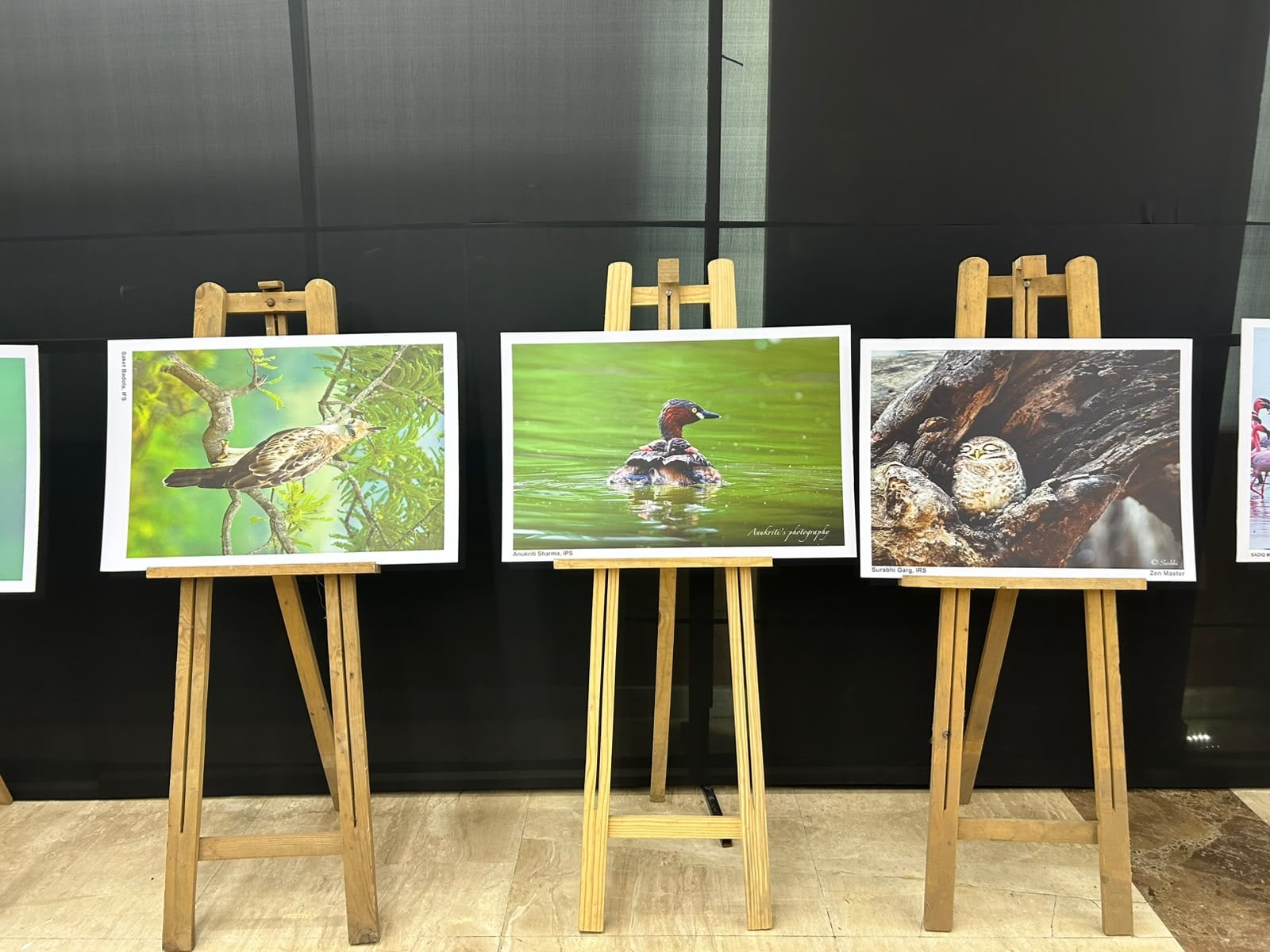
Closer home, Dr Saket Badola, Field Director of Corbett Tiger Reserve, also caught the Minister’s attention with his photograph of a changeable hawk-eagle. The image reflected the kind of intimate access and patience that comes from spending years in the field. For a forest officer, such encounters are part of the working landscape; for a photographer, they offer the possibility of capturing a fleeting expression of wildness.
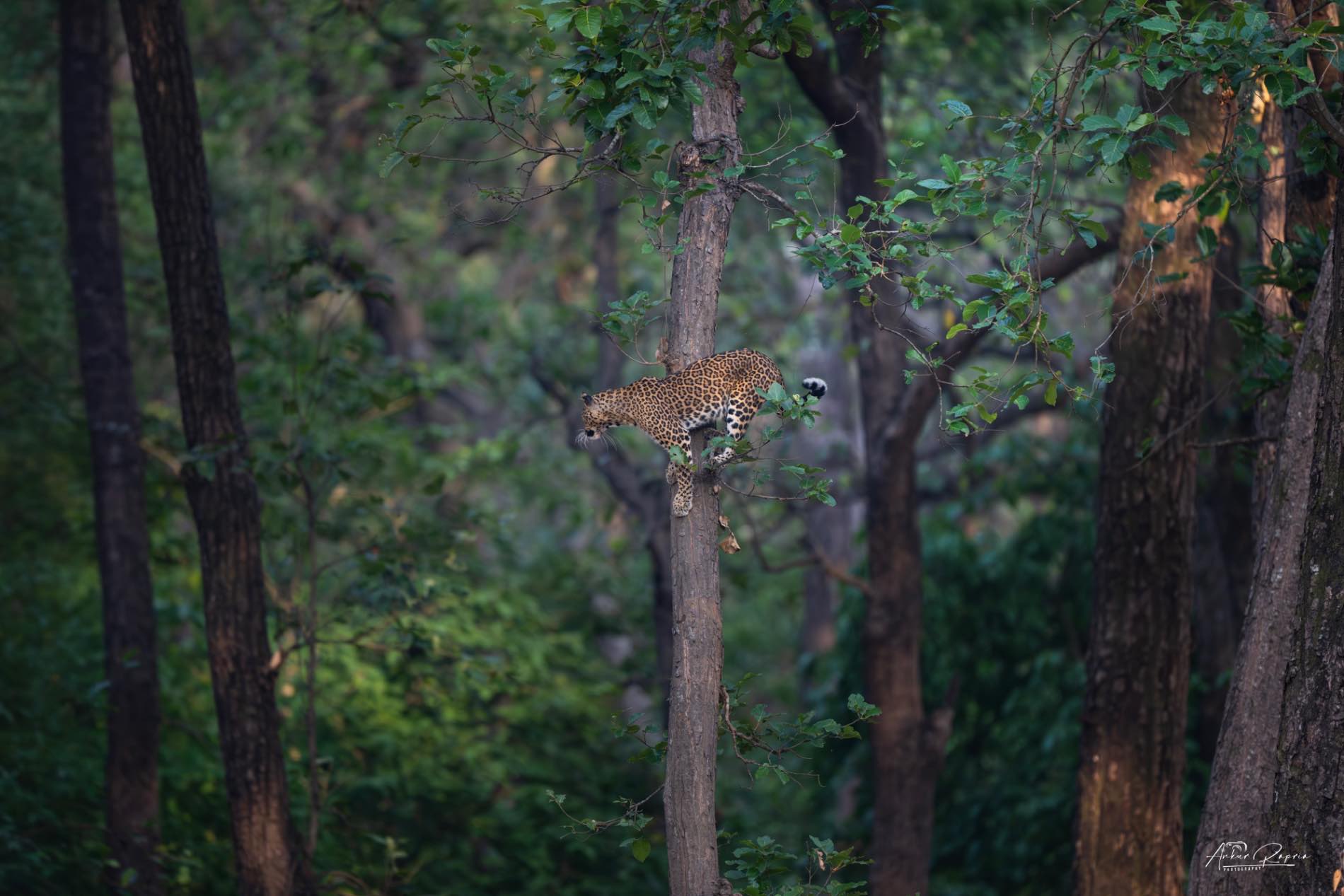
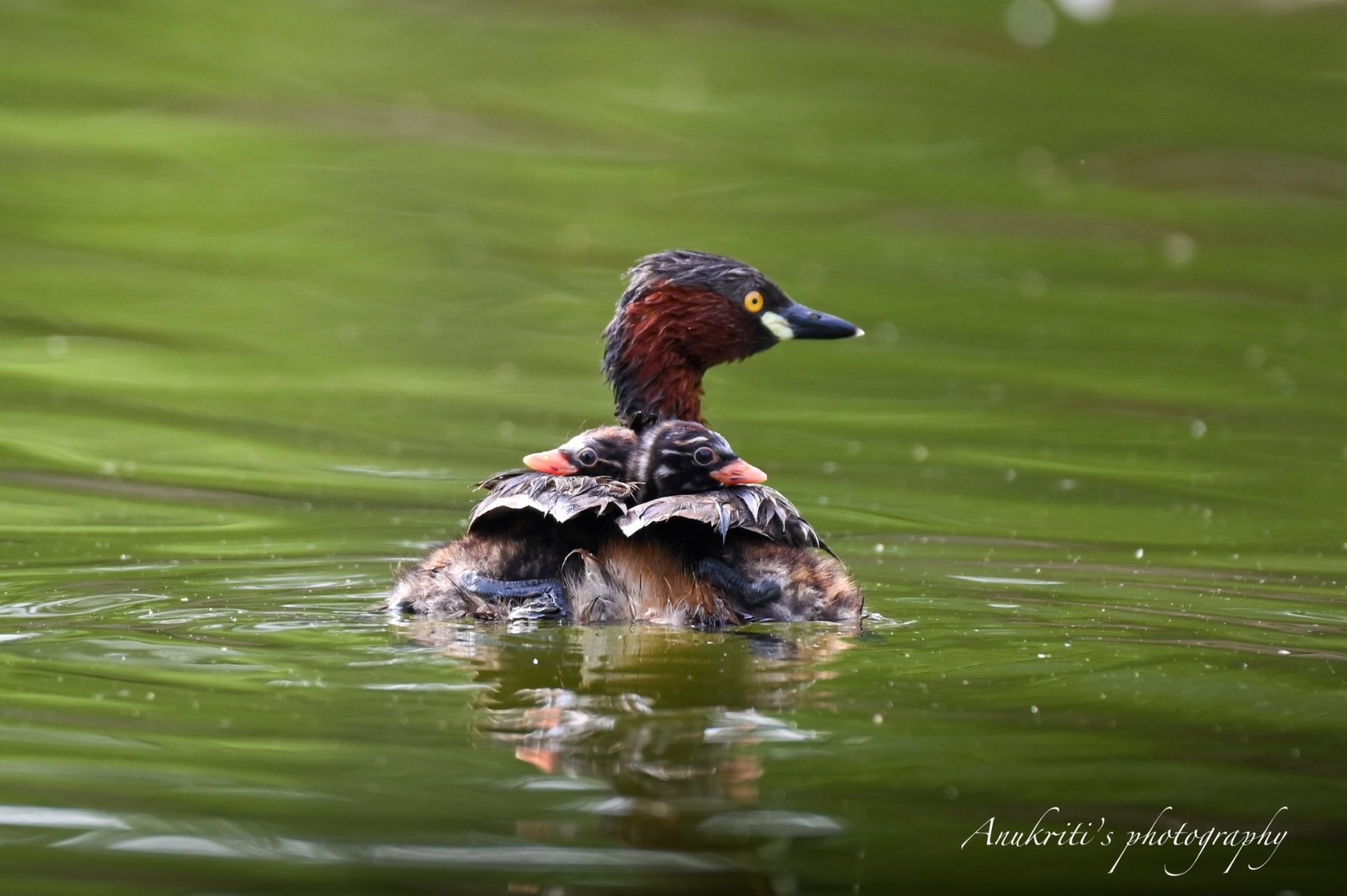
The exhibition featured the work of several other civil servants, underlining that the relationship between public service and nature extends beyond official assignments. Among those whose photographs were displayed were Mr. Sadik Mujawar, IFS, from Gujarat; Dr L. Krishnamurthy, IFS, presently posted as APCCF Wildlife in Madhya Pradesh; Ms. Anukriti Sharma, IPS presently posted as DCP Gautam Buddha Nagar (Noida); Ankur Raparia, IRS; Surabhi Garg, IRS; and Vishwanath Neelannavar, IFS, posted as Conservator of Forests, Behrampur (Odisha) besides Dr Bhardwaj, Dr Badola and Sanjay Shukla.
The diversity of the participating officers was itself noteworthy. The exhibition brought together members of different civil services, but photography provided a common language. Their professional responsibilities may differ, yet their cameras were focused on the same larger subject—the extraordinary richness of the natural world.
There was also an interesting symbolism in placing the photography exhibition alongside the Eco Warrior Awards. The awards recognise people who work, often away from public attention, to protect forests, wildlife and ecosystems. The photographs offered another way of telling that story. They showed visitors what is being protected.
A forest officer may spend months dealing with encroachment, poaching, forest fires, habitat management or human-wildlife conflict. But behind those difficult and often bureaucratic responsibilities lies a world of extraordinary beauty: an eagle perched silently in the canopy, penguins moving across an Antarctic landscape, a lemur seemingly dancing across the ground, or countless other fleeting moments in the wild.
Photography freezes these moments and brings them into the public imagination.
In that sense, the exhibition complemented the central philosophy of the Eco Warrior Awards. The awards celebrated the custodians of nature; the photographs celebrated nature itself. One recognised the people who stand between wildlife and its many threats, while the other reminded visitors of the beauty, wonder and fragility that make that responsibility so important.
The enthusiastic response of the Environment Minister to individual photographs added another dimension to the exhibition. His curiosity about the sifaka’s unusual movement, his appreciation of the King Penguins’ almost balletic pose and his interest in the changeable hawk-eagle showed how a well-captured wildlife photograph can do more than decorate a wall. It can provoke curiosity, communicate knowledge and create an emotional connection with the natural world.
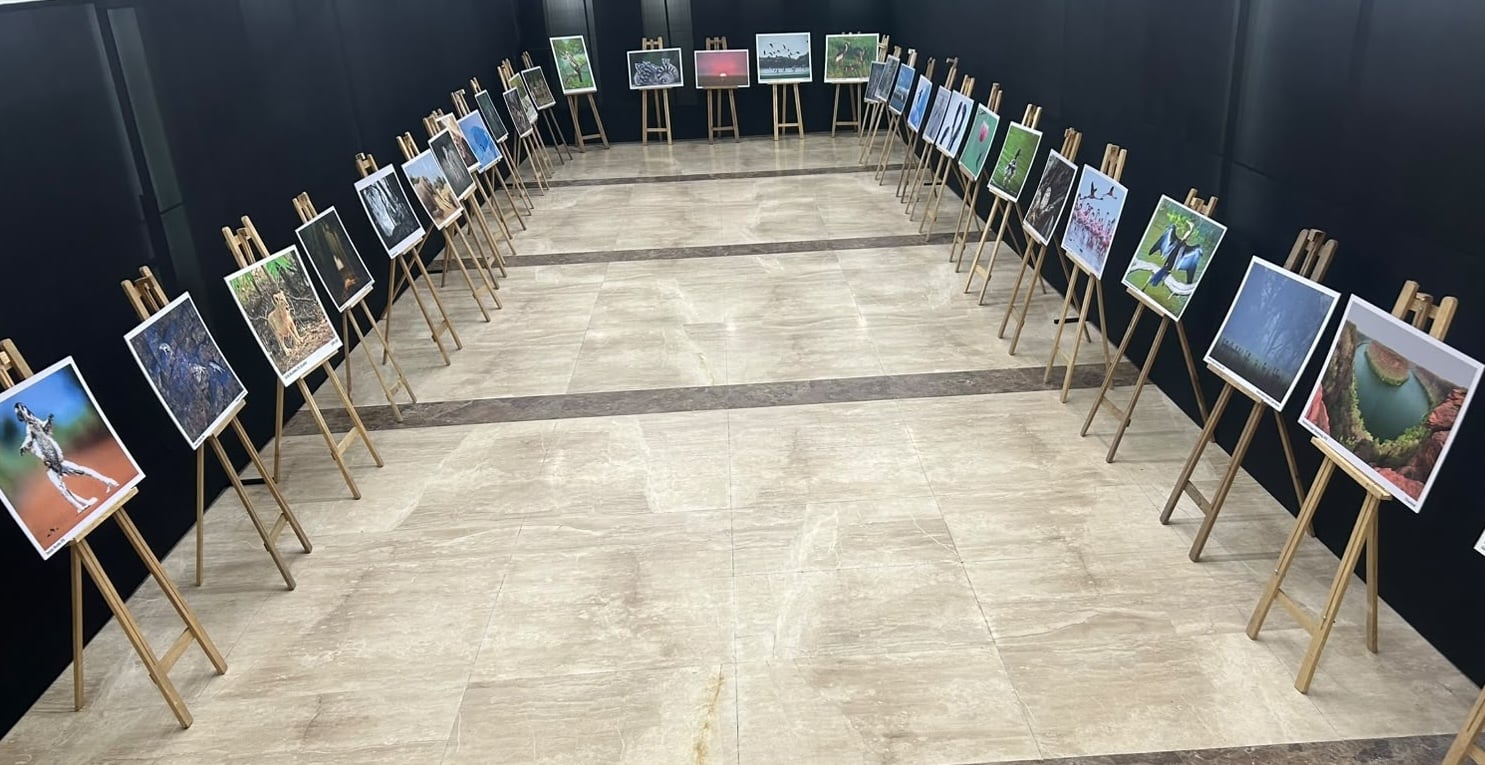
For the civil servants who stepped behind the camera, the exhibition was perhaps another expression of the same commitment that defines their professional lives. They administer forests, protect wildlife and manage ecosystems by day; through their lenses, they also become storytellers of the wild. Often a single photograph can tell the story more powerfully than a thousand words.