India’s journey towards a developed and prosperous future cannot be separated from the health of its forests, rivers, wildlife and ecosystems. As the country looks towards Viksit Bharat 2047, the challenge is no longer simply about achieving economic growth, but about ensuring that growth remains inclusive, ecologically responsible and sustainable for generations to come.
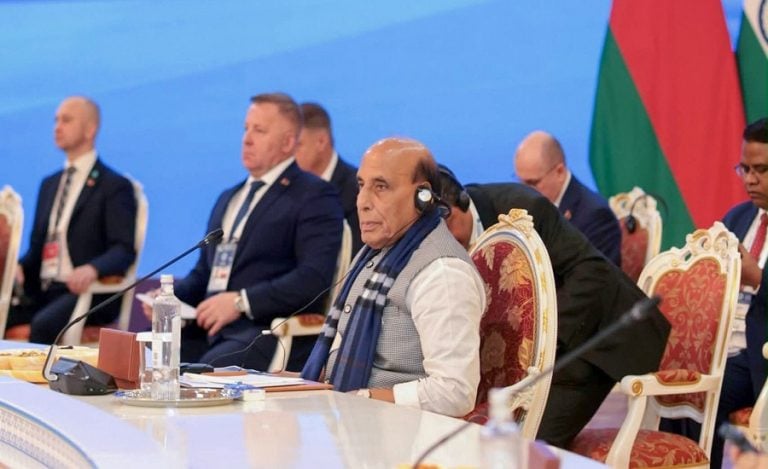
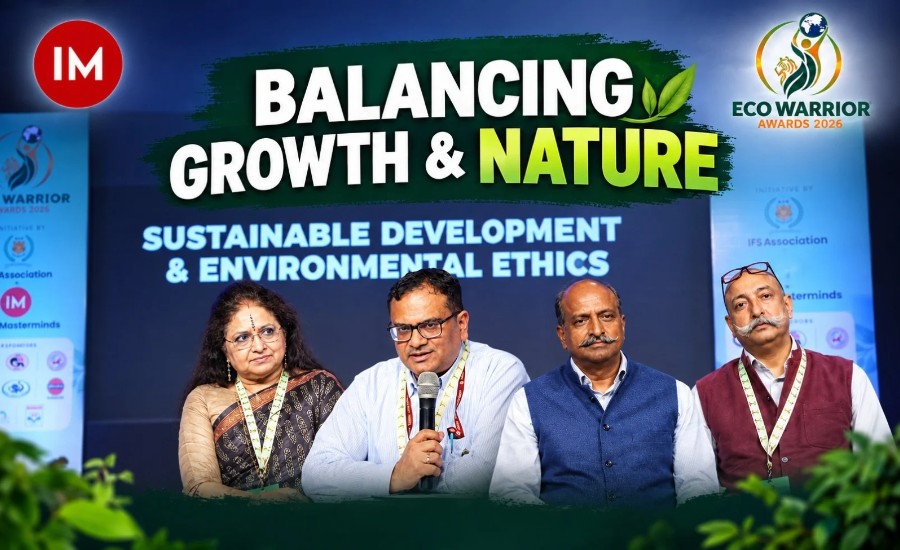
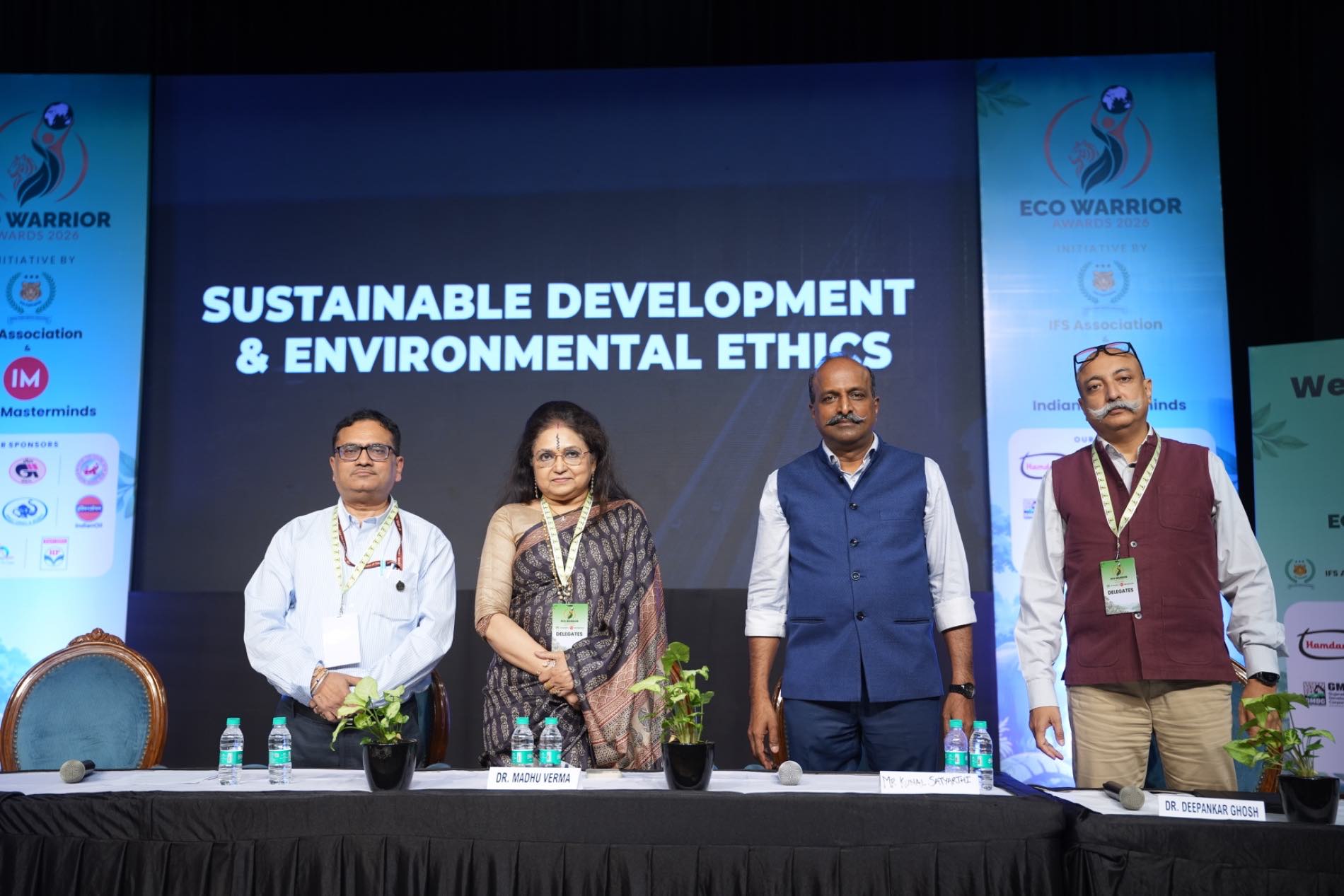
This larger question formed the focus of the third and final panel discussion at the Eco Warrior Awards 2026 Conclave, which brought together experts from environmental economics, wildlife conservation, forest administration and public policy to deliberate on “Sustainable Development & Environmental Ethics.”
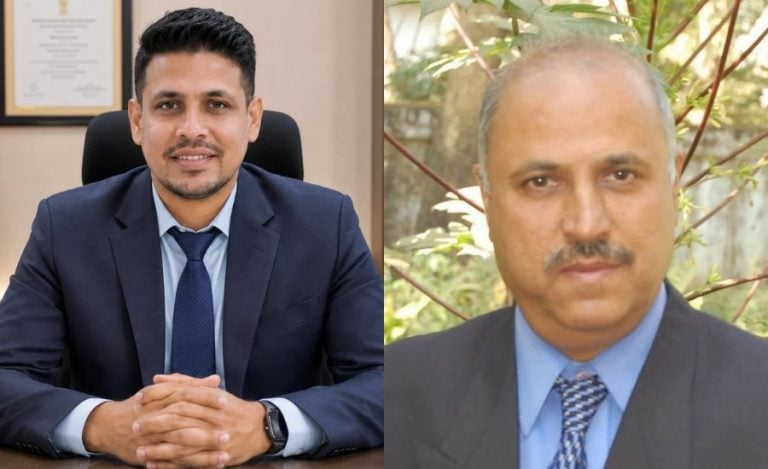
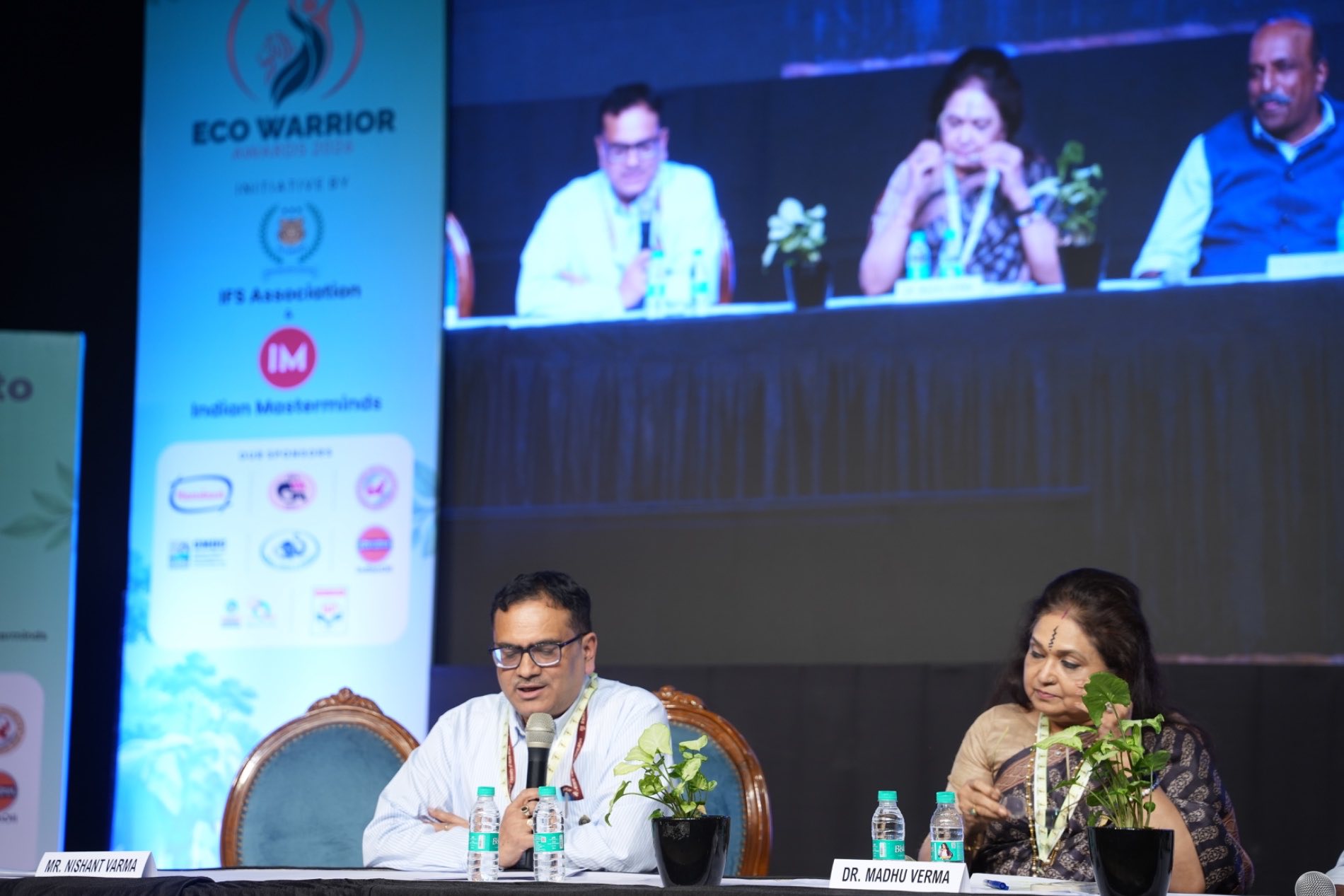
Moderated by Dr. Nishant Verma, 1999 batch IFS officer from the Uttarakhand and Joint Secretary, Department of Science & Technology, the session explored how India can reconcile infrastructure development, economic aspirations and national security with ecological security and social well-being.
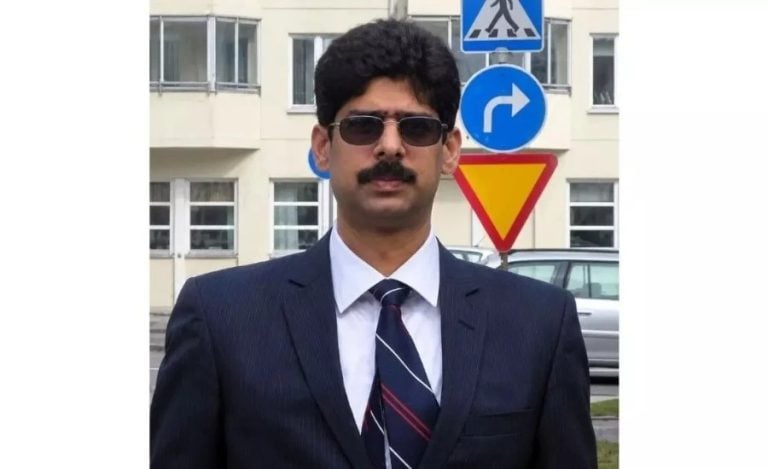
The distinguished panel featured Dr. Madhu Verma, environmental economist and wildlife expert; Dr. Deepankar Ghosh, Senior Director, WWF; and Kunal Satyarthi, IFS, 1997-batch Himachal Pradesh cadre officer.
Putting an Economic Value on Nature
Opening the discussion, Dr. Nishant Verma framed the central challenge around India’s development aspirations. He noted that economic growth, infrastructure and improved quality of life must progress alongside sustainability, inclusiveness and environmental responsibility.
Dr. Madhu Verma brought the perspective of environmental economics to the discussion, stressing that forests contribute far more to the economy than conventional economic calculations often capture.
Drawing from her early work in Himachal Pradesh, she explained how forests provide a wide range of ecosystem services, including biodiversity, carbon sequestration, climate regulation, landscape value and other ecological benefits.
According to her, forests are frequently undervalued because many of these contributions are neither adequately quantified nor reflected in conventional economic calculations.
Her work sought to demonstrate the wider economic contribution of forests and helped inform subsequent discussions around compensation for ecological loss and valuation of ecosystem services.
She also highlighted how factors such as forest diversity, biodiversity, forest cover and environmental performance gradually became part of discussions around fiscal transfers and ecological valuation.
Her larger message was clear: what is not measured and valued can easily be overlooked in development planning.
From Project Clearance to Effective Compliance
The discussion then moved towards one of the most difficult questions facing environmental governance: how to reconcile development and ecological security.
Kunal Satyarthi, IFS, highlighted that economic development, national security and ecological security are all realities that India must address simultaneously.
Infrastructure projects, roads, energy projects and other developments often involve competing priorities. The challenge, therefore, is not simply whether development should happen, but how it can happen while incorporating adequate environmental safeguards.
He emphasised that environmental clearance should not be treated as the end of the process.
Projects often receive clearances with detailed environmental conditions, but the effectiveness of those conditions depends on subsequent monitoring and enforcement.
The discussion therefore underlined the importance of ensuring that environmental safeguards remain meaningful after project approval, rather than becoming merely procedural requirements.
Climate change, he noted, is also an established reality, while national development is an equally important requirement. The task before India is to find a sustainable pathway between the two.
Why Conservation Planning Must Begin at the Master-Planning Stage
Another important theme was the need to bring forest and conservation expertise into development planning much earlier.
The panel noted that forest officials are often consulted when a project has already reached the clearance stage. By then, several important planning decisions may already have been made.
The experts argued that ecological considerations should instead be incorporated during master planning and infrastructure planning itself.
Dr. Deepankar Ghosh stressed that development planning needs to move beyond individual projects and adopt a landscape-level approach.
According to him, assessing only the portion of a road or infrastructure project passing through a forest or protected area can overlook its cumulative impact on wildlife movement, habitat connectivity and ecological flows.
For instance, creating a wildlife passage is not simply about constructing a physical structure at one point. It must take into account how animals actually move across the wider landscape.
Development Must Also Reflect Community Priorities
The panel also emphasised that development ultimately exists for people and therefore must incorporate the priorities of local communities.
Dr. Ghosh pointed out that community interests and conservation are not necessarily opposing objectives. In many landscapes, local communities themselves have strong links with natural resources and can become important partners in conservation.
The discussion highlighted the need for development planning to consider questions such as urban expansion, connectivity, congestion and the pressure that rapidly growing settlements place on surrounding ecosystems.
As India prepares for substantial urban expansion, the experts stressed that ecological considerations cannot remain separate from urban and infrastructure planning.
Nature-Based Solutions and the Circular Economy
Dr. Madhu Verma also highlighted the importance of nature-based solutions and the broader economic benefits generated by healthy ecosystems.
Forests and other natural systems provide benefits extending beyond timber and non-timber forest products. Carbon storage, climate regulation, biodiversity, water-related services and landscape values all contribute to human welfare.
She connected this approach with the idea of a circular economy, in which society uses natural resources while also ensuring that ecological systems are maintained and replenished.
The discussion also touched upon payments for ecosystem services, incentives and financial mechanisms that can reward communities and states for conserving natural resources.
Examples from states such as Himachal Pradesh, Sikkim and Meghalaya illustrated how economic instruments can potentially create incentives for conservation while supporting communities.
Safeguarding Natural Capital for Future Generations
Towards the conclusion, the panel returned to the larger question of environmental ethics.
The experts emphasised that forests, biodiversity and ecosystems should be viewed as natural capital that cannot always be replaced once lost.
This makes the precautionary principle particularly important in development planning.
The session concluded with a strong message: India does not have to choose between development and conservation as mutually exclusive objectives. Instead, the challenge is to design institutions, planning systems and economic mechanisms that allow both to reinforce each other.
The final panel of the Eco Warrior Awards 2026 Conclave thus brought the evening’s discussions full circle—from technology and corporate participation in conservation to the larger ethical question of what sustainable development should mean.
At its heart was a simple but consequential idea: development must improve lives today without diminishing the natural capital on which future generations will depend.
Read Also: Eco Warrior Awards 2026 Conclave: Can AI Change the Way We Protect Forests and Wildlife?