From Protected Areas to a National Conservation Estate
Other Effective Area-based Conservation Measures, or OECMs, have emerged as one of the most important innovations in contemporary biodiversity policy. Under the Convention on Biological Diversity, an OECM is a geographically defined area outside a formally designated protected area that is governed and managed in ways that achieve sustained, effective and long-term conservation of biodiversity. The concept has assumed renewed significance following the adoption of Target 3 of the Kunming-Montreal Global Biodiversity Framework, which calls upon countries to conserve at least 30 per cent of terrestrial, inland water, coastal and marine areas by 2030 through systems of protected areas and OECMs. OECMs thus offer a means of recognising conservation outcomes wherever they occur, not only where conservation is the primary legal purpose.
For India, this is more than a new international reporting category. It is an opportunity to reconsider the architecture of area-based conservation itself. India has built a strong and globally respected protected area network, using a Biogeographic Planning Framework, over the past five decades. National Parks, Wildlife Sanctuaries, Conservation Reserves and Community Reserves remain indispensable to the survival of threatened species and the protection of representative ecosystems. Yet the ecological processes that sustain biodiversity do not stop at protected area boundaries. Species move across administrative jurisdictions; ecological systems function as continuums; and many areas outside the formal network retain high biodiversity value through community stewardship, institutional management or compatible land use.
OECMs therefore represent a significant paradigm shift from designation-based conservation to outcome-based conservation. A protected area is recognised principally because it has been legally designated for conservation. An OECM is recognised because its governance and management deliver enduring biodiversity outcomes, even where conservation may not be the primary stated objective. This distinction is profound. It expands the conservation lens from legal status alone to ecological performance, durability of governance and the maintenance of biodiversity over time. The future of conservation lies not merely in protecting designated spaces, but in recognising and strengthening all spaces that demonstrably conserve biodiversity.
At the same time, the terminology deserves thoughtful reflection. The phrase ‘Other Effective Area-based Conservation Measures’ has played an important role in international negotiations by distinguishing these areas from protected areas. However, the word ‘Other’ unintentionally gives them a residual character, as though they occupy a secondary place in the conservation hierarchy. Many such areas may be critical for ecological connectivity, climate resilience and species persistence. Similarly, the word ‘Effective’ is inherently retrospective. Effectiveness can only be demonstrated through evidence accumulated over time, whereas countries are currently identifying areas that have the potential to provide sustained conservation outcomes. These observations do not diminish the importance of the OECM framework. Rather, they underline the need for language that more positively reflects the contribution of these areas to national conservation goals.
The larger policy opportunity is therefore to move beyond a narrow debate over categories and towards the idea of a National Conservation Estate. India’s National Conservation Estate may be understood as the collective network of terrestrial, freshwater, coastal and marine areas that demonstrably contribute to the long-term conservation of biodiversity, irrespective of their legal designation, governance model or ownership. Protected areas would remain its foundation, but they would be complemented by recognised conservation areas governed by communities, government departments, corporate entities, local institutions, private landholders, public-sector agencies, educational institutional campuses, and other custodians including the ministries of railways, highways and irrigation that own huge land resources across the country. Such an estate would not dilute protected areas; it would place them within a broader conservation architecture.
This is the true significance of reimagining India’s conservation estate. The challenge before the country is no longer simply to increase the number or extent of isolated conservation sites. It is to secure ecological continuity across landscapes and seascapes, strengthen buffers and corridors, maintain ecosystem functions, and support viable populations of species beyond the boundaries of formally protected areas. The transition is therefore from islands to networks, from individual sites to functioning landscapes, and from a protected area system to an integrated conservation estate.
Such a framework would also give practical meaning to India’s commitment to the High Ambition Coalition for Nature and People and to the global 30 by 30 goal. Meeting a numerical target is important, but the quality, representativeness, connectivity and governance of the areas counted are even more important. A National Conservation Estate should not become an exercise in simply adding hectares. It should be guided by ecological priorities, credible evidence, long-term governance arrangements and respect for the rights and knowledge of local communities. The objective must be to conserve biodiversity where it persists, restore ecological functionality and secure essential linkages.
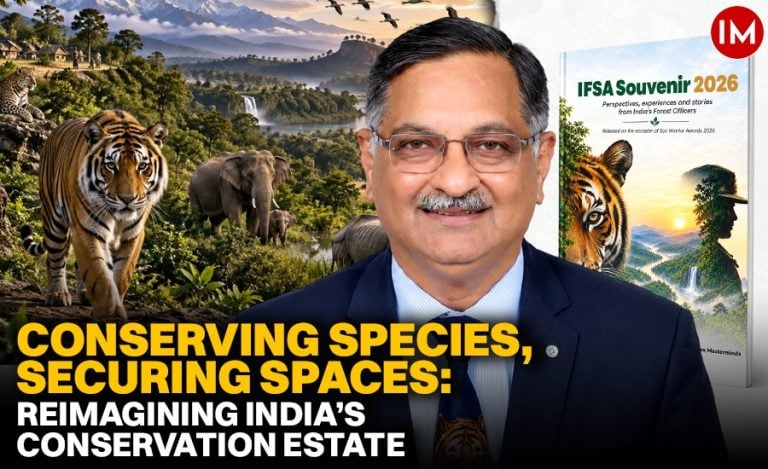
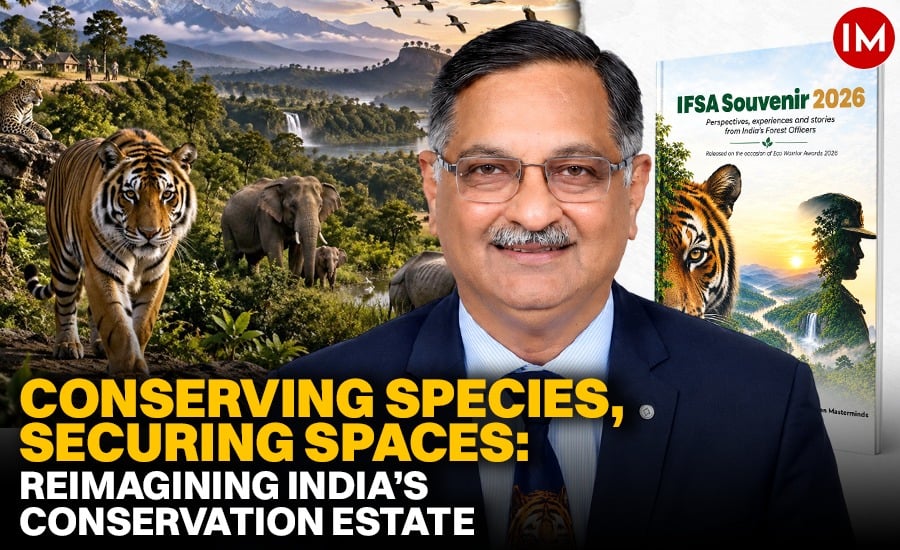
The phrase ‘Conserving Species, Securing Spaces’ captures this relationship. Species conservation cannot be achieved through recovery plans alone unless the spaces required for breeding, feeding, dispersal, migration and climate adaptation are also secured. Conversely, securing land or water without clarity about ecological values may produce only nominal conservation. Effective policy must bring the two together: identify the species and ecological processes that require attention, and then secure the spatial systems needed for their long-term persistence. This is especially relevant where wildlife populations occur across mosaics of forests, farms, wetlands, infrastructure and settlements.
Operationalising a National Conservation Estate will require careful institutional design. India first needs a clear national framework for identifying, evaluating and recognising OECMs in accordance with CBD and IUCN principles, while adapting the process to its constitutional, legal and administrative context. Recognition should be evidence-based, transparent and voluntary, and it should not weaken existing protections or become a route for relabelling degraded lands. Areas should qualify because they already deliver, or can credibly demonstrate, sustained biodiversity outcomes supported by durable governance. The burden of proof must therefore rest on conservation value and continuity, not merely on administrative convenience.
Second, ecological and spatial planning must guide the process. Potential OECMs should be assessed for their contribution to ecosystem representation, landscape connectivity, threatened species recovery, wild species movements, climate refugia, watershed security and coastal resilience. This will require stronger collaboration among forest and wildlife departments, biodiversity authorities, scientific institutions, local governments and sectoral agencies. Spatial databases and monitoring systems must be developed so that OECMs are not only identified, but periodically evaluated for ecological condition, governance stability and conservation outcomes.
Third, governance must be treated as central rather than incidental. Many potential OECMs will be located in areas managed by communities or institutions whose primary mandates may not be biodiversity conservation. Recognition must therefore build trust, respect legitimate rights, and provide incentives for long-term stewardship. It should not impose an additional layer of control without corresponding support. The credibility of the OECM process will depend on whether custodians see recognition as an affirmation of their conservation contribution and a pathway to technical, financial and institutional assistance.
Fourth, the process should be led as a national conservation mission rather than as a short-term accounting exercise. Capacity building for forest and wildlife managers will be essential, particularly in applying OECM criteria, evaluating governance arrangements and monitoring outcomes. State-level pilots can test methodologies across ecological and governance contexts before national scaling. Financing will also be necessary for baseline assessments, management support, restoration and monitoring. Public investment should be complemented by carefully designed partnerships, while ensuring that conservation integrity is never subordinated to branding or numerical claims.
The Indian Forest Service and the wider conservation community have a distinctive leadership role in this transition. Their experience in protected area management, species recovery, landscape planning, community engagement and interdepartmental coordination provides the institutional foundation for moving from a protected area network to a national conservation estate. The task is not to replace established conservation instruments, but to connect them, strengthen them and recognise the larger ecological fabric within which they operate.
During the past fifty years, India has established a “Biogeographical Planning Framework”, one of the world’s most significant protected area systems. The coming decade offers an opportunity to build something broader: a National Conservation Estate that recognises every landscape and seascape making a measurable and enduring contribution to biodiversity conservation. Such an approach would retain protected areas as the secure core of conservation while extending recognition and stewardship across the wider countryside, freshwater systems and coastal and marine realms.
If the twentieth century was the century of protected areas, the twenty-first century must become the century of integrated conservation estates. OECMs provide the bridge between these two eras. By embracing this vision, India can move beyond counting conserved hectares towards securing connected landscapes, resilient ecosystems and thriving species populations. OECMs provide the policy instrument; the National Conservation Estate provides the national vision. ‘Conserving Species, Securing Spaces’ should therefore become not merely the title of an article, but a guiding philosophy for the next generation of conservation policy and practice in India.