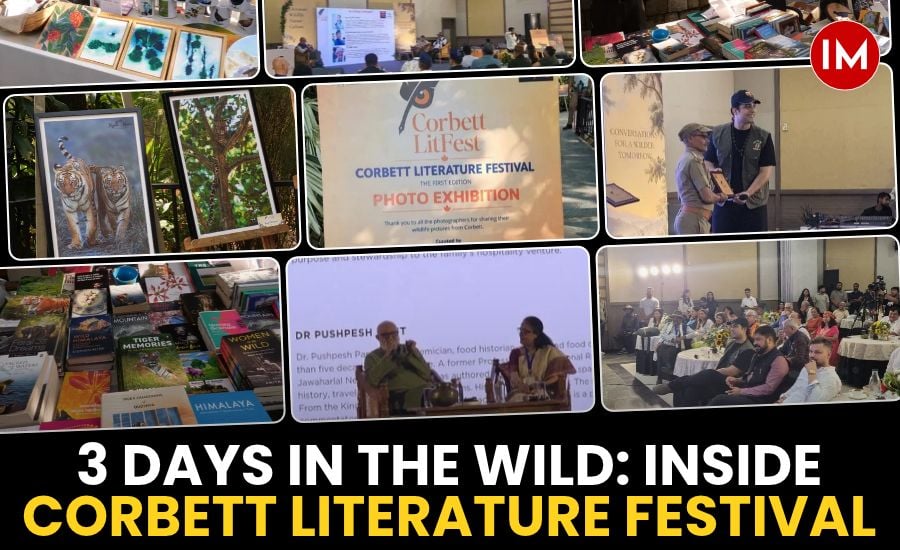
From wildlife photography and documentary films to conversations on nature, culture and conservation, the inaugural Corbett Literature Festival brought together diverse voices to explore the many stories of the natural world.
What can a photograph reveal about a forest? How can literature change the way people understand wildlife? And whose stories should be told when conversations turn to conservation?
These questions found space at the inaugural Corbett Literature Festival, held from October 6 to 8 in Uttarakhand. Titled 3 Days in the Wild, the festival brought together writers, naturalists, photographers, filmmakers, historians, conservationists and nature enthusiasts to explore the relationship between people and the natural world.
Across three days, more than 20 sessions featured over 30 voices, with discussions spanning wildlife, nature writing, photography, filmmaking, the Himalayas and Uttarakhand’s cultural heritage. The gathering went beyond conventional discussions on conservation, using different forms of storytelling to help audiences engage with the landscapes, wildlife and communities connected to them.
Among the participants were photographer and environmentalist Anup Shah, historian and author Janhavi Prasada, and author and naturalist Stephen Alter, alongside several other voices from the worlds of literature, wildlife and conservation.
Watch the video here:
An Idea to Bring Nature into Conversations
Behind the festival was a larger question: how can more people be brought into conversations about nature and conservation?
Indian Masterminds caught up with Saket Badola, IFS, Field Director of Corbett Tiger Reserve and the brainchild behind the inaugural festival, to understand the idea that brought these diverse disciplines together.
The festival’s approach rested on the understanding that nature can be experienced and understood in many ways. While scientific knowledge and conservation practices remain essential, literature, photography, films and personal experiences can offer audiences different ways to connect with the natural world.
By bringing these perspectives together, 3 Days in the Wild created a space where discussions about forests and wildlife could extend beyond technical subjects to include stories, culture, art and the people who live and work around these landscapes.
When Photography and Films Tell Forest Stories
Photography formed an important part of the festival, offering visitors an opportunity to see wildlife and natural landscapes through the eyes of those who document them.
Alongside the sessions, a photography exhibition showcased the visual appeal of the natural world and the experiences behind the images. The exhibition added another dimension to the discussions, allowing visitors to engage with nature beyond words and presentations.
Cinema also found a place in the programme. The festival screened a documentary by filmmaker Vikramjit Singh Bal and a film on the king cobra by environmental journalist, photographer and filmmaker Ajay Suri.
Through these films, wildlife stories reached audiences in a format that combined visual storytelling with a closer look at the natural world. The screenings also complemented the conversations on photography and conservation, demonstrating how images and films can communicate experiences that may otherwise remain unfamiliar to many people.
The festival’s activities extended beyond its formal sessions. Art and craft displays, book stalls and cultural handicrafts gave visitors more ways to explore the region’s artistic traditions and its connections with nature.
Singer Jubin Nautiyal was among those who attended, bringing another cultural perspective to a gathering that brought together wildlife, literature, filmmaking and the arts.
Recognising the People Who Know the Forest Closely
One of the notable moments of the festival centred on the forest guards who work in and around Corbett’s landscapes.
A short film on Corbett, created using photographs and videos captured by forest guards during their work, offered audiences a glimpse of the landscape through the eyes of those who experience it regularly.
The visuals received an appreciative response from the audience. More than simply presenting the beauty of Corbett, the film drew attention to the people who observe its changing landscapes and document what they encounter as part of their daily responsibilities.
In a special gesture, Jubin Nautiyal presented certificates of recognition to the forest guards, acknowledging their contribution to documenting and protecting the region’s natural heritage.
Their presence added an important dimension to the festival. Conversations about wildlife often feature researchers, photographers, authors and conservation experts, but the knowledge and experiences of people working on the ground are equally important to understanding a forest.
By recognising the forest guards and showcasing their work, the festival brought these perspectives into a wider public conversation.
Three Days, Multiple Ways to Understand Nature
The inaugural Corbett Literature Festival brought together people who approach the natural world from different directions. For some, it was through literature and history; for others, through photography, filmmaking, music or conservation work.
The diversity of its programme reflected the idea that conversations about nature need not remain confined to a single discipline. A photograph, a documentary, a book or the experience of a forest guard can each reveal a different aspect of the same landscape.
For Corbett, a landscape widely associated with wildlife and tiger conservation, the festival also offered an opportunity to explore the stories, people and cultural traditions connected to the region.
As 3 Days in the Wild concluded on October 8, it left behind more than a programme of sessions and screenings. It brought together different ways of seeing and understanding nature while making room for voices from both established fields and the ground-level work of conservation.
The first edition has concluded, but the conversations it opened can continue beyond the festival venues. By connecting literature, wildlife, culture and the experiences of people who work closely with nature, the Corbett Literature Festival offered a reminder that understanding a landscape begins not only with looking at it but also with listening to the many stories it holds.
From Corbett, Indian Masterminds brings you the story of a festival that placed nature, its people and their stories at the centre of the conversation.