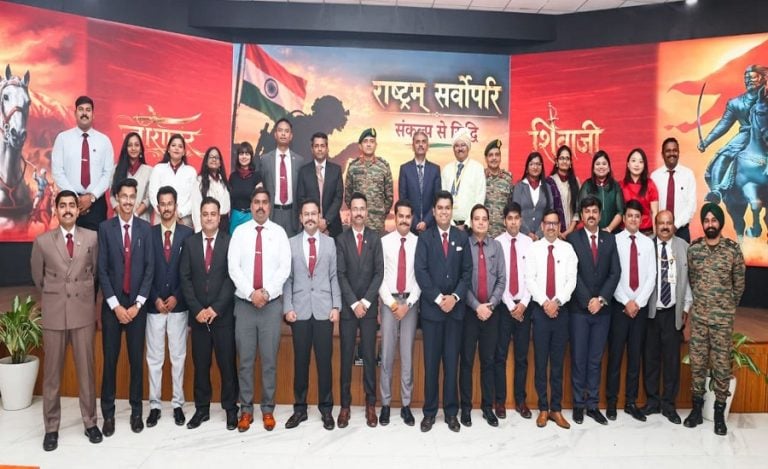
We are living in an era of tech-savvy IFS officer trainees, many of them engineers, who are intelligent, capable, amicable, and equipped to address complex real-world challenges. Their success in clearing one of the toughest competitive examinations (UPSC) is a testament to their merit. Yet, it is concerning that field-based learning is increasingly receiving less attention, even though it should remain the backbone of our service. The forest is our office, not merely the backdrop to reports and deadlines; its realities must be understood through firsthand experience. Being an engineer is certainly no impediment, some of our finest foresters and naturalists have come from non-forestry backgrounds, but we must ensure that the spirit of learning from the forest never withers away.
All the technology that has come in; camera traps, drones, GPS collars, AI-based image recognition must not make us forget a simple truth: it was the foot soldiers who made India’s forests what they are. From Kailash Sankhala’s hand-rearing of tigers to Saroj Raj Choudhury’s pugmark census, to Sanjoy Deb Roy’s pygmy hog reintroduction plans, it has been trials, failures, and hard-won successes on the ground that have driven forest management in India.
The backbone of this legacy is knowing the jungle from within the forest: the trees and grasses, the birds and animals, what they eat, how they smell, and how they behave. No textbook can fully teach this, and no technology can entirely match it. It is learned only when foresters and field staff roam the forest day after day, season after season.
Also Read – Women, Forests and the Power of Participation: Rethinking Forest Governance in India
Field Science as the Foundation of Indian Conservation- some examples
Foot Patrolling: The Kaziranga Rhino Model
Kaziranga’s rhino-conservation model rests on sustained field presence, disciplined foot patrols and intelligence-led surveillance. From fewer than a dozen rhinos in the early 1900s , around 12 in 1908, the park has grown to 2,613 greater one-horned rhinos in the 2022 census, the world’s largest single population. In the 1930s, Assam’s pioneering forest officer Mahi Chandra Miri, one of the first Assamese officers selected for the Imperial Forest Service, introduced hilltop observation, watchtowers and rapid ambush-based responses to poachers. That foundation evolved into an extensive network of anti-poaching camps and more than 1,500 frontline personnel, combining local knowledge with relentless patrols through grasslands, wetlands and riverine forests. After recording annual poaching peaks of about 25–27 rhinos in 2013–14, Kaziranga reported zero 2 straight rhino poaching years since January 2024 and counting! demonstrating how boots on the ground, early warning and institutional commitment can convert field intelligence into conservation success.
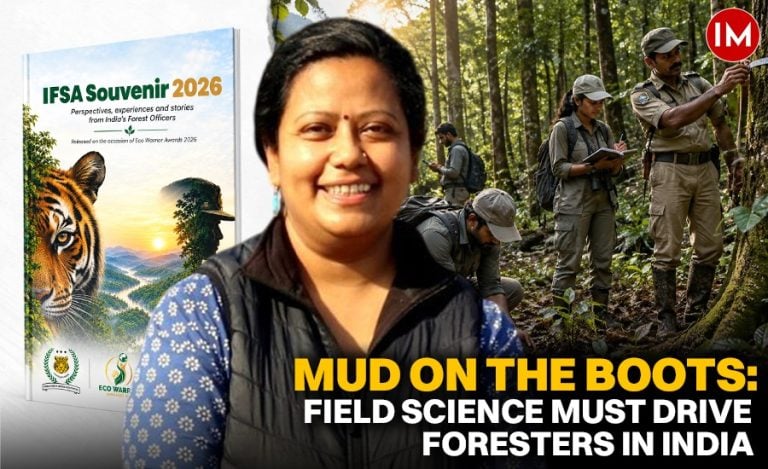
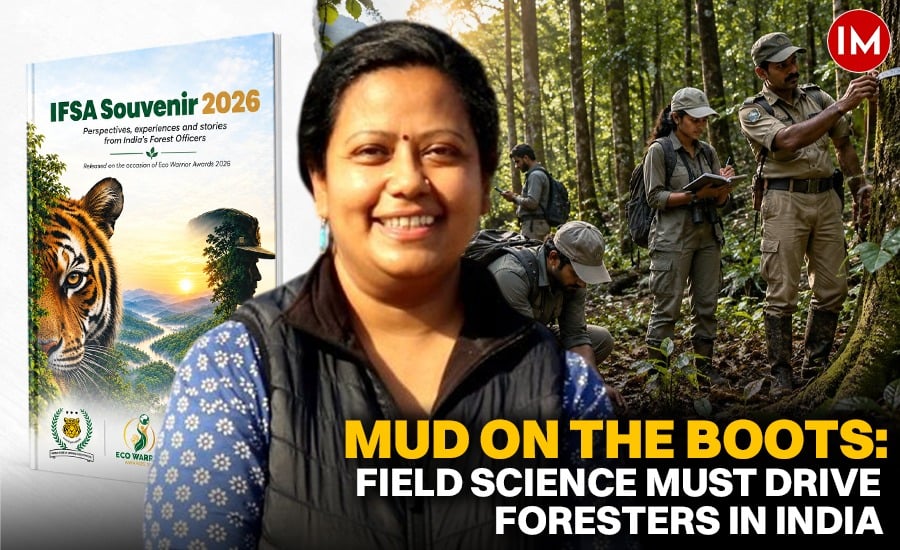
Link for IFSA Souvenir 2026 – https://heyzine.com/flip-book/5ae558c21d.html
Pugmark Census: Imperfect but Transformative
The pugmark census technique, pioneered by Saroj Raj Choudhury in the early 1970s, was the first systematic method to estimate tiger numbers across India. While scientifically imperfect and later replaced by camera-trap and genetic methods after 2004, it was “good enough” to galvanize Project Tiger and give the country its first credible picture of tiger distribution and status. More importantly, it forced forest staff to learn individual tigers by their tracks, movement patterns, and territorial behaviour, knowledge that still underpins anti-poaching patrols and conflict management today. • Animal behaviour studies from close quarters: Choudhury’s daily logs of the hand-reared tigress Khairi yielded insights into tiger pheromones and social behaviour that later informed broader research.Hand-rearing and translocation: Kailash Sankhala’s work with tigers, both in zoos and in the wild, combined hands-on rearing, translocation experiments, and field observation to shape early tiger management under Project Tiger.
Bustard Trapping: From Local Skill to Scientific Tool
Traditional bustard trappers in Rajasthan and other grasslands once spent hours hidden behind bushes or artificial covers, patiently waiting to capture birds by hand or simple snares. This intimate knowledge of bustard behaviour, flight paths, and habitat use has now been repurposed for science: biologists use modified trapping and tagging protocols to fit satellite transmitters, collect blood samples, and study migration and breeding ecology of endangered species like the Great Indian Bustard. The old trapper’s patience and fieldcraft remain central to modern conservation research. In many landscapes even today, forest guards work with local herders, honey collectors, and fisherfolk, using their ecological knowledge to locate wildlife, detect illegal activity, and design better protection strategies.
Controlled Burning: Reading the Grass, Planning the Fire
Controlled or prescribed burning is often presented as a technical exercise, but in Indian grasslands and dry forests it rests on generations of field observation. Veteran foresters and frontline staff know which grass patches burn hot, which hold moisture, where fire lines must be cut before summer, and how to stagger burns to get a flush of fresh grazing for herbivores in the monsoon. This “grass sense” determines where fire lines are laid, how wide they must be, and when burns are safe decisions that protect both wildlife and nearby villages. Across Gir, Kanha, and other reserves, frontline staff map and maintain fire lines based on local topography, wind patterns, and past fire behaviour, integrating traditional knowledge with modern fire-risk mapping.
Pygmy Hog Recovery: Experiments in the Grasslands
The story of the pygmy hog, one of the world’s rarest suids, is inseparable from field-based experimentation in Assam’s grasslands. After the species was rediscovered in the 1970s, conservationists like those associated with the Pygmy Hog Conservation Programme (PHCP), building on the spirit of field officers such as Sanjoy Deb Roy,in Manas National Park, Assam began capturing a few individuals to start a captive breeding programme. Decades of trial and error in diet, enclosure design, disease management, and soft-release protocols have now enabled the reintroduction of captive-bred hogs into Manas and other grasslands, slowly rebuilding a wild population once feared extinct.
Elephants as friends of forest department
P. D. Stracey was a distinguished forest officer who served in the Assam Forest Department and later became Chief Conservator of Forests, Assam. Drawing on extensive field experience with elephants, he wrote ‘Elephant Gold’ in 1960s as a valuable account of their capture, behaviour, training, and management. Many of his insights remain relevant today, particularly for elephant care, habitat management, and the design of effective strategies for mitigating human–elephant conflict.
Why Technology Cannot Replace the Boots
Technology amplifies field science; it does not replace it. Camera traps confirm what a tracker suspects from a pugmark; GPS collars validate movement patterns first guessed from repeated sightings; drones survey fire damage that field staff already know is vulnerable. But the starting point remains the same, a forester who can read the forest, its smells, sounds, and subtle signs and turn that into management decisions.
In that sense, ‘mud on the boots’ is not nostalgia; it is methodology. India’s forest and wildlife successes, from tigers to rhinos to pygmy hogs rest on a foundation laid by those who walked the beats, experimented in the field, and learned the jungle from the inside out.
Also Read – How IAS Dhatri Reddy Is Turning Andhra Pradesh into a Launchpad for India’s Next Big Ideas