“Sabji Mandi is full of vegetables and fruits, junk/packaged food in the market and delicacies in my freezer are tempting, but I don’t know what is safe to eat.”
Food used to be a little more than for mere survival and taste. It was also a culture and an experience. It was what brought families together and defined festivals and traditions. It used to be full of stories, smells, and love. Today, food still tastes good, maybe even better, but what we eat is quietly becoming a threat to our health and well-being. Instead of nourishment, food has now become a complex mix of chemicals, artificial flavours, hidden toxins, and cutting-edge technologies.
There was a time when food was simple. A few fresh vegetables from the market, homemade ghee, rice from the village mill, and pulses that were cooked slowly on a coal stove and digested easily. Today, our meals are fast, and our digestion is slow. Our plates are colourful, but our energy is dull. Something is clearly wrong, and it runs deeper than just calories or carbs. Do we trust food anymore? Or, is it time to ask, are we really eating food, or just a clever illusion of it?
The Illusion of Modern Food
Technology has transformed what we eat, how we eat, and even how we think about food. We now have lab-grown meat, biofortified crops, AI-designed recipes, genetically modified grains, and food delivery apps that promise piping-hot food in under ten minutes. On the surface, it’s a miracle. But scratch a little deeper, and you find a quiet unease.
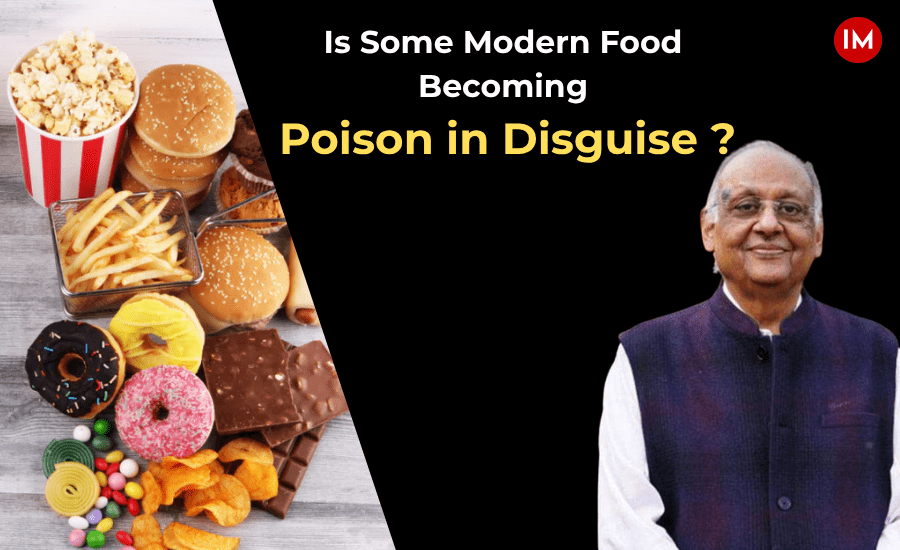
We eat tomatoes that look red but have no taste. We store fruits in the fridge for weeks and expect them to retain life. We proudly read “No Added Sugar” labels without realising that ultra-processed foods manipulate our bodies in ways science still doesn’t fully understand. And all this is wrapped in plastic—inside and out. Milk might contain harmful hormones injected in milch cattle for higher yield; meat may carry antibiotics; oils could be adulterated. Our habit of cola being a must with meals and the need for social show-off of buying cola-popcorn-pizza combos in cinema halls at exorbitant prices are willful assaults on our bodies. We may be inviting cancer without knowing.
Even our “healthy” choices are not spared, eg, cold-pressed juices in plastic bottles, organic biscuits/health powders loaded with synthetic additives, packaged salads with hidden sugars/preservatives, and multigrain/brown bread often made with refined maida. We are fooled as much by advertising as by fads and the need for convenience. And slowly, food is turning from a source of life into a slow poison. We are becoming victims of a silent but serious attack on public health.
Fridge, Plastics, Preservatives: The New Silent Killers
Let’s face it—fridges are not what keeps food fresh. They just make old food look less dead. Fruits and vegetables start losing vitality the moment they’re plucked. Cooling them only slows the decay. We find nothing wrong with deep-freezing food for months. Add to this the common practice of wrapping food in cling film or storing it in plastic containers, and we’re locking in toxins. Defrosting, heating, and cooking it in the microwave makes this even worse.
Plastics may be invisible, but their impact isn’t. They interfere with hormones, disrupt gut health, and accumulate quietly in our organs. Preservatives, too, are added to make food last longer on shelves—often at the cost of our bodies. And pesticides? They’re often sitting stubbornly on the surface of your apples and spinach, barely removed by a quick rinse under the tap.
Fridges, plastics, and preservatives are becoming killers, not because of anything being wrong with them—indeed, they are technology’s gift for our good—but because we lack the wisdom to use them appropriately.
Inner Health Is Inner Governance
Here’s the deeper truth: food doesn’t just impact our bodies. It shapes our minds, our moods, and even our moral clarity. Ayurveda has long said, “Jaisa ann, vaisa mann”—as is the food, so is the mind. When we eat food full of artificial energy, preservatives, and toxins, it clouds not just our digestion but our inner compass. We feel anxious, restless, tired, and bloated—not just physically, but emotionally. Indeed, food is not just what we eat—it defines who we are.
Modern science now confirms what ancient wisdom always knew: our gut is our second brain. The quality of our food directly influences mental health, sleep, immunity, focus, and resilience. If we want to feel aligned, aware, and alive, what we eat must support it.
Eating well is not about following trendy diets or expensive superfoods. It is about restoring governance over our own inner ecosystem. It is about conscious choices. Just as a society collapses without governance, our body and mind decline without food discipline.
Technology: Saviour or Saboteur?
Let’s not throw technology out of the kitchen. It has given us great gifts: better crop yields, access to diverse food, food safety alerts, and awareness of nutrition. It has made cooking easier and healthier for many. AI-powered sensors, drones, and precision agriculture are making farms more efficient and climate-resilient. Hydroponics and vertical farming can grow crops in cities, using less water and land. The problem isn’t technology itself. It’s the way we use it. When convenience becomes king, wisdom is thrown out.
We must use technology mindfully—let it help us grow our own food in small spaces, learn how to clean produce properly, plan our meals, and understand what suits our body. But let us never outsource our inner awareness to a gadget or app.
Your body is the best nutritionist you will ever have. It tells you what to eat, when to rest, and when to stop. Listen to it.
To-Do Options: Simple, Sensible Food Habits
Here are seven gentle shifts anyone can make:
- Eat food that’s alive. Choose what’s fresh, local, seasonal, and eaten within 24–48 hours when possible.
- Clean your produce properly. Use salt water, baking soda, or vinegar to wash off pesticides, not just water—soaking the raw produce for some time, not just rinsing it.
- Avoid plastics with food. Never heat, store, or wrap food in plastic. Glass, steel, or ceramic are your best friends.
- Don’t overeat: Leave your stomach slightly empty. Never ever overeat, however delicious the dishes may be.
- Let tech assist, not dictate. Use apps to learn and plan—but let your body and tradition guide final choices. Read the labels. Short ingredient lists, with names you recognise, are usually safer than fancy health claims.
- Eat balanced, nutritious food: Take a balanced, nutritious diet, as per your own body’s needs and taste. Trusting traditional meals like simple khichdi or roti-subzi with love and awareness beats a high-protein, AI-generated bowl.
- Eat with attention. No screens, no rushing. Sit down. Breathe. Taste. Chew. Be present. Eat with family when possible. Above all, be happy and peaceful—food with love makes it Amrit (Nectar); anger converts it into poison. Digestion begins in the mind.
Endnote: Food Is a Relationship
More than fuel, food is our first deep relationship with nature, with tradition, and with our own body. It’s where healing begins and where destruction often hides. If we can reclaim food, we reclaim our vitality. If we eat with wisdom, we live with clarity.
Let your food not just fill your stomach but restore your soul.
(The author is a 1972-batch IAS officer (Retd) of the UP Cadre. He has been Secretary to the Government of India & Member, Competition Commission of India. He has been a student of Artificial Intelligence for the past 10 years.)