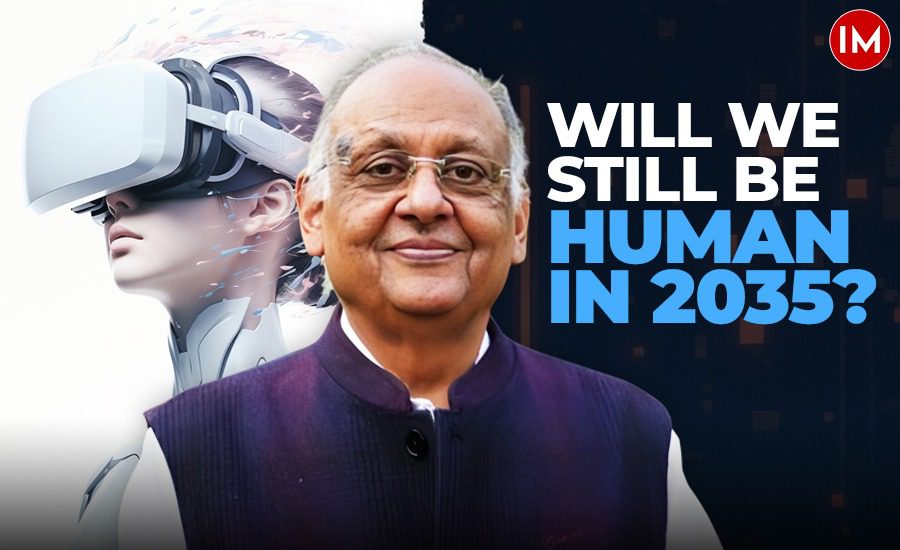
It was a quiet evening in 2035 when Meera sat by her window, watching her 12-year-old daughter chatting with her AI tutor in the Metaverse. The tutor was flawless—patient, endlessly knowledgeable, and even capable of sensing the child’s mood. For a moment, Meera felt grateful. Yet another thought disturbed her: What would it mean for her daughter to grow up guided more by machines than by human teachers, friends, or even parents?
Later that night, she asked her husband, “Do you think our children will even know what it means to be human in this world of AI, virtual companions, and genetic perfection?”
Her question lingers for all of us. What does it mean to be human when technology begins to shape not just how we live, but who we are?
Defining “Being Human”
Being human has never had a single definition. Philosophers speak of free will, the ability to make choices even when they are hard. Spiritual traditions speak of the soul, compassion, and our deeper purpose. Psychologists point to our emotions, empathy, and imagination. Scientists remind us of our curiosity and creativity, our endless desire to ask “why.”
No single description is complete, yet together they remind us of something essential: being human is not only about survival or intelligence. It is about meaning, relationships, values, and the courage to remain authentic.
The challenge of the coming decade is that technologies—AI, the Metaverse, biotechnology, gene-editing—are entering the very spaces where these qualities once belonged exclusively to us.
Technology’s Silent Takeover
Already today, algorithms decide what news we see, which jobs we qualify for, and even how we present ourselves online. Virtual assistants reorder groceries, suggest what we should eat, and schedule our week. By 2035, this quiet influence may deepen:
- AI may not only draft our speeches, guide our careers, and negotiate on our behalf, but take even major life-impacting decisions which will define how we live, what we do, and indeed who we are.
- The Metaverse may host much of our education, work, and social life, blurring the difference between the real and the virtual, leading to possible schizophrenia and serious mental health or interpersonal/ societal relationship issues.
- Biotechnology and gene-editing may not just treat diseases, give us much longer, healthier lifespans, but even help humans to move towards becoming Transhumans, going beyond natural biological limits in intelligence, health, or abilities, and also allow parents to “design” their children.
These powers are breathtaking, but they bring a risk: we may lose the will and ability to make our own choices. And choice, in many ways, is the heart of being human.
Different Lives, Different Impacts
The transformation will not touch everyone in the same way:
- Children may grow up surrounded by AI tutors, virtual playmates, and perfectly optimized learning paths. They may become highly skilled, but less able to handle boredom, conflict, or failure—the very experiences that build character.
- Working adults may find relief as AI takes over routine tasks. Yet, they may also feel diminished, questioning their worth when machines outperform them in speed, memory, or even creativity. Careers may become more unstable, and identity may no longer be tied to one’s profession.
- The elderly may gain new independence through healthcare AI, robotic caregivers, and virtual companionship. But they may also suffer deeper loneliness if human family bonds weaken in the face of machine efficiency.
- Society as a whole may become more productive and prosperous, but also more divided. Those with access to advanced technologies may surge ahead, while others risk exclusion. Cultural values may erode under the pressure of engineered convenience, and ethics may lag behind invention.
These are not distant possibilities. They would be the lived realities of 2035 if we do not consciously shape the relationship between humans and technology.
Philosophical and Spiritual Reflections
Philosophically, humanity has always been defined by our capacity to choose, to err, and to grow. If AI begins to make “better” choices on our behalf, we may become more efficient—but will we still be truly human?
Spiritually, technology cannot fill the yearning for meaning, love, or transcendence. It can provide stimulation, but not depth; distraction, but not wisdom. The risk is not only that we forget our higher purpose, but that we stop asking the question altogether. We may not only give up the quest for answering the quintessential human/ spiritual question “Who Am I”, the question itself may be lost in the noise of technology and efficiency.
Ethics, Compassion and Relationships
Ethics and compassion are central to humanity. Yet technologies often reward the opposite. Social media thrives on outrage. AI personalization traps us in echo chambers. Virtual companions soothe loneliness, but can never fully replace genuine human intimacy.
Gene-editing may give us healthier children, but if pushed too far, it could tempt us to engineer “ideal” traits—beauty, intelligence, obedience. This could rob life of its unpredictability and uniqueness. A society where every child is designed for perfection may not be more human—it may be less.
The Risk of Dehumanization
The danger of 2035 is not killer robots or machine rebellion; it is quiet dehumanization. We may live longer but forget what life is for. We may connect more but feel lonelier. We may have knowledge at our fingertips, but lose the patience to seek wisdom.
The true threat is that in giving technology too much control, we gradually stop exercising our most human capacities: wonder, resilience, forgiveness, imagination, and the courage to live with imperfection.
A Positive Path Forward
Yet, this future is not fixed. Technology reflects our intentions. If used wisely, it can expand, not shrink, our humanity:
- Keeping Choice Alive: Use AI to support human decision-making, not replace it. Algorithms should guide, but the final “yes” or “no” must remain ours.
- Nurturing Compassion: Build digital platforms that reward empathy and dialogue, not anger and division.
- Preserving Creativity: Encourage human imagination even in an age of machine-generated art, music, and writing. Let technology inspire us, not define us.
- Protecting Dignity: Use biotech to heal, but resist the temptation to redesign humanity as a product.
- Balancing Real and Virtual: Ensure children and adults alike spend as much time in genuine relationships as in virtual spaces.
Above all, we must keep reminding ourselves that machines can be powerful partners, but they must never be our masters.
Act Wisely
In 2035, being human will not simply mean being born of flesh and blood. It will mean the courage to remain authentic in a world of simulations, the wisdom to choose in a world of automation, and the compassion to stay connected in a society of virtual illusions.
The true test of our times will not be how advanced our machines become, but how deeply we hold on to the essence of humanity—our spirit, our creativity, our empathy, and our freedom to choose.
In the end, the question is not whether machines will think like humans, but whether humans will still dare to live, love, and create like humans.