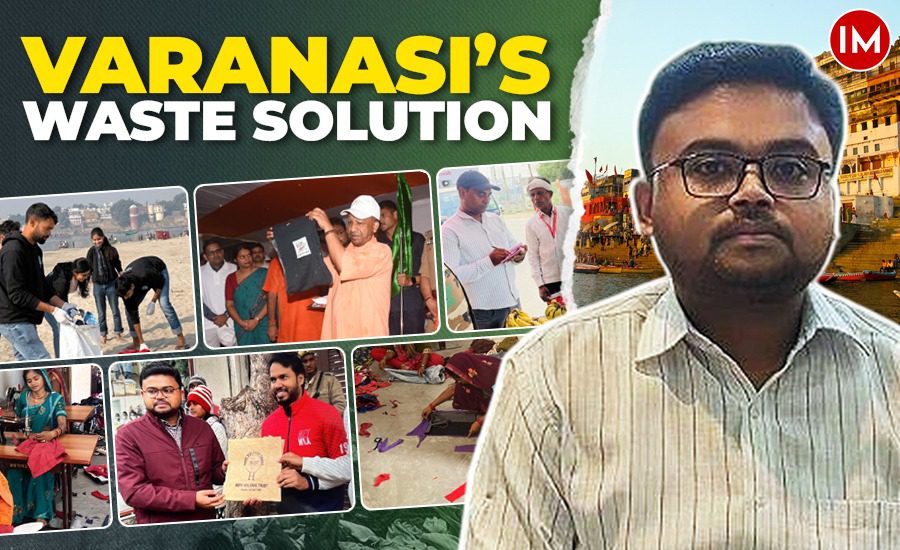
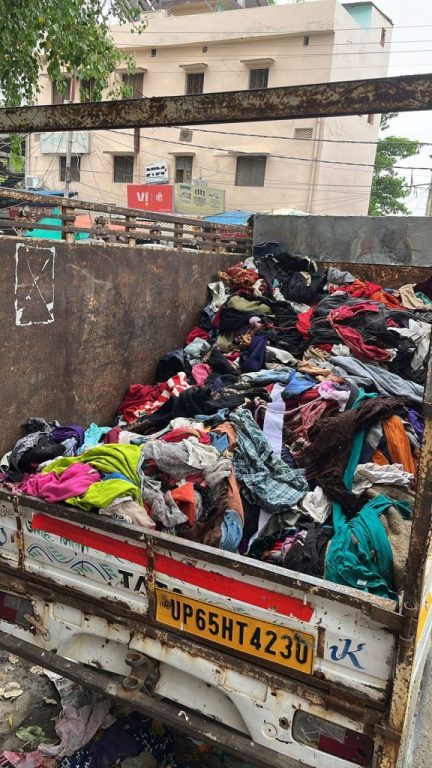
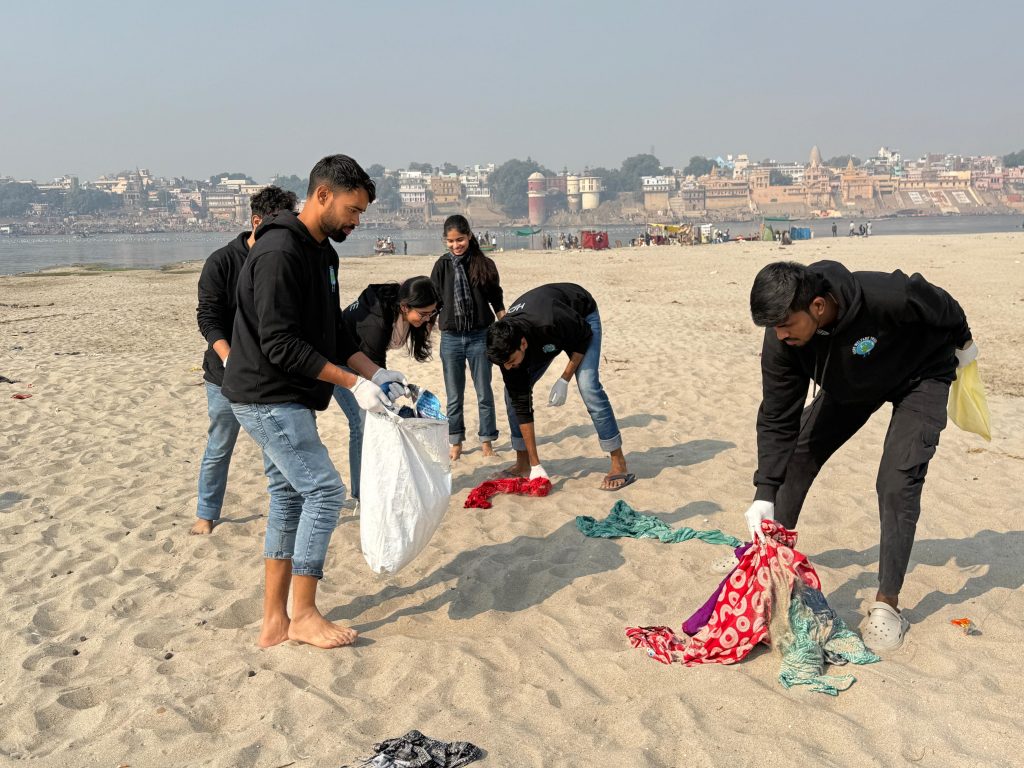
In Varanasi, a centuries-old tradition sees devotees leaving behind clothes as offerings at the ghats of the Ganga. While this practice is rooted in religious beliefs, it has led to significant challenges for the municipal authorities. The discarded garments accumulate along the riverbanks, making cleaning operations difficult and posing risks to stray animals that often ingest them. Additionally, these clothes add to the overall waste burden of the city.
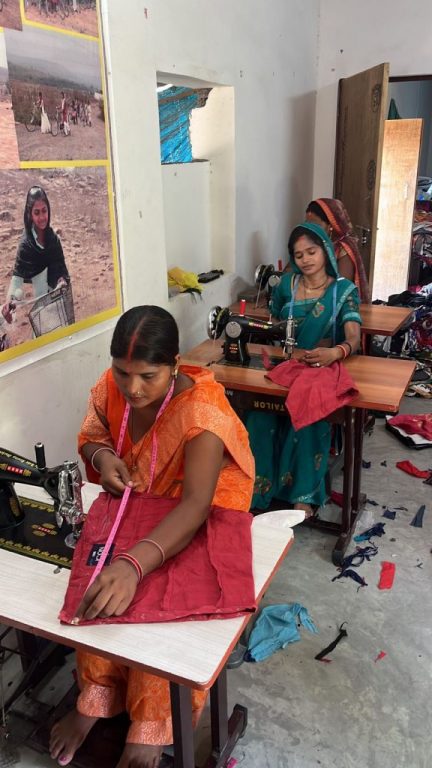
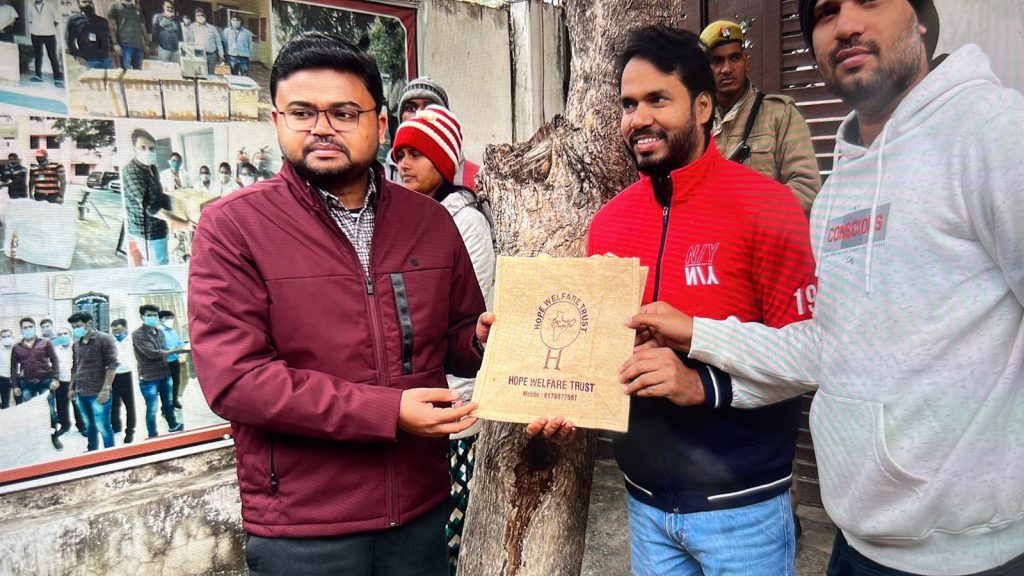
Recognising the urgency of the problem, Municipal Commissioner Akshat Verma, IAS (2017 batch, Uttar Pradesh cadre), introduced a unique initiative to repurpose these abandoned garments into reusable cloth bags. In collaboration with the Hope Welfare Foundation and the Green Army, a youth-driven environmental group, the Varanasi Municipal Corporation partnered with a self-help group of rural women to convert these waste clothes into eco-friendly alternatives to plastic bags.
IMPLEMENTATION AND IMPACT
To kickstart the project, the Municipal Corporation commissioned the production of 1 lakh (100,000) bags, which were distributed free of cost to local shopkeepers and residents. This strategy aimed to provide an accessible, sustainable replacement for single-use plastics while simultaneously addressing the issue of cloth waste along the ghats.
Beyond waste management, the initiative provided livelihood opportunities to women from rural backgrounds. These women, who were part of self-help groups, received training and financial support to manufacture the cloth bags, empowering them economically while also promoting sustainability.
ADDRESSING BEHAVIOURAL AND CULTURAL ASPECTS
The practice of leaving clothes at the ghats is deeply entrenched in religious customs. “Devotees often consider it a spiritual act, making it challenging to directly curb the habit. Instead of discouraging the practice outright, we focused on managing the discarded textiles more efficiently, ensuring they are put to productive use,” Mr. Verma shared with Indian Masterminds.
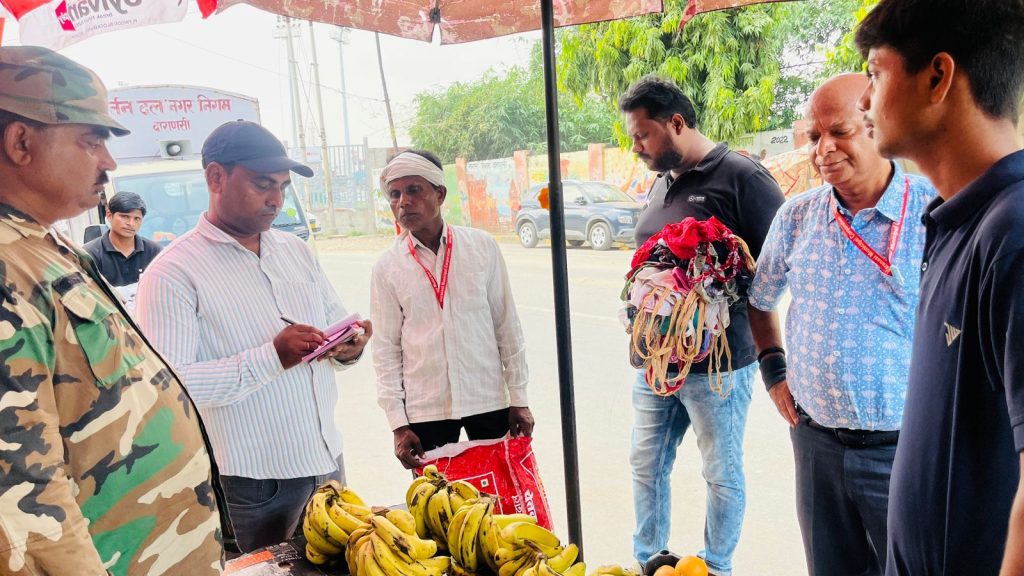
Public perception has gradually shifted due to consistent awareness efforts. Enforcement teams responsible for monitoring plastic use in the city have integrated bag distribution into their operations. When penalising shopkeepers for using plastic, they simultaneously offer them free cloth bags as an alternative, making the transition smoother and fostering a sense of cooperation rather than resistance.
FINANCIAL BACKING AND EXPANSION
The initial phase of the project was supported through Corporate Social Responsibility (CSR) funds from Union Bank, covering the costs of bag production. As the initiative gained traction and demonstrated its impact, more organisations expressed interest in funding the expansion. “We now aim to scale up production to 2.5 to 3 lakh (250,000 to 300,000) bags, ensuring wider availability and deeper market penetration,” Mr. Verma shared.
COMMUNITY RESPONSE AND RECOGNITION
The initiative has been met with widespread appreciation from both locals and authorities. Residents and shopkeepers have welcomed the move, acknowledging the benefits of reducing plastic waste while receiving an environmentally friendly alternative at no cost. The women involved in bag production have not only gained steady incomes but have also received recognition for their efforts, with some even being acknowledged by the Governor of Uttar Pradesh.
Through this initiative, three key objectives have been achieved:
1. Waste management: The ghats remain cleaner as discarded clothes are repurposed.
2. Women’s empowerment: Rural women gain economic independence through their participation in bag production.
3. Environmental sustainability: The project actively reduces plastic dependency, promoting the use of cloth bags in daily transactions.
While the tradition of leaving clothes at the ghats continues, the Varanasi administration has successfully turned a challenge into an opportunity. By transforming discarded garments into a sustainable solution, the initiative not only addresses a long-standing waste issue but also fosters a more eco-conscious and economically inclusive city.